Aluminum Profile Racing Cockpit: The Engineering Guide to Ultimate Rigidity
Your high-end direct drive wheel is only as precise as the surface it is bolted to. If your chassis moves even 2 millimeters during a high-speed corner, you are losing the granular force feedback detail that allows you to catch a slide before it ends your race. The 8020 aluminum profile racing cockpit solves this by treating your simulator as a piece of industrial machinery rather than a piece of furniture. It is frustrating to invest in a 25Nm motor just to feel the steering column oscillate under heavy load. We understand that for a driver seeking total immersion, any structural compromise feels like a barrier between you and the track.
This guide reveals how to engineer a "forever" rig that eliminates the flex found in 90% of pre-fabricated steel frames. We'll show you how to achieve perfect ergonomic alignment and ensure your pedal deck handles 100kg of load cell pressure without a hint of movement. You'll discover the specific extrusion sizes needed for future-proofing your setup with 4-post motion systems. By the end, you will have the technical knowledge to build a cockpit that remains rigid for a lifetime of racing.
Key Takeaways
-
Understand why the modular T-slot system revolutionized sim racing by offering unparalleled adjustability and structural integrity for any hardware configuration.
-
Learn the engineering principles behind how aluminum extrusions manage multi-axis forces and provide superior damping for high-frequency haptic feedback.
-
Identify how the structural design of an 8020 aluminum profile racing cockpit preserves the fidelity of your hardware by eliminating unwanted movement and pedal plate flex.
-
Gain professional insights into selecting the correct profile series to ensure absolute stability for both high-torque direct drive motors and advanced motion systems.
-
Explore how to build a professional-grade ecosystem using components that align with a philosophy of uncompromising quality and engineering excellence.
Table of Contents
What is an 8020 Aluminum Profile Racing Cockpit?
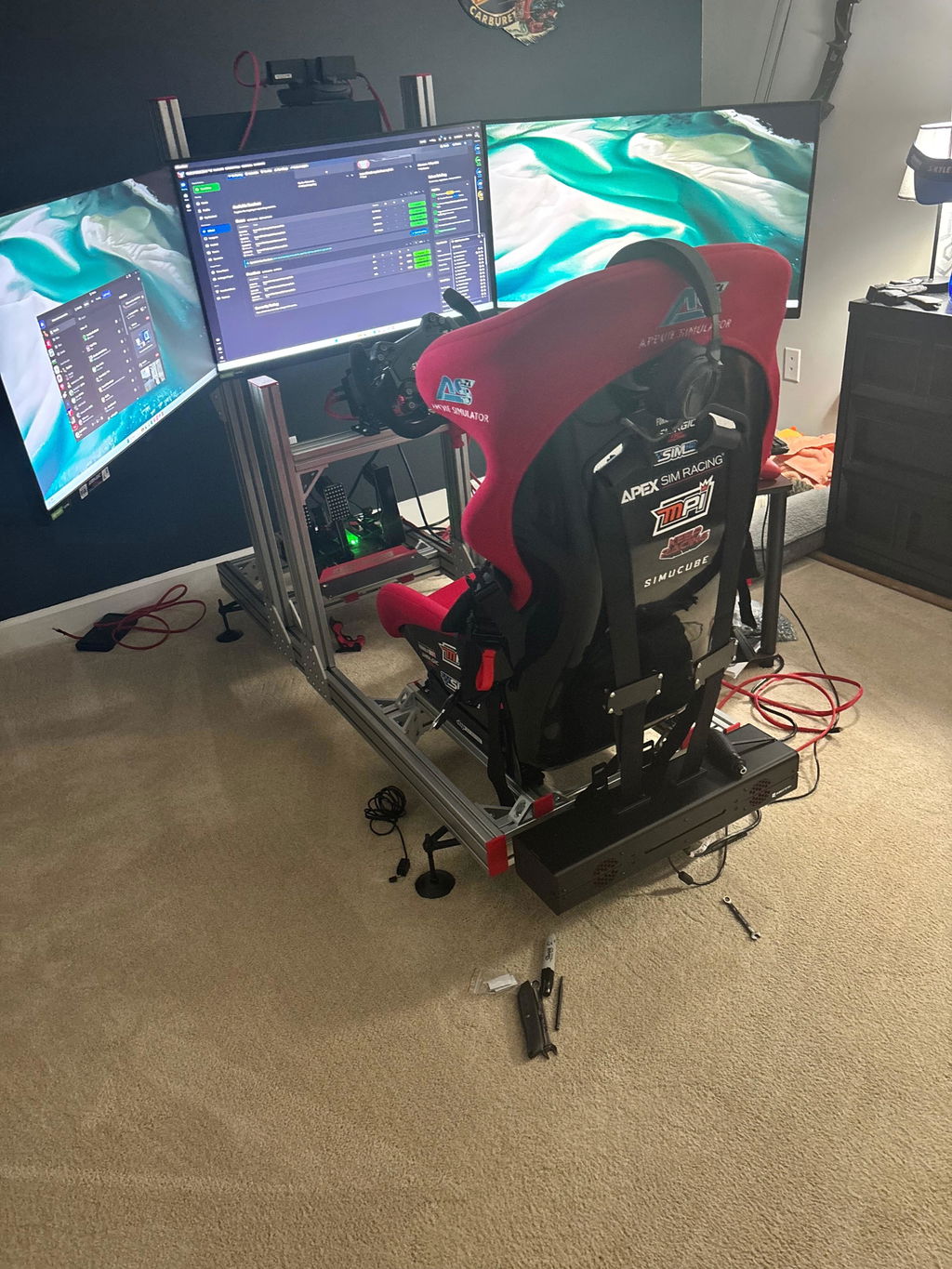
The 8020 aluminum profile racing cockpit represents the pinnacle of sim racing chassis design, moving away from the limitations of fixed-frame furniture toward an industrial-grade engineering solution. While "8020" originally referred to a specific American brand, the term now describes the universal system of T-slot structural framing used by professional builders globally. This modular system relies on extruded aluminum beams with continuous channels running along their length, allowing components to be fastened at any point without the need for permanent modifications like welding or drilling.
Professional sim racers favor the 8020 aluminum profile racing cockpit because it solves the two greatest enemies of immersion: flex and poor ergonomics. Traditional rigs often force a "one size fits most" posture, but the T-slot architecture provides millimeter-precise control over pedal height, wheel angle, and seat position. This adaptability ensures that the physical interface matches the digital car's geometry, which reduces physical fatigue during long endurance sessions. It's a system built on the principle of absolute rigidity, ensuring that every bit of force-feedback from a direct drive wheel reaches the driver's hands rather than being lost to chassis vibration.
The Anatomy of an Aluminum Extrusion
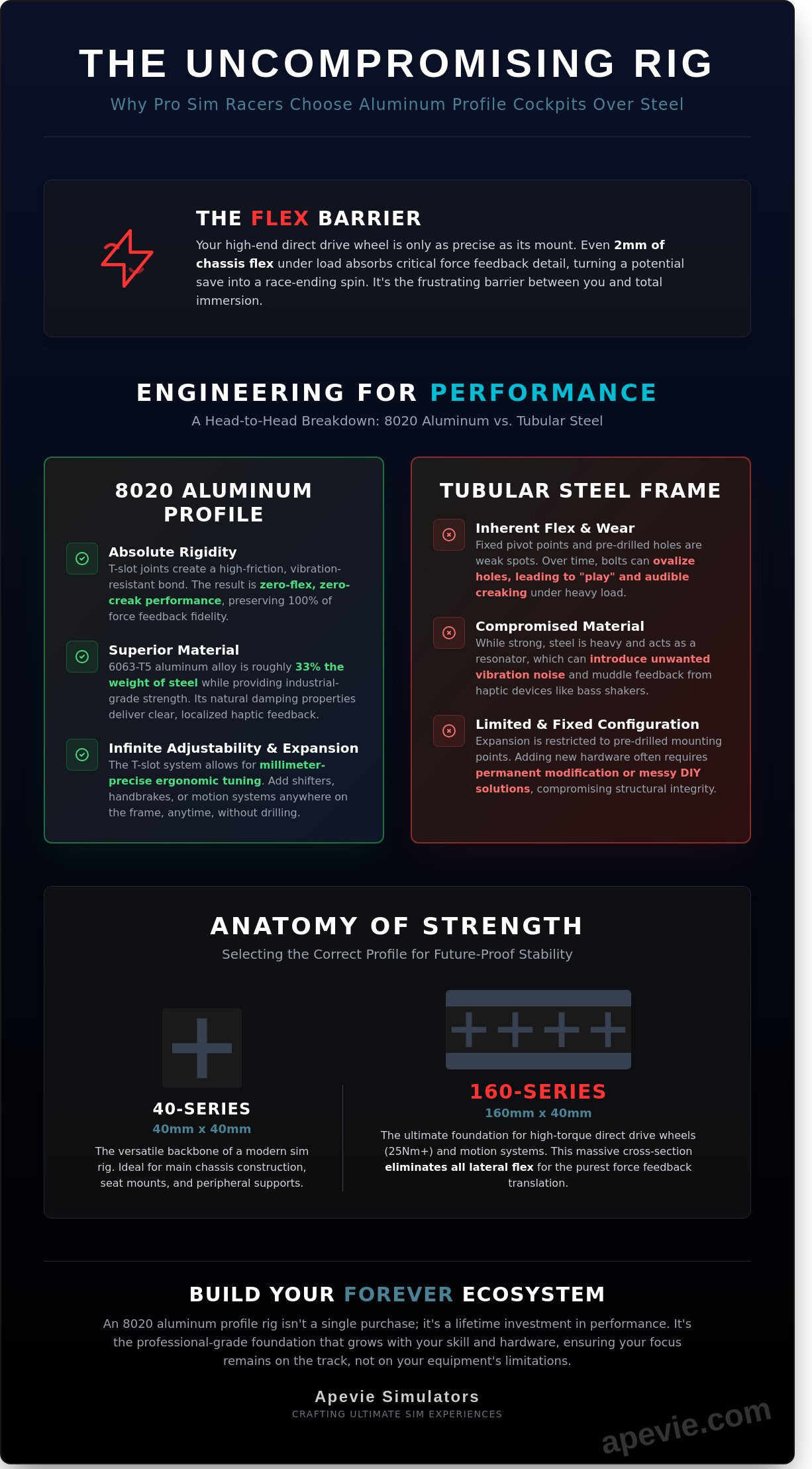
Understanding naming conventions is essential for structural integrity. The industry standard follows metric measurements, specifically the 40-series, where the base profile measures 40mm by 40mm. High-torque direct drive wheels often require a 160-series base, which utilizes a massive 160mm by 40mm cross-section to eliminate lateral movement. The connection's strength comes from the T-nut, a specialized fastener that slides into the profile's channel. When tightened, it creates a high-friction, vibration-resistant bond that stays secure even under heavy load. Most premium rigs feature a deep black or silver anodized finish. This isn't just for aesthetics; it provides a surface hardness that resists scratches and oxidation over decades of use.
8020 vs. Tubular Sim Rigs
Tubular steel rigs often look sleek, but they possess an inherent flaw: fixed pivot points. Over time, the bolts holding these tubes together can ovalize the pre-drilled holes, leading to "play" or audible creaking during heavy braking. An 8020 aluminum profile racing cockpit avoids this through superior weight-to-strength ratios and surface-area contact. Aluminum extrusion is roughly 33% the weight of steel while maintaining the rigidity necessary to handle 25Nm of steering torque.
-
Zero Creak Performance: The friction-based joints don't loosen like traditional bolted tubes.
-
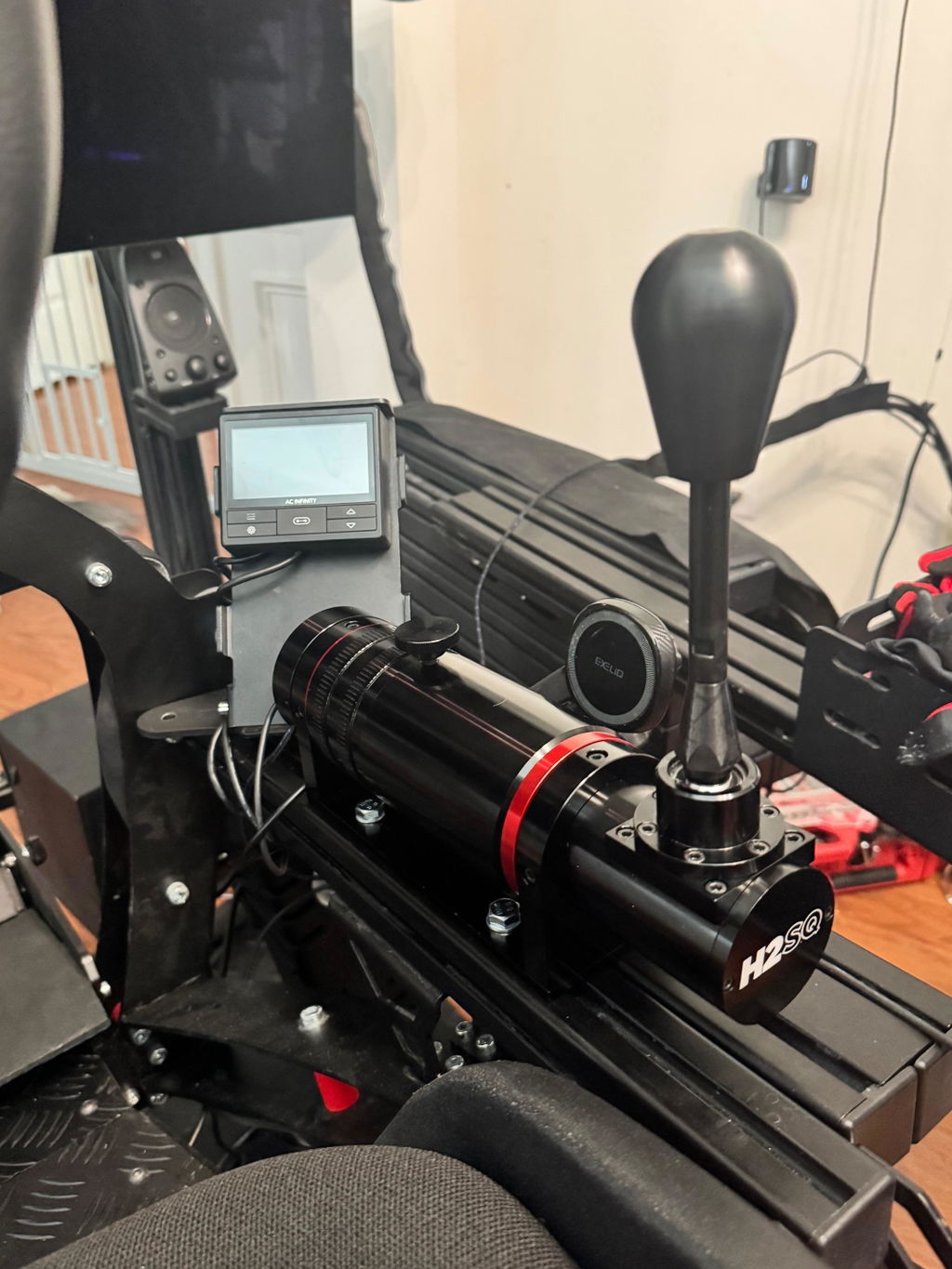
Infinite Expandability: Add shifters, handbrakes, or motion actuators anywhere on the frame.
-
Future-Proofing: You won't need a power drill to add new accessories; you simply slide in a new T-nut and tighten a bolt.
This modularity simplifies long-term ownership. If you decide to upgrade your peripheral set three years after your initial purchase, the frame grows with you. There's no need for structural compromise or messy DIY modifications to accommodate the latest technology.
The Engineering Behind T-Slot Modular Sim Rigs
The structural integrity of an 8020 aluminum profile racing cockpit stems from the unique geometry of the T-slot extrusion. Typically manufactured from 6063-T5 aluminum alloy, these profiles handle multi-axis forces by distributing load across the internal webbing of the metal. Unlike thin-walled steel tubing that can twist under heavy braking, the 40-series and 80-series profiles used in high-end rigs provide a rigid backbone that maintains its shape even when subjected to longitudinal forces exceeding 100kg from hydraulic pedals.
Aluminum's material properties offer distinct advantages for high-frequency haptic feedback. While steel often acts as a resonator that can introduce unwanted vibration noise, aluminum possesses natural damping characteristics. This ensures that the vibrations from a bass shaker or a direct drive wheel remain clear and localized. It's about maintaining a clean signal. Professional drivers require this clarity to distinguish between a curb strike and a loss of rear-end traction. Just as a premium quality foundation is essential for long-term physical well-being, a high-grade aluminum frame is the essential foundation for simulator performance.
Rigidity and Force Feedback Fidelity
A flexing chassis acts as an unwanted filter. It deletes the fine details of force feedback before they reach your hands. According to Newton’s Third Law, for every 25Nm of torque a motor delivers, the rig must resist that same 25Nm. If the wheel deck moves by even 2mm, the signal-to-noise ratio drops significantly. This mechanical loss means you're missing the subtle tire scrub data that's vital for consistent lap times. An 8020 aluminum profile racing cockpit ensures that 100% of the motor's output is transferred to the driver, preserving the fidelity of the simulation.
The Modularity Advantage
Standardization is the hallmark of the T-slot system. Most professional-grade peripherals, such as Heusinkveld Ultimate+ pedals or GSI steering wheels, are designed specifically for profile mounting. This ecosystem uses M8 T-nuts and bolts that allow for "unlimited" adjustment. You aren't locked into pre-drilled holes. You can slide a pedal tray forward by 5mm or tilt a seat by 3 degrees to achieve perfect ergonomic alignment.
-
Scalability: You can transition from a simple GT setup to a complex flight simulator by adding a few 40x40mm beams.
-
Integrated Solutions: Triple monitor stands can be bolted directly to the main chassis, ensuring the screens don't wobble during intense sessions.
-
Cable Management: The 8mm slots provide a built-in channel to hide wiring, using plastic cover strips to keep the workspace clean and organized.
This level of modularity means the rig evolves with your needs. It's a lifetime investment that adapts to new hardware releases without requiring a complete replacement of the frame.
Rigidity vs. Force: Direct Drive and High-End Pedals
High-fidelity sim racing hardware transforms digital signals into physical resistance. When a driver utilizes a Simucube 2 Pro, they're dealing with up to 25Nm of peak torque. Entry-level cockpits made of thin-walled steel or lightweight extrusions simply can't handle these loads. The energy meant for your hands gets absorbed by the frame; this leads to dampened feedback where micro-details of the track surface vanish. An 8020 aluminum profile racing cockpit ensures that every Newton-meter of force reaches the driver's hands without being lost to structural deformation.
Chassis stiffness directly impacts lap time consistency. If the cockpit flexes during heavy braking or high-speed cornering, the driver's physical reference points shift. Muscle memory relies on a static environment. A frame that moves even 2mm under load forces the brain to compensate for a changing variable. This instability breaks the connection between the driver and the car's limit of adhesion, making it difficult to replicate the same braking point lap after lap.
Direct Drive Mounting Solutions
Mounting a heavy motor requires more than just four bolts. Front-mount solutions are superior for high-torque applications because they secure the motor directly to the uprights; this reduces the leverage acting on the mounting plate. Bottom-mount plates often suffer from a diving effect under heavy force feedback. To eliminate side-to-side wobble during aggressive steering, look for upright brackets made from 10mm thick steel or heavy-duty aluminum. These thick plates act as structural braces, turning the wheel deck into a monolithic part of the 8020 aluminum profile racing cockpit.
Pedal Deck Engineering
The brake pedal is where most time is found or lost. High-end sim racing pedals utilize load cell sensors that measure pressure, not travel. If the pedal deck flexes under 80kg or 100kg of force, the sensor's accuracy drops. Vertical flex acts as a secondary, unintended spring in the system. This makes trail braking modulation nearly impossible to master because the feel changes based on how much the metal is bending. Profile-based pedal decks offer a significant advantage over 3mm stamped steel plates; they provide a zero-flex mounting surface that remains rigid even under the 130kg forces required by professional-grade hydraulic sets.
-
Load Cell Accuracy: Zero flex ensures the sensor reads only your foot pressure, not the bending of the rig.
-
Trail Braking: Rigid mounting allows for the precise release of brake pressure needed to rotate the car into a corner.
-
Structural Integrity: 10mm steel brackets prevent the wheel from oscillating independently of the chassis.
Choosing the Right Profile: 40-Series vs. 160-Series Rigs
Selecting the foundation for your 8020 aluminum profile racing cockpit isn't just about aesthetics; it's a precise structural calculation. A high-end direct drive motor, such as the Simucube 2 Pro, generates up to 25Nm of peak torque. If your frame lacks sufficient mass and cross-sectional density, that energy dissipates into vibration and chassis flex rather than reaching your hands. You lose the fine-grained detail of the tire's slip angle when the metal itself starts to twist under load.
The 40x80mm profile serves as the reliable industry standard for high-end static setups. It handles the longitudinal forces of heavy braking, which can exceed 100kg of load cell pressure, without measurable deflection. You'll find the "sweet spot" here for most home enthusiasts who don't plan on adding hydraulic motion. However, when you step up to 160x40mm profiles, you're investing in a significantly higher moment of inertia. This extra material is vital for rigs supporting 30kg steering bases or active pedal systems that require an absolute lack of movement.
The Motion-Ready Framework
Motion systems like the Sigma Integrale DK2+ introduce vertical and lateral G-forces that static rigs never face. A 4-post actuator setup creates constant torsional stress at every corner of the frame. Using a 160mm base profile ensures that the heavy-duty T-slots have enough surface area for the mounting brackets to grip securely. Frame fatigue typically occurs at the joints during high-duty cycles. The 160-series extrusions prevent bolts from loosening under 2G accelerations, keeping the 8020 aluminum profile racing cockpit stable over years of intense use.
Ergonomic Customization
Achieving the correct stack height is the difference between professional comfort and a long-term back injury. For formula-style seating, your heels should be level with your hips. This requires elevated pedal decks, often raised 150mm or more above the main frame rails. In multi-user environments, you should prioritize seat sliders with locking pins for quick adjustments between drivers of different heights. While reclining buckets offer flexibility for casual driving, fixed-back seats provide the most consistent tactile feedback from the chassis vibrations.
Weight is a final, critical consideration for your flooring. A fully loaded 160-series rig can easily exceed 120kg before the driver even sits down. If you're placing this on hardwood or laminate, you'll need 6mm rubber isolation pads to protect the surface and dampen noise. If you require mobility, only use industrial-grade casters rated for at least 200kg to prevent the wheels from flat-spotting under the static load of the rig.
For those seeking the ultimate in structural integrity and performance, explore our premium racing solutions designed for professional-grade stability.
Building Your Professional Ecosystem with Apevie
Building a high-end simulator requires more than just ordering parts; it's about creating a cohesive ecosystem where every Newton-meter of torque translates into direct driver feedback. At Apevie, we curate the world's most advanced components to ensure your 8020 aluminum profile racing cockpit functions as a professional-grade instrument. Our philosophy centers on engineering integrity. We only stock hardware that survives rigorous stress testing, ensuring that your equipment never becomes the bottleneck in your performance. Every bolt and bracket in our inventory has a specific purpose, selected for its ability to maintain structural alignment under extreme loads.
Choosing a turnkey build over a DIY project offers a distinct technical advantage. While DIY kits provide a foundation, our pre-engineered solutions eliminate the 15 to 20 hours typically spent on alignment, squaring the frame, and complex cable management. We handle the structural optimization and hardware synchronization, which allows you to focus on your lap times rather than troubleshooting mechanical flex. It's the difference between owning a collection of parts and owning a calibrated racing machine.
Integrating Elite Hardware
A professional rig demands the highest fidelity steering systems. We specialize in pairing the 8020 aluminum profile racing cockpit with Simucube 2 direct drive bases and GSI steering wheels. This combination requires precise mounting angles to prevent flex during high-torque maneuvers exceeding 25Nm. For those seeking the ultimate immersion, we integrate Sigma Integrale motion systems directly into the chassis. Our engineers calculate component spacing based on 5th to 95th percentile driver ergonomics. This data-driven approach ensures that pedal reach and wheel height minimize physical fatigue during 24-hour endurance stints.
The Apevie Custom Advantage
Rigidity isn't an assumption; it's a metric we validate through physical testing. Every custom rig undergoes a structural assessment to confirm zero-deflection under 150kg of braking force. This level of precision is why professional sim racers across the US rely on our national shipping and dedicated technical support. We design rigs tailored to specific disciplines, whether you need the upright seating of a GT3 car or the reclined posture of a formula chassis. Our team understands that a rally driver needs different peripheral placement than a prototype racer. If you're ready to transition from a hobbyist setup to a professional-grade simulator, Consult with our simulator engineers to begin your build.
Elevate Your Performance with Engineering Precision
Choosing the right foundation isn't just about aesthetics; it's a technical requirement for high-fidelity simulation. A well-engineered 8020 aluminum profile racing cockpit provides the structural integrity needed to handle 25Nm of peak torque from direct drive systems without losing detail to chassis flex. By selecting between 40-series and 160-series profiles, you're defining the limits of your feedback and the precision of your braking. Experience shows that modularity ensures your rig grows alongside your career, rather than becoming a bottleneck in your development. This modular approach allows for precise adjustments that mirror real-world cockpit ergonomics and seat positioning.
At Apevie, we focus on the intersection of professional motorsport training and laboratory-grade stability. As an authorized Simucube and Sigma Integrale dealer, we provide expert-tested solutions designed for zero-flex performance under extreme loads. Our team applies scientific rigor to every connection point, ensuring that every Newton of force from your pedals translates into accurate on-track data. Whether you're looking for a specific component or a custom turnkey build for professional training, we're here to guide your selection with technical authority. It's time to stop fighting your hardware and start trusting your inputs.
Build your professional sim racing foundation with Apevie
Frequently Asked Questions
Is 8020 aluminum profile strong enough for a 25Nm direct drive wheel?
Yes, a standard 40x120mm or 40x160mm aluminum profile upright exhibits less than 0.1mm of deflection under a 25Nm load. This structural integrity ensures that every bit of force feedback reaches your hands without energy loss. A high-quality 8020 aluminum profile racing cockpit uses T6-6061 grade aluminum to maintain this rigidity over years of intense use.
How much does a full 8020 sim racing cockpit weigh?
A complete chassis typically weighs between 45kg and 75kg depending on the profile thickness and added accessories. This mass provides a stable foundation that resists the 100kg of force often applied during emergency braking. While the weight makes the rig difficult to move alone, it's the primary reason these cockpits remain stationary during intense 24-hour endurance races.
Can I add a motion system to any aluminum profile rig later?
The modular nature of the 8020 aluminum profile racing cockpit allows for motion integration at any time. Most 4-actuator systems, such as those from D-BOX or Sigma Integrale, mount directly to the 40mm or 80mm base profiles using standard T-nuts. You'll simply need to ensure your base frame uses 40x80mm profiles or larger to handle the dynamic 1.5G forces generated by high-end motion platforms.
What tools are required to assemble an 8020 sim rig?
You only need a set of metric hex keys, specifically 4mm, 5mm, and 6mm sizes. A high-quality torque wrench is recommended to ensure all M8 bolts are tightened to the industry standard of 15 to 20 Newton-meters. Using a spirit level during the build process ensures the wheel deck and pedal plate are perfectly horizontal; this prevents ergonomic strain during long sessions.
Is there a difference between "8020" and "T-slot" aluminum?
8020 is a specific American brand name, while T-slot refers to the universal design of the extrusion. In Europe and Asia, most sim racers use metric profiles like 40 series or 45 series instead of the imperial 15 series often associated with the 8020 brand. Both systems function identically by utilizing a groove that allows hardware to slide into any position along the rail for millimeter-perfect adjustments.
Why are aluminum profile rigs more expensive than tubular ones?
The higher cost reflects the precision manufacturing and material density of the extruded aluminum. A tubular steel rig is often welded into a fixed shape, whereas a profile rig offers infinite adjustability through its modular T-slot system. You're investing in a chassis that never becomes obsolete, as 100 percent of the components can be repurposed or expanded as your hardware evolves.
How do I mount a racing seat to an aluminum profile rig?
You mount a seat by bolting two steel side brackets or a slider mechanism directly into the T-slots of the floor cross-members. This setup allows you to adjust the seat height and tilt angle by 15 degrees or more to find the optimal driving position. Standard M8 T-nuts and bolts provide a secure connection that eliminates the flexing often found in budget seat mounting solutions.
Do aluminum profile rigs creak or make noise over time?
A correctly assembled rig remains silent if the fasteners are tightened to the correct torque specifications. Creaking usually occurs if M8 bolts lose tension, which can be prevented by using spring-loaded T-nuts or thread-locking fluid. Data from long-term users shows that checking the tightness of the 12 main structural joints once every 6 months keeps the chassis as quiet as the day it was built.