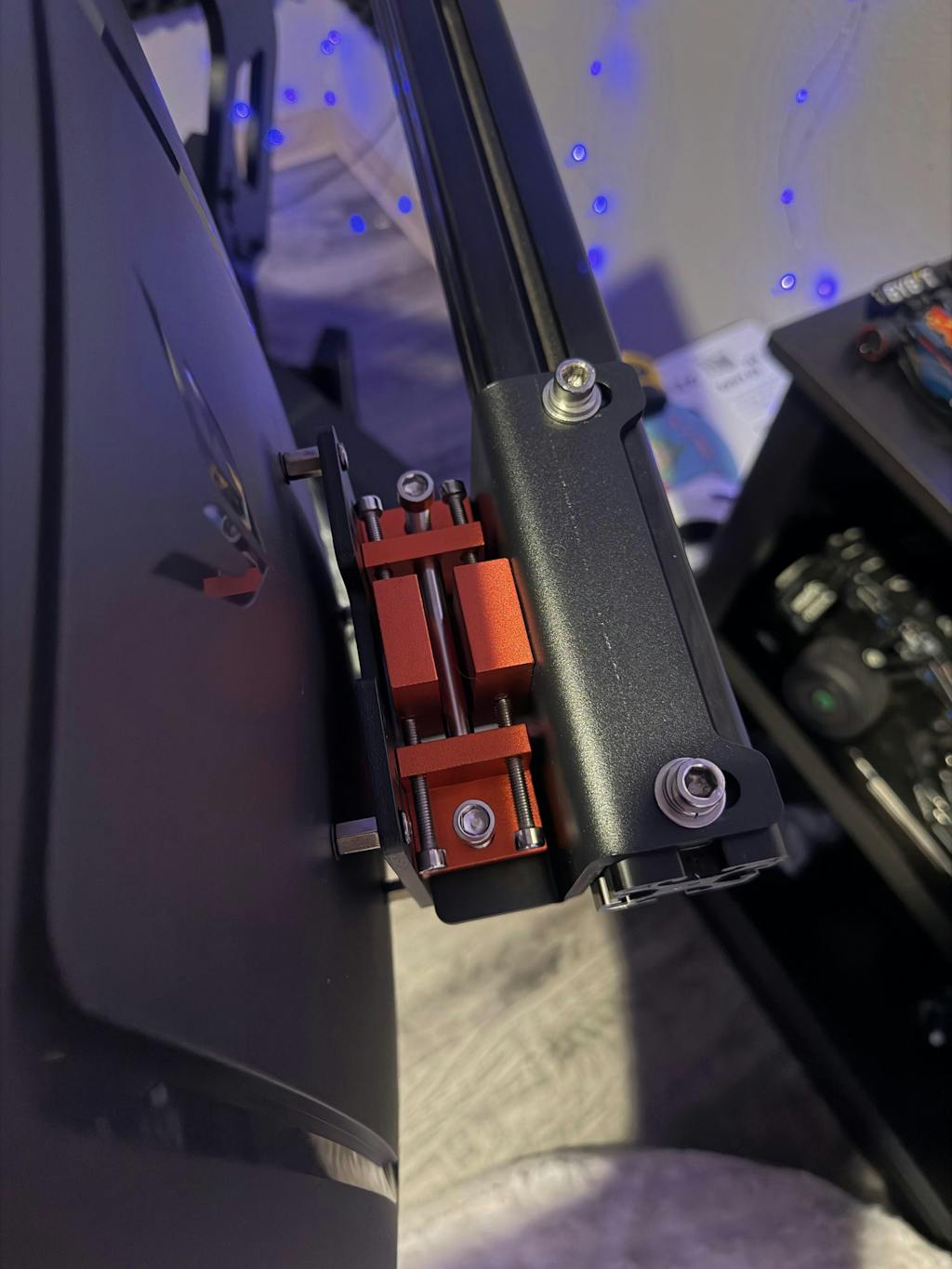
Are Motion Simulators Worth It? A Realistic Look at 2DOF, 3DOF & 6DOF
Let's settle this once and for all.
Walk into any sim racing forum and you'll find the debate: Is motion worth the money? Some say it's the ultimate immersion. Others call it an expensive gimmick that won't make you faster. Both sides have valid points-but most arguments miss the real question.
The question isn't "Does motion make you faster?"
The real question is: What kind of motion are we talking about?
Because not all motion is created equal. A cheap seat mover and a professional 6DOF platform are worlds apart-and understanding that difference is the key to knowing whether motion belongs in your rig.
First, Let's Talk DOF: What Those Numbers Actually Mean
You've seen the terms: 2DOF, 3DOF, 6DOF. Here's what they actually do.
| Term | Full Name | What It Simulates | Real-World Feel |
|---|---|---|---|
| 2DOF | Pitch + Roll | Braking dive, acceleration squat, cornering lean | Basic tilt. Your body moves, but your car doesn't. |
| 3DOF | Pitch + Roll + Heave | Adds vertical movement-curbs, bumps, road texture | Noticeably more immersive. You feel the road. |
| 6DOF | Pitch + Roll + Heave + Surge + Sway + Yaw | Full motion-sliding, rotating, every axis | Complete physics replication. Feels like a real car. |
The key insight: 2DOF and 3DOF systems create sensation. 6DOF systems create physics.
A 3DOF platform can tilt you back under braking and tilt you forward under acceleration. It feels convincing-until you realize your body is moving but the car's center of mass isn't. That's where 6DOF changes the game.
With 6DOF, you get surge (forward/backward sliding) and sway (side-to-side sliding) and yaw (rotation). These are the movements that tell your inner ear exactly what the car is doing at the limit.
The Problem with Most Motion Systems: Cue Conflict
Here's something the marketing materials don't tell you.
In a real car, when you brake hard, your body presses forward into the harness-and stays there until you release the brakes. That's sustained G-force.
Most motion simulators can't do sustained G-forces. They deliver a quick jolt (transient motion) and then return to neutral. So you get the initial sensation of braking, but your body doesn't feel the continuous pressure of cornering or braking through a long turn.
This creates cue conflict.
Your eyes see a long right-hand sweeper. Your inner ear feels a quick tilt and then nothing. Your brain gets confused. The result? Fatigue, disorientation, and-according to research cited by SimCraft-the potential to build bad driving habits instead of good ones.
Professional-grade systems solve this with different approaches. Some use G-seats and G-belts to apply sustained pressure. Others, like Qubic System platforms, use full 6DOF motion to create continuous, physics-accurate movement.
Beyond DOF: Belt Tensioners, Buttkickers, and the Immersion Stack
Motion isn't everything. Here's what else matters and what they do.
| Technology | What It Does | Performance or Immersion? |
|---|---|---|
| Buttkickers / Tactile Transducers | Vibrate the rig-curbs, engine rumble, road texture | Immersion. Adds atmosphere, not information. |
| Belt Tensioners | Tighten harness under braking/cornering | Performance. Instant feedback your brain interprets as G-force. |
| Motion Platforms | Move the entire rig | Both. Depends entirely on quality and DOF. |
On Buttkickers: vibration is "atmosphere, not information." Your brain processes it as background texture. It feels cool, but it won't improve your lap times because it doesn't tell you anything about what the car is doing.
On Belt Tensioners: This is where it gets interesting. Active belt systems use motors to tighten and loosen your harness in real time. Under hard braking, the belts pull tight against your chest. During a spin, they release. Dual-axis systems can even differentiate left and right, giving you lateral G-force feel through your shoulders.
The magic of belt tensioners is speed. They react instantly-faster than any motion platform. This makes them true haptic feedback: performance information delivered directly to your body.
On Motion: Good motion does what belts can't-it moves your entire body through space, giving you the vestibular cues your inner ear needs to understand the car's attitude. Bad motion just shakes you around.
So, Does Motion Make You Faster?
The honest answer: It depends on the motion.
A poorly tuned, high-latency motion system can actually make you slower by introducing cue conflict and training bad reactions. A high-quality, properly integrated system can help you develop the same muscle memory and car control instincts that real drivers use.
The research bears this out. SimCraft's work with Michigan State University showed that accurate motion simulation-specifically center-of-mass rotation and translational seat time-creates skills that transfer to real vehicles.
But here's the catch: Motion alone isn't enough. You need:
-
Low latency (under 20ms is ideal)
-
Sustained G-force capability (not just transient jolts)
-
Proper physics integration (motion that matches the car model)
Without those, you're paying for sensation, not performance.
The Final Verdict
Motion simulators are worth it-when they're done right.
-
2DOF/3DOF: Great for immersion. Adds a new dimension to your racing. Won't make you faster, but will make you smile.
-
6DOF (quality systems): Legitimate training tools. Deliver physics-accurate feedback that builds real car control. Expensive, but you're paying for capability, not just sensation.
-
Belt Tensioners: The hidden gem. Instant feedback, works with or without motion, directly improves your understanding of braking and cornering forces.
-
Buttkickers: Pure fun. Add them to any rig for atmosphere, but don't expect lap time magic.
The worst mistake you can make is buying a cheap, poorly implemented motion system and assuming you've experienced what motion can do. You haven't.
The best move? Understand what each technology actually does. Match it to your goals. And if you're going to do motion, do it right-with low latency, proper physics, and a rig solid enough to handle it.
Because when motion is done right, it doesn't just feel real. It teaches you to drive real.
And here's the truth they don't tell you: you get what you pay for. A $500 seat mover and a professional 6DOF system share a name, but they share nothing else. Know the difference before you spend.
➡️ See how Ferrari guests experienced 6DOF motion: Ferrari Event Blog
➡️ Shop Motion Systems & Components: Apevie Motion Collection