The 5% Eligible Influencer Collection: A 2026 Buyer’s Guide to Professional Sim Racing Gear
The most expensive direct drive wheelbase on the market won't save your race if your brake pedal lacks the hydraulic fidelity to hit a consistent trail-braking point. It's a frustrating reality that many drivers face when they realize their high-end cockpit has become a collection of mismatched bottlenecks. You've likely felt the paralysis that comes from staring at a massive catalog of 344 individual products, wondering if a Moza R21 base truly belongs next to a set of Heusinkveld Ultimates. To qualify for the 5% eligible influencer status in the sim racing community, your hardware must mirror the 1:1 physics of a GT3 car rather than a consumer toy.
I've developed this technical framework to help you filter Apevie’s curated 5% Eligible collection with the precision of a race engineer. You'll learn exactly how to balance torque output with pedal resistance to ensure your hardware never masks your natural talent. We're moving past the guesswork to focus on professional-grade components like Simucube 2 Pro bases and VR-optimized configurations that are ready for full-motion integration. This guide provides a clear blueprint for a turnkey system that delivers elite performance without the typical compatibility headaches found in DIY builds.
Key Takeaways
- Understand how the 5% eligible influencer collection filters 344 vetted products to ensure every component meets the rigorous physics and performance standards required for professional PC simulation.
- Learn why direct drive torque and high-fidelity visuals, such as the Pimax Crystal’s 2880 x 2880 resolution, are mandatory benchmarks for a truly immersive, race-grade cockpit.
- Discover the engineering behind elite hardware like the Simucube ActivePedal Pro and CONSPIT 300 GT wheel to see how software-defined force feedback translates to realistic track feel.
- Identify the critical role of aluminum extrusion foundations in eliminating "flex factor," ensuring your high-torque peripherals perform with surgical precision during high-stress maneuvers.
- Explore the advantages of Apevie’s white-glove installation and expert consultation to transform complex professional hardware into a seamless, turnkey racing experience.
What is the 5% Eligible Influencer Collection at Apevie Simulators?
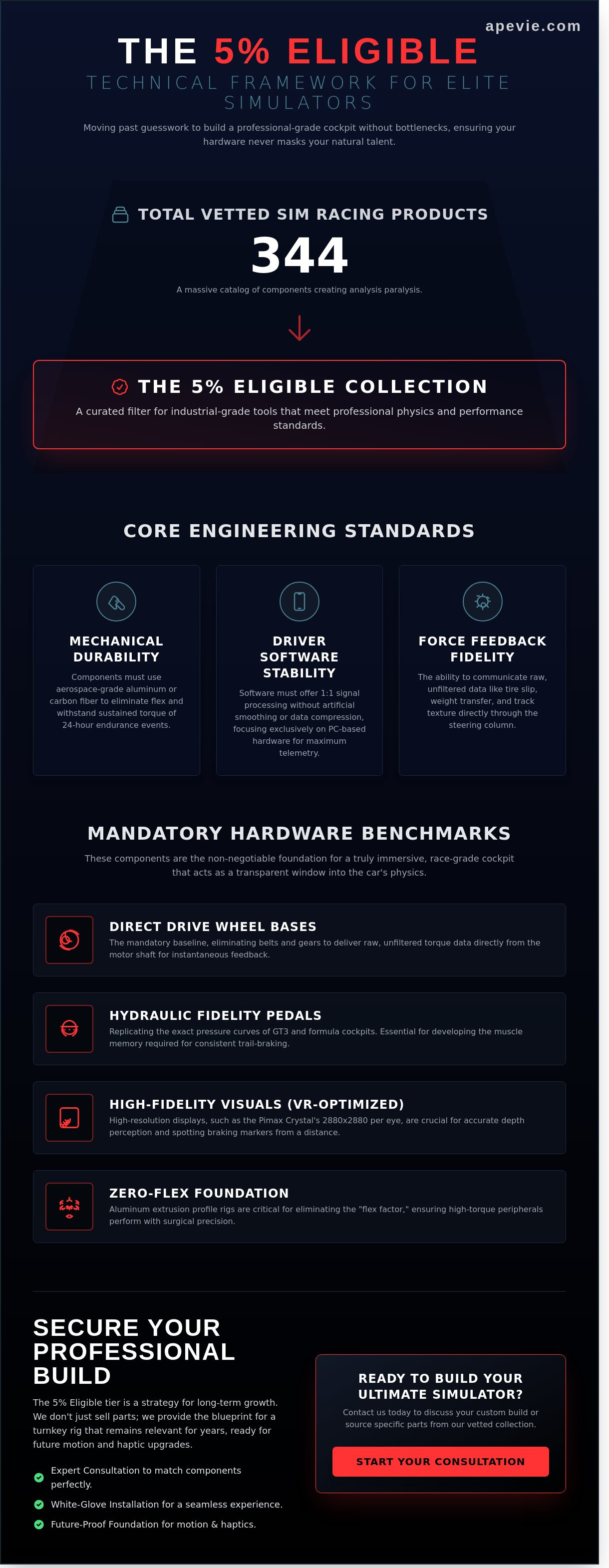
Most sim racers eventually hit a ceiling where their equipment no longer translates their inputs into consistent lap times. The 5% eligible influencer collection at Apevie Simulators was designed to solve this specific plateau. We have meticulously vetted 344 products that meet the rigorous standards of professional PC simulation, ensuring that every component delivers the mechanical transparency required for elite performance. This isn't a list of generic gaming peripherals; it's a technical filter that separates consumer-grade toys from industrial-grade tools.
The "boosted" eligibility status acts as a benchmark for quality, signaling that a product can withstand the sustained torque and vibration of 24-hour endurance events. To truly appreciate the necessity of such hardware, it's helpful to understand what sim racing is in its most professional form. It has evolved from a hobby into a critical training discipline for real-world motorsport. Our collection bridges this gap by offering direct drive wheel bases and hydraulic pedal sets that replicate the exact pressure curves found in GT3 and formula cockpits.
The Logic of Professional-Grade Selection
Our criteria for inclusion are rigid. We prioritize three core pillars: mechanical durability, driver software stability, and force feedback fidelity. If a wheel base exhibits thermal throttling after two hours of use, it's excluded. We focus exclusively on PC-based hardware because console ecosystems often compress the telemetry data that high-end peripherals need to function. Apevie Simulators operates as a boutique firm, providing the necessary expert consultation to integrate complex components from manufacturers like Precision Sim Engineering or Pro-Sim into a seamless, turnkey environment.
- Mechanical Durability: Components must use aerospace-grade aluminum or carbon fiber to eliminate flex.
- Driver Stability: Software must offer 1:1 signal processing without artificial smoothing.
- Feedback Fidelity: The ability to communicate tire slip and weight transfer through the steering column.
Value Proposition for Serious Buyers
Investing in the 5% eligible influencer tier is a strategy for long-term growth. Many racers buy mid-range gear only to sell it at a loss six months later when they realize it can't support high-fidelity motion. By starting with components from Vesaro or Apex Sim Racing, you build a foundation that supports future upgrades like 4-degree-of-freedom motion platforms or active belt tensioners. We don't just sell parts; we provide the blueprint for a rig that remains relevant for years. The collection is a curated gateway to elite motorsport simulation.
If you're ready to move beyond mass-produced setups, Apevie Simulators offers the professional consultation and white-glove installation needed to build your ultimate racing environment. Contact us today to discuss your custom build or to source specific parts from our vetted collection.
The Engineering Standards of High-Performance Hardware
Serious sim racers often reach a plateau where their equipment begins to mask their actual performance. If you're aiming for the status of a 5% eligible influencer, your hardware must act as a transparent window into the car's physics rather than a filtered interpretation. This starts with the physics of torque. Direct drive wheel bases are the mandatory baseline because they eliminate the dampening effects of belts and gears. By mounting the steering wheel directly to the motor shaft, you receive raw, unfiltered data. This allows for instantaneous corrections before a slide becomes a terminal crash.
The construction of these units relies on engineering standards typically reserved for aerospace applications. Using CNC machined aviation-grade aluminum in shifters and pedals ensures zero flex under heavy braking loads. When you combine this rigid construction with 16-bit high-precision position sensors, you're working with 65,536 points of resolution. This level of granularity is what builds deep muscle memory. High-end components from manufacturers like Precision Sim Engineering exemplify this commitment to material integrity; they use carbon fiber and billet aluminum to reduce rotational inertia and increase tactile response. Maintaining 5% eligible influencer standards requires hardware that doesn't just look the part but performs under the stress of 24-hour simulation cycles.
Direct Drive and Force Feedback Logic
Choosing the right base depends on your specific torque requirements. The Moza R-series provides a clear hierarchy: the R5 offers a compact entry point; the R9 serves as a versatile mid-range option; the R12 delivers the sustained overhead needed for high-downforce cars. Professional racers don't just chase peak torque numbers. They prioritize linear torque delivery. A base that clips or fluctuates during high-load corners destroys the driver's ability to sense weight transfer. For those managing professional workflows, quick-release systems like the Simucube Wheel Side Kit allow for rapid hardware swaps without compromising the mechanical integrity of the steering column.
Visual and Haptic Immersion Standards
Visual clarity in 2026 is defined by the Pimax Crystal series. With a resolution of 2880 x 2880 per eye and 35 PPD (Pixels Per Degree), the pixelated "screen door effect" is effectively eliminated. In endurance titles like iRacing or ACC, local dimming technology becomes vital for night-stint realism. It provides true blacks that prevent the grey haze common in cheaper panels. Physical feedback extends beyond the wheel; the Qubic System QS-BT1 uses dual-channel direct drive motors for seat belt tensioning. This engineering simulates sustained G-forces under braking, providing a haptic cue that your inner ear requires to process deceleration accurately. You can explore these integrated components in our curated hardware selections to see how they fit into a professional build.
Standout Picks: Comparing the Best of the Boosted Collection
As a 5% eligible influencer, you understand that elite performance stems from hardware that doesn't just simulate racing but replicates the physical reality of the track. The 2026 collection focuses on components that bridge the gap between digital entertainment and professional training. We've curated these specific picks because they represent the pinnacle of current engineering, offering the tactile precision required for consistent lap times.
The Simucube ActivePedal Pro is the centerpiece of this premium tier. It's the world's first fully software-defined pedal, meaning it lacks traditional springs or elastomers. Instead, a powerful actuator provides up to 110kg of force. You can customize the feel of the brake fade, ABS vibration, and travel distance instantly through a digital interface. This level of adjustability is unmatched by mechanical systems. For visual clarity, the Pimax Crystal VR Headset remains the gold standard. With its glass aspheric lenses and high pixel density, it provides the visual fidelity professional drivers need to spot distant braking markers with absolute certainty.
Pedal Engineering: Load Cell vs. Active Feedback
Precision in braking is the difference between a podium finish and a mid-pack result. The Moza Racing CRP 3 Pedals utilize a 3-stage clutch and CNC-machined assembly to provide a heavy, realistic resistance. While the Moza SR-P uses load cell sensors to measure pressure, the Simucube ActivePedal Pro moves beyond static resistance into dynamic feedback. If you're building a versatile rig, the SR-P Lite Brake Pedal Performance Kit is a mandatory upgrade to ensure your entry-level hardware has the mechanical stiffness needed for muscle memory. You can explore the technical differences in The Ultimate Guide to Sim Racing Pedals.
Steering Wheels and Shifters: Tactile Feedback
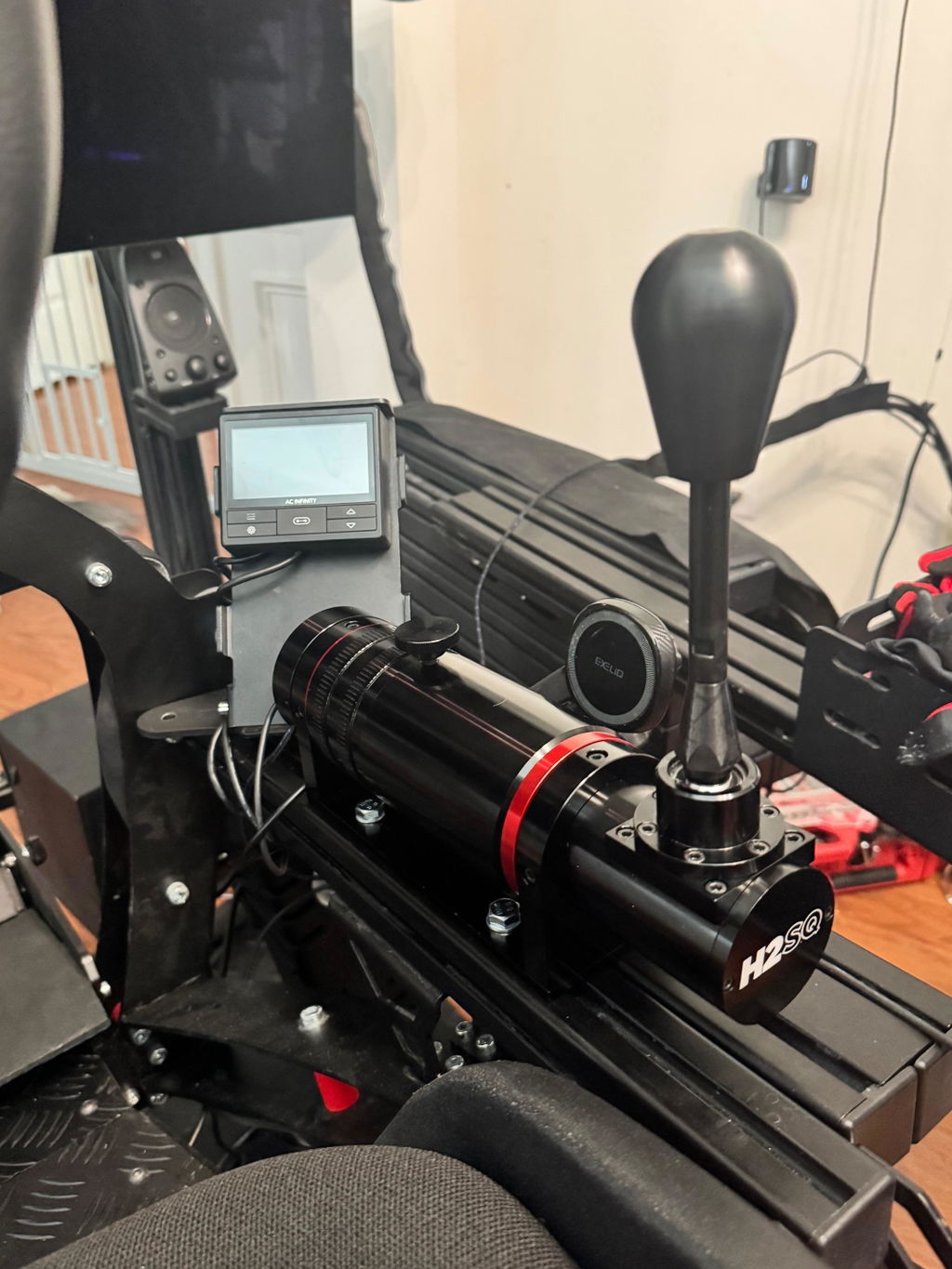
The CONSPIT 300 GT Wheel uses a race-grade carbon fiber structure to ensure every bit of force feedback reaches your hands without dampening. It's a stark contrast to the Moza ES Steering Wheel, which becomes a different beast when paired with the 12-inch Round Wheel Mod for drifting or oval racing. Diameter matters because it changes the leverage and rotational speed of your inputs. We cover these ergonomic nuances in our guide to The Best F1 Steering Wheels. To complete the tactile experience, the Moza SGP Sequential Shifter uses aerospace-grade aluminum and non-contact Hall sensors. Every gear change is crisp, positive, and built to withstand the rigors of endurance racing.
Selecting the right components as a 5% eligible influencer requires a balance of technical specs and practical application. Here is how these top picks compare:
- Simucube ActivePedal Pro: Best for professional drivers needing infinite adjustability without swapping hardware parts.
- CONSPIT 300 GT: Ideal for high-end GT3 simulation where structural rigidity and weight savings are paramount.
- Moza CRP 3: The preferred choice for racers who want a traditional mechanical feel with modern CNC precision.
- Pimax Crystal: Essential for drivers who prioritize depth perception and long-distance track visibility.
At Apevie Simulators, we don't just sell individual parts; we design integrated ecosystems. Our turnkey solutions ensure that your active pedals, high-torque wheel bases, and VR headsets work in perfect harmony. If you're ready to move beyond basic setups, our expert consultation and white-glove installation services provide a seamless transition to professional-grade simulation.
Rig Architecture: Pairing Components for a Balanced Setup
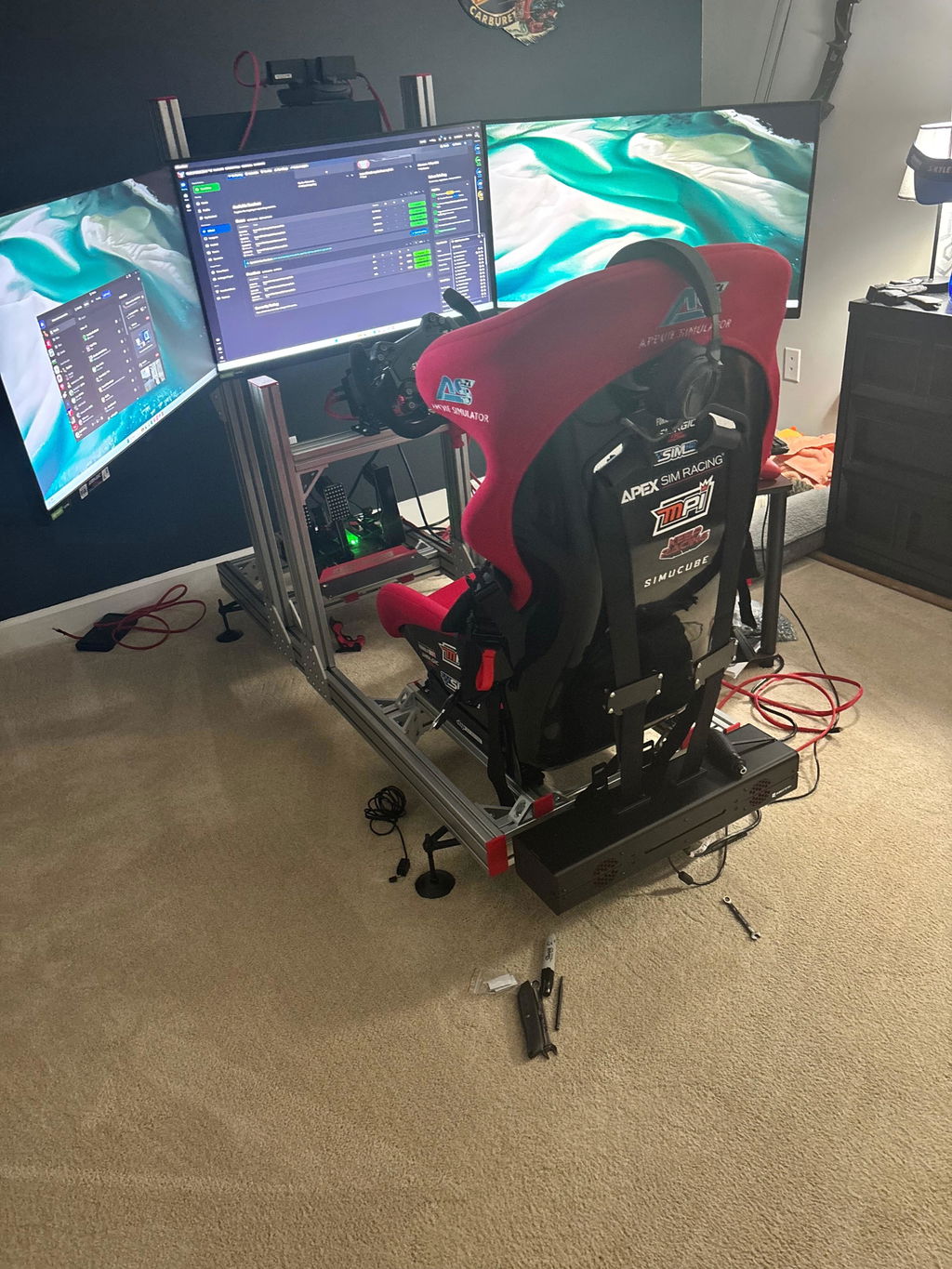
Building a high-end simulator isn't just about buying the most expensive wheel base. It's about structural integrity. If you're a 5% eligible influencer looking to showcase professional-grade racing, you can't afford the "flex factor." When you mount a high-torque motor like the Moza R12 to a standard desk, the energy meant for your hands dissipates into the furniture. You lose the subtle vibrations that signal a loss of traction. A dedicated aluminum extrusion foundation is mandatory for any motor pushing beyond 8Nm of torque. These 80/20 profiles provide the rigid skeleton needed to handle sudden counter-steering forces without the frame groaning under pressure.
Connectivity often becomes a bottleneck as your setup grows. The Moza Universal Hub simplifies this by allowing you to connect multiple peripherals, like shifters, handbrakes, and pedals, directly to your PC through a single interface. This reduces cable clutter and ensures your hardware communicates with zero detectable latency. For those starting smaller, the Moza R5, R9, and R12 Table Clamps offer a temporary solution, but they lack the ergonomic adjustability of a full chassis. A dedicated rig allows you to set the steering column angle to match a GT3 or Formula position, which prevents wrist fatigue during long sessions.
Optimizing Your Visual Field
Perfectly aligned screens are the difference between guessing an apex and hitting it every time. Using a Variable Micro Adjustment VESA Adapter allows for millimeter-perfect positioning of triple monitor setups. Without this, even a 2-degree misalignment creates a break in the horizon that ruins your spatial awareness. For those who prioritize raw immersion, pairing the Pimax Crystal series with a high-end PC build delivers 2880 x 2880 pixels per eye. This resolution is high enough to read dashboard telemetry and spot braking markers 200 meters away with total clarity. Tool-free adapter plates make switching between single and triple monitor configurations efficient for creators who jump between different racing disciplines.
Foundation and Stability
Your brake pedal is the most important input device in your cockpit. High-end assemblies like the Moza CRP 3 require a zero-flex base because they rely on load-cell technology. If the pedal plate flexes when you apply 80kg of pressure, your muscle memory fails to develop accurately. You can enhance this physical feedback by integrating the Qubic QS-BT1 seat belt tensioner. This device pulls against your shoulders during braking, simulating G-forces that a static seat cannot provide. It's these details that separate a 5% eligible influencer setup from a standard gaming rig. For a deep dive into choosing the right frame, check out The Ultimate Sim Rig Guide for professional chassis advice.
Securing Your Professional Build with Apevie
Investing in a high-end sim racing ecosystem requires more than just a large budget. For a 5% eligible influencer or a professional driver, the primary goal is reliability and precision. Apevie bridges the gap between raw components and a functional masterpiece through white-glove installation and expert consultation. Complex builds involving direct-drive wheelbases from Simucube or hydraulic pedals from Heusinkveld require meticulous calibration to perform as intended. Our team ensures that your hardware is not just bolted together, but tuned to provide the most accurate tactile feedback possible.
Buying from an authorized dealer like Apevie provides a layer of security that generic marketplaces cannot match. We handle the logistics of warranty claims and technical support, ensuring you aren't left troubleshooting firmware conflicts alone. This professional oversight is essential when integrating high-performance "boosted" components that push the limits of current sim technology. By selecting items from the 5% eligible influencer collection, you are choosing hardware that has been vetted for its ability to withstand the rigors of daily professional use and content creation.
Turnkey Solutions vs. Component Upgrades
Deciding between a full turnkey package and individual component upgrades depends on your existing foundation. If you're starting with a clean slate, a turnkey system ensures every part, from the cockpit to the PC, is optimized for compatibility. This approach is vital for motion-capable systems using D-BOX haptic actuators, where professional assembly prevents mechanical wear and ensures safety. If you already possess a high-end chassis, you can still enhance your setup with specific parts. You can explore the 5% Eligible Boosted Collection at Apevie to find curated upgrades that meet our 2026 performance standards.
The Apevie Professional Standard
Apevie functions as a premium consultancy for serious racers, not a typical retail outlet. We focus on reducing the analysis paralysis that often comes with high-end purchases by offering a refined selection of the world's best gear. This curated approach ensures that every component in your rig contributes to a cohesive, high-fidelity experience. Professional PC-based hardware retains approximately 72% of its market value after three years, making these systems a stable investment for those committed to the sport.
Final Pre-Build Checklist:
- Power Requirements: Ensure your space has at least two dedicated 15-amp circuits to handle high-torque motors and multi-GPU PCs without tripping breakers.
- Space Planning: A professional motion rig requires a minimum footprint of 2.5 meters by 1.5 meters to allow for safe range of movement.
- Cable Management: Use industrial-grade shielded trunking to prevent electromagnetic interference between high-voltage power cables and sensitive USB data lines.
- Network Stability: Hardwired Cat6 or Cat8 Ethernet is mandatory for competitive 2026 racing environments to maintain low latency.
Ready to finalize your setup? Contact Apevie Simulator today for a professional consultation or to begin your custom build process.
Engineering Your Path to the Podium
Building a professional simulator requires more than just picking high-end parts off a shelf. It's about the synergy between a Simucube 2 Pro direct drive base and a chassis that handles high torque without losing feedback detail through flex. We've shown how the hardware within the 5% eligible influencer collection meets these rigorous engineering standards for 2026. Selecting components from an authorized Simucube and Moza dealer ensures you're investing in authentic, high-performance technology designed for professional PC-based racing physics. Apevie Simulators removes the technical hurdles by offering white-glove installation for turnkey systems, meaning your focus stays on the track instead of the toolbox. You'll avoid the common pitfalls of mismatched components and inconsistent driver software. Every professional build we deliver is a commitment to stability and tactile precision. It's time to stop compromising on your equipment and start trusting a setup that responds as fast as your instincts do.
Browse the 5% Eligible Boosted Collection for Elite Sim Hardware
Your journey toward a more immersive and competitive racing career starts with the right foundation. We're here to help you cross that finish line first.
Frequently Asked Questions
What does '5% eligible' mean for a sim racing product?
A 5% eligible influencer product belongs to a curated selection of hardware that qualifies for specific professional discounts within our partnership ecosystem. This designation identifies gear that meets the 2026 standards for high-end streaming and competitive racing. When you see a product labeled as a 5% eligible influencer item, it signifies that the component has been vetted for its technical reliability and performance under the demanding conditions of a professional sim racing environment.
Is the Moza ES Steering Wheel compatible with Simucube wheel bases?
The Moza ES Steering Wheel isn't natively compatible with Simucube wheel bases because it uses a proprietary connection designed specifically for the Moza R3 and R5 systems. To bridge this gap, you'd need a third-party USB conversion kit and a 70mm bolt pattern adapter to mount it. Most serious racers prefer pairing Simucube bases with wheels from brands like Cube Controls or GSI to ensure full telemetry support without extra hardware layers.
Why should I choose the Pimax Crystal over a standard gaming VR headset?
The Pimax Crystal provides a pixel density of 35 pixels per degree, which is nearly double the clarity found in mainstream headsets released before 2025. Its use of aspheric glass lenses eliminates the god rays and blurring common in plastic Fresnel lenses found in consumer-grade gear. For sim racers, this means your dashboard gauges remain perfectly legible and distant apexes stay sharp, which is critical for 24-hour endurance races where eye fatigue is a factor.
What are the benefits of a direct drive seat belt tensioner like the QS-BT1?
A direct drive seat belt tensioner like the QS-BT1 uses a high-torque motor to physically pull your harness during braking events to simulate G-forces. This provides immediate physical feedback that your inner ear needs to process deceleration, reducing the reliance on visual cues alone. It delivers 20kg of pulling force, creating a level of immersion that standard vibration motors can't match. This hardware is a staple in our turnkey Apevie professional builds for maximum realism.
Do I need a special rig to mount the Simucube ActivePedal Pro?
You need a rigid 160mm or 120mm aluminum profile cockpit with a reinforced steel pedal plate to handle the immense forces of the Simucube ActivePedal Pro. These pedals can generate up to 150kg of braking force, which will flex or break standard consumer-grade rigs. At Apevie, we recommend mounting them to a custom-drilled 10mm thick steel plate to ensure there's zero movement during emergency braking maneuvers. A flexible rig will absorb the force, ruining the precision of the active feedback.
How do the Variable Micro Adjustment VESA mounts improve a triple monitor setup?
Variable Micro Adjustment (VMA) VESA mounts allow you to adjust the height, tilt, and rotation of each screen in 1mm increments using integrated dials. This eliminates the 2mm to 5mm gaps often seen between monitors on standard mounts that rely on simple friction. Perfect alignment is essential for a seamless 180-degree field of view, as even a tiny misalignment can break the immersion when your car's A-pillar spans across two different screens. Our installation team uses these for every professional triple-screen build.
Can the Moza SGP Shifter be used as a standalone USB device?
The Moza SGP Shifter functions as a standalone USB device, allowing you to use it with any wheel base on the market today. It doesn't require a Moza hub to operate, making it a versatile addition to mixed-brand setups featuring Simucube or Fanatec bases. The shifter features a non-contact Hall sensor that tracks 100% of the movement with zero wear, ensuring consistent performance over thousands of gear changes. It's a reliable choice for those building a custom cockpit piece by piece.
What is the difference between Moza SR-P and SR-P Lite pedals?
The main difference is the high-precision load cell sensor found in the standard SR-P model, which measures pressure up to 75kg. The SR-P Lite version relies purely on angle sensors, which track how far the pedal travels rather than how hard you press. Load cells are superior because they allow you to develop muscle memory based on foot pressure. Additionally, the standard SR-P pedals are constructed from high-strength steel, providing a much firmer platform than the Lite version's thinner materials.