3 factors to weigh before a direct drive upgrade
A direct-drive wheelbase may be the most exciting upgrade, but it isn’t always the smartest first one. It connects the motor straight to the wheel rim, without belts or gears, to deliver detailed force feedback. Whether a direct drive upgrade is worth it depends on how well your pedals and cockpit support that feedback, and what you want from your driving.
If you’re drawn to a more direct feel and a stronger connection to the car, that appeal is real. But a new wheelbase won’t automatically make you faster. A flexible cockpit or pedals that don’t suit your driving can limit the value of the upgrade.
This guide explains what direct drive changes, how to compare a wheelbase upgrade with pedal and cockpit improvements, and how detailed feedback can help you build consistency and recognize mistakes. Use the practical criteria below to decide whether to upgrade now, improve another part of your rig first, or wait until your setup and driving goals are better aligned.
Key Takeaways
- Understand how a direct-drive wheel’s motor connection shapes force-feedback detail and responsiveness.
- Decide whether your next improvement should be the wheelbase, pedals, or a more rigid cockpit.
- Use clearer feedback to notice driving errors and refine repeatability, rather than expecting equipment alone to make you faster.
- Compare direct drive with belt-driven and geared systems to see which trade-offs matter most for your driving.
1. What is a Direct Drive Wheel?
A direct-drive wheel connects its motor directly to the steering rim, without belts or gears. That direct connection lets the motor deliver force feedback with fewer mechanical steps between the signal and your hands. In a corner, you can feel changes in load, grip, and surface detail as the simulation communicates them. A good base can provide cleaner, more informative feedback even at modest torque levels. Budget direct-drive setups are described as starting around 5-12 Nm, but torque alone doesn’t determine fidelity. Responsiveness also depends on how clearly the base reproduces changing forces and how you interpret them.
Popular bases such as Simucube 3 and Fanatec Direct Drive models differ in price, compatibility, and performance by model and setup. Compare the complete cost of the base, wheel, and mounting, then match platform and connection compatibility to your equipment; performance depends on feedback detail, torque, and your preferred driving feel.
Direct drive removes belt and gear mechanisms, but the motor, electronics, cables, and mounting still need sensible care. Keep the area clean, inspect mounting fasteners and cable connections, and follow the manufacturer’s maintenance guidance. Practical risks include a base shifting on a flexible rig, strained cables, or faults in the motor or electronics.
Installation involves a few important steps: secure the base to a rigid mount, attach the wheel, connect power and data, then configure the software. The tools required depend on the base and cockpit; mounting bolts may need a suitable hex key. Follow the model’s instructions and test the wheel at low force before driving.
Warranty terms vary by manufacturer and model, so read the terms for your specific base before installation or modification. Secure mounting and controlled force settings support safe use. Keep your hands clear during startup and calibration. Energy use and resale value also vary by product and buyer, so compare operating requirements and condition rather than assuming a uniform effect.
2. Balancing wheelbase, pedals, and cockpit upgrades
A direct-drive base is only one part of the chain between your inputs and the car’s response. If your pedals make braking hard to repeat, or your seating position shifts under pressure, a stronger wheelbase won’t fix those limitations. Assess the whole rig before choosing the next component, especially if you’re building around a Simucube 3 Wheel Base or Fanatec Wheel Base.
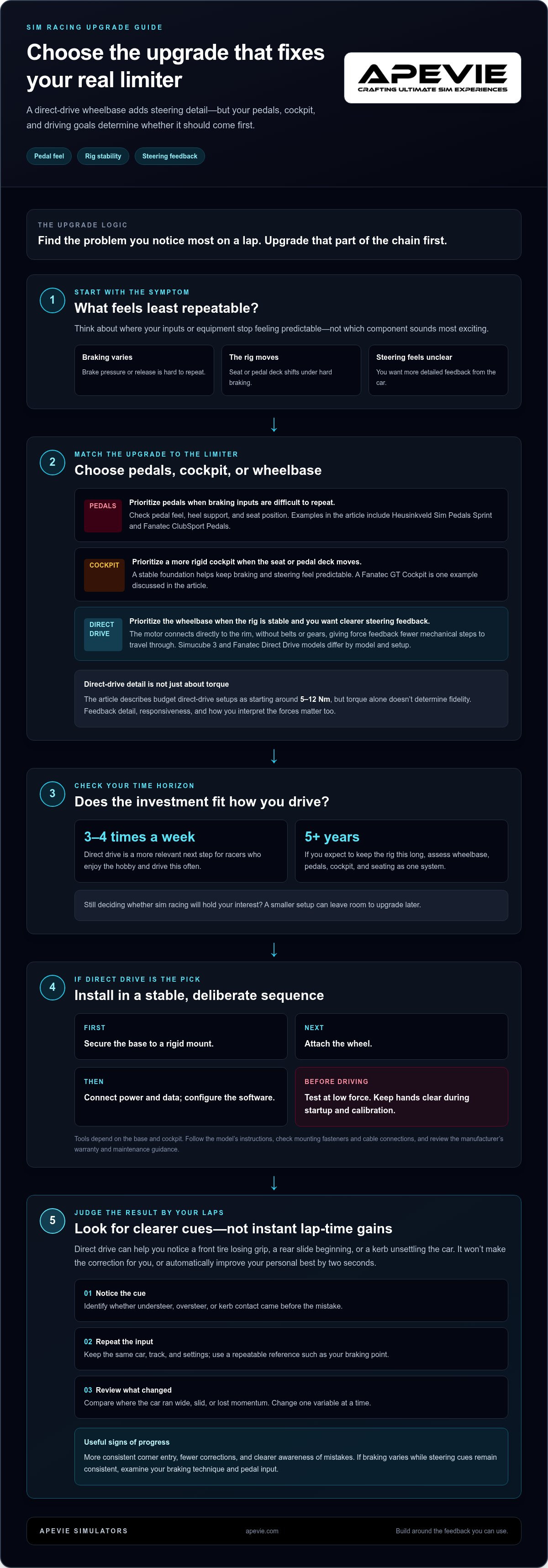
Start with the problem you notice most during a lap. If your braking points vary, examine pedal feel, heel support, and seat position before prioritizing more steering detail. A Heusinkveld Sim Pedals Sprint or Fanatec ClubSport Pedals offers a separate upgrade path from a wheelbase. The right sequence depends on whether braking consistency or steering feedback is currently limiting your driving.
- Choose pedals first if pressure and brake release are difficult to repeat.
- Choose a cockpit first if your seat or pedal deck moves during hard braking.
- Choose direct drive first if your rig is stable and you want clearer steering feedback.
For example, a Fanatec GT Cockpit can provide a more stable foundation for a wheel and pedals than a desk setup. Check that the seat, pedal plate, and wheel position let you maintain a comfortable driving posture. A stable rig matters because flex can make braking and steering feel less predictable.
Consider how often you drive and how long you expect to keep the rig. Direct drive is a more relevant next step for racers who enjoy the hobby and race 3-4 times a week. If you’re still deciding whether sim racing will hold your interest, a smaller setup can leave room to upgrade later. For a rig you plan to keep for 5+ years, assess the wheelbase, pedals, cockpit, and seating position as one system rather than isolated purchases.
3. Benefits for consistency and driving mistakes
Direct-drive feedback can make steering cues easier to read, but consistency still comes from repeatable inputs. Clearer feedback may help you notice a front tire losing grip, a rear slide beginning, or a kerb unsettling the car. Those cues give you more information to respond to; they don’t make the correction for you. A wheelbase also won’t automatically improve your personal best by two seconds. To judge whether a direct drive upgrade is worth it, look for better awareness of what changed between laps, not an instant lap-time gain.
Expect an adjustment period when switching from a belt-driven or geared wheel. At first, the extra feedback detail may distract you, and you might drive more slowly while adapting. Keep the same car, track, and settings during practice, then focus on a repeatable reference, such as your braking point into a corner. Changing several variables at once makes it harder to tell whether the new wheelbase is helping.
- Notice the cue: identify whether understeer, oversteer, or kerb contact preceded the mistake.
- Repeat the input: use the same braking marker and steering approach on the next lap.
- Review the result: compare where the car ran wide, slid, or lost momentum.
Use those observations to separate a driving error from a setup issue. If the wheel signals a loss of grip before you run wide, adjust your steering response rather than adding speed. If braking varies while steering cues remain consistent, examine your braking technique and pedal input. That distinction helps you decide whether a direct drive upgrade is worthwhile for your driving or whether your technique needs attention first.
Judge progress across clean laps, not by one dramatic personal best. Consistent corner entry, fewer corrections, and clearer awareness of mistakes are practical signs that you’re interpreting the feedback well. If the extra detail feels overwhelming, reduce the force settings and build familiarity before changing your driving style again.
4. What are the benefits of direct drive compared with belt drive or geared systems?
Direct-drive bases connect the motor directly to the steering shaft, while belt-driven and geared wheels transmit force through mechanical components. This can make direct-drive feedback feel more immediate and less filtered. For example, a quick change in cornering load can reach your hands without a belt or gear mechanism between the motor and rim. Belt-driven and geared wheels still communicate useful steering forces, but their mechanical transmission shapes how those forces feel.
Compare the systems by what you notice during a lap, not by labels alone. Direct drive can provide detailed feedback about grip and changing load. Belt-driven systems use a belt to transfer motor force, while geared systems use gears. Feedback character varies by wheelbase and settings, so no type guarantees better driving or faster lap times.
- Direct drive: direct motor connection and detailed force cues, with a rigid cockpit needed to limit movement.
- Belt drive: belt-transmitted force feedback, which may feel different from a direct motor connection.
- Geared systems: gear-transmitted feedback, with mechanical components between motor and rim.
Noise can also influence your choice. One sim racer reported avoiding vibration or resonance noise experienced with a wheel-on trainer after switching to direct drive. That’s an individual report, not a promise that every direct-drive base runs silently. Mounting, settings, and the surrounding rig all affect what you hear and feel during a session.
For a practical comparison, drive the same car and track with each wheel type, if you can try them. Notice how clearly you sense a slide, how smoothly the wheel responds, and whether noise distracts you. A direct-drive upgrade is most compelling when feedback detail is a priority and your cockpit can support the base securely. If your current wheel already gives you useful cues, pedals or cockpit stability may matter more.
Apevie Simulators: Custom High-Performance racing simulator
Apevie Simulators helps bring the build together with a custom high-performance racing simulator tailored to your goals and selected components. Its turnkey packages and white-glove simulator installation provide an assembled solution, rather than a collection of disconnected parts.
You can also consider components such as Heusinkveld Sim Pedals Sprint or a Sigma Integrale DK2 Motion System as part of the build. Expert guidance helps align those choices with the driving experience you want, while installation brings the finished setup together.
Contact Apevie Simulators to discuss a turnkey simulator build tailored to your plans.
Plan an upgrade path that fits your driving
Give your next setup a purpose beyond simply owning new hardware. Choose a racing discipline you want to spend more time with, then note what would make the experience more engaging, whether that’s the steering feel, a closer sense of vehicle movement, or a more focused driving position. Those notes can turn a broad upgrade idea into a clear brief.
It’s also useful to think about how your simulator may evolve. A rig that supports future changes can make it easier to explore different cars and formats without rebuilding your entire setup. Describe the experience you’re aiming for, the space you have, and the equipment you already own. Contact Apevie Simulators about your setup to discuss a custom simulator direction that suits your plans.
You don’t need to map every future purchase now. Start with a goal that excites you, and let your simulator grow with your time behind the wheel.
Frequently Asked Questions
What is a Direct Drive Wheel?
A direct-drive wheel is a force-feedback steering system for sim racing, with the motor integrated into the wheelbase’s steering output. The wheelbase, steering rim, and software settings each affect how the system works in a particular rig. Before choosing a base, check the connection standard and supported simulator platform, especially if you plan to reuse an existing rim.
Conclusion: Is It Worth It?
It can be worthwhile if you value a more detailed steering experience and your setup can accommodate the change. Consider whether you’ll use the added feedback often enough to prioritize it over other parts of your simulator. If you’re still deciding what you want from sim racing, wait until your driving preferences and equipment needs are clearer before making a major hardware change.
Who Should Actually Buy One?
Consider direct drive if you already know which simulator platform and steering style you prefer, and you’re ready to build around that choice. It may suit a racer replacing a worn wheelbase or assembling a dedicated PC simulator. If you share a desk, change platforms, or are unsure which racing discipline you enjoy, settle those practical requirements before choosing a wheel system.
What is a direct drive upgrade, and what equipment does it replace?
In many upgrade plans, the wheelbase is the component being changed, while pedals and displays can remain part of the rig. The key questions are whether your current steering rim connects to the new base and whether your computer recognizes the hardware. Before deciding what to keep, make a compatibility list covering the rim, mounting interface, simulator software, and any adapters.
How much does a direct drive upgrade cost, including installation and accessories?
The total depends on the wheelbase you select and what your current rig can reuse. Include the rim or connection parts, mounting hardware, and any installation help you choose. A complete build may involve different components than a base-only replacement. Make an itemized plan around the parts you need instead of assuming the wheelbase alone represents the full upgrade budget.
How much performance improvement does a direct drive upgrade provide in real-world use?
There’s no single performance figure that applies to every driver or simulator. The experience depends on how the base is configured, the car being driven, and whether its steering response suits your preferences. If you’re planning a complete rig or comparing components, contact Apevie Simulators about your setup to discuss a configuration that fits your goals.