Best Sim Rig for iRacing: Professional 2026 Guide
The difference between a qualifying pole and a mid-pack start in iRacing often isn't found in your driving line, but in the microscopic details lost to chassis flex and signal clipping. You've likely felt that frustrating inconsistency when a heavy braking zone feels different every lap because your pedal plate isn't truly rigid. It's a common pain point for serious racers who realize that even the most expensive direct drive wheel can't perform if the cockpit absorbs the feedback meant for your hands. Finding the best sim rig for iRacing in 2026 requires moving beyond consumer-grade hardware toward a zero-flex ecosystem that can handle the 25Nm plus torque demands of modern wheelbases.
We're going to show you exactly how to achieve that professional-grade fidelity by synchronizing your hardware with iRacing's specific telemetry. You'll learn why a 160mm aluminum profile foundation is now the industry standard and how pairing Heusinkveld Ultimate+ pedals with a Sigma Integrale DK2+ motion system creates the consistency needed for endurance racing. This guide breaks down the precise configurations and integration strategies required to turn your simulator into a high-fidelity training tool that responds with surgical precision. We'll explore the gold standard of current components, from Simucube 3 wheelbases to GSI steering wheels, ensuring your setup translates every ripple of the track into actionable data.
Key Takeaways
- Learn why a zero-flex aluminum chassis is the essential foundation for translating iRacing’s high-frequency physics into consistent lap times.
- Understand the engineering requirements for the best sim rig for iracing, focusing on 160mm x 40mm extrusion profiles to eliminate mechanical damping.
- Discover why Heusinkveld Sim Pedals Ultimate+ and GSI wheels are the professional benchmarks for precision and adjustable hydraulic feedback.
- Explore how the Sigma Integrale DK2+ motion system provides critical haptic data, allowing you to sense rear-end slip and curb strikes before they ruin a race.
- Evaluate the advantages of a turnkey professional build to bypass complex integration hurdles and ensure your hardware is perfectly calibrated from day one.
Understanding iRacing’s Physics: Why Your Rig is a Performance Tool
iRacing operates on a sophisticated tire model that calculates physics at high frequencies. To truly master this platform, you need hardware that doesn't just rumble, but communicates. The best sim rig for iracing acts as a bridge between the software's mathematical outputs and your biological inputs. When the software calculates a loss of traction, that signal travels through your wheelbase and into your hands. If your equipment is subpar, that message gets muffled. This is why we view the simulator as a professional training instrument rather than a gaming peripheral.
Mechanical damping is the silent enemy of lap times. In sim racing, flex refers to any unwanted movement in the chassis, steering mount, or pedal deck. While it might seem like a minor annoyance, it is actually a literal loss of telemetry data. When you apply 80kg of force to a load-cell brake, any bend in the metal absorbs energy that should be going into the sensor. This creates a mushy feeling that makes threshold braking nearly impossible to replicate lap after lap. Every millimeter of movement in your rig is a piece of information that never reaches your brain.
The Relationship Between Chassis Rigidity and Lap Time
Consistency is the bedrock of competitive racing. A flexing brake deck leads to inconsistent threshold braking, causing you to miss apexes because the bite point of the car shifts based on how much the metal bows. Similarly, steering column oscillation ruins your ability to catch oversteer. If the rig is vibrating or moving independently of the wheelbase, you won't feel the subtle lightening of the wheel that signals the rear tires have let go. Mechanical fidelity is the lack of energy loss between the motor and the driver; it ensures every Newton-meter of torque reaches your fingertips without being dampened by a weak frame. A chassis designed for the best sim rig for iracing must be rigid enough to handle these forces without deflection.
iRacing’s Telemetry and High-Fidelity Hardware
The goal of high-end gear is to accurately simulate auto racing by processing raw data into tactile sensations. Modern units like the Simucube 3 are designed to process iRacing's force feedback signal with near-zero latency. While many beginners focus on peak torque, professional racers prioritize signal clarity. A wheelbase that can output 25Nm is useless if the signal is noisy or filtered. You need to feel the difference between a tire scrubbing across the asphalt and a curb strike. This level of detail is only possible in a PC-only ecosystem, where software-side tuning allows you to bypass the limitations of console hardware. By choosing components that prioritize data integrity, you unlock the ability to develop muscle memory that translates directly to the real track.
The Aluminum Profile Standard: Selecting a Zero-Flex Chassis
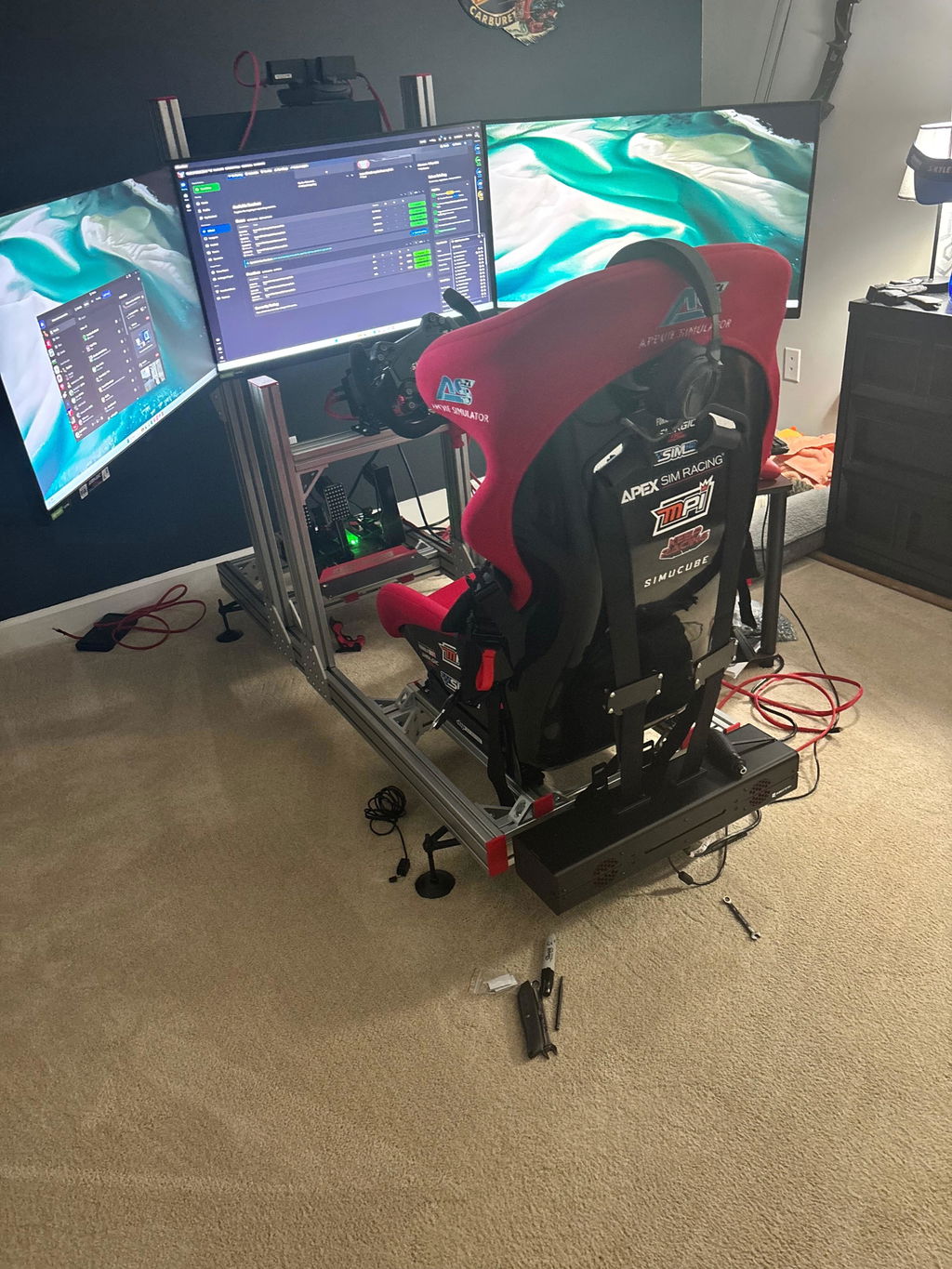
Selecting a high-end chassis is the most critical decision in your build. In 2026, T-slot aluminum extrusion, often called 8020, remains the undisputed benchmark for anyone seeking the best sim rig for iracing. While basic cockpits might suffice for entry-level wheels, they fail the moment you upgrade to a professional direct drive motor. The beauty of aluminum profile lies in its inherent rigidity and infinite adjustability. You aren't locked into a manufacturer's ideal seating position. Instead, you can move every bracket by a fraction of a millimeter to achieve perfect ergonomic alignment.
When you're evaluating frames, the thickness of the base extrusion matters. A standard 80mm x 40mm profile is common, but for high-fidelity setups, we recommend a 160mm x 40mm heavy-duty base. This extra mass isn't just for show. It provides the low-frequency stability required to keep the rig planted when a 25Nm Simucube 3 motor is fighting your steering inputs. This mass also helps dampen vibrations, ensuring that the signal you feel is pure data rather than mechanical resonance. For more on selecting these components, check out our guide on building a professional foundation in 2026.
The modularity of aluminum profile is its greatest asset. You can attach shifters, handbrakes, and motion actuators without ever picking up a drill. This "buy once, cry once" philosophy ensures that as your hobby evolves into a professional pursuit, your chassis can grow with you. Whether you're adding a triple monitor mount or a dedicated keyboard tray, the T-slot system handles it with ease.
To explore premium aluminum chassis options and learn more about high-end sim racing gear, S5 Tech provides the specialized equipment needed for a zero-flex setup.
Extrusion vs. Tube Frames: The Professional Verdict
Many beginners are drawn to the aesthetic of tubular steel frames, but these often suffer from "creak" over time. Every welded joint is a potential point of failure or flex. In contrast, an aluminum profile rig uses high-tensile bolts and T-nuts that create a rock-solid bond. Force feedback drives sim racing performance, and any movement in a tubular frame acts as a filter, softening the very details you need to stay competitive. Professional competitors typically migrate to 160mm heavy extrusion for its superior rigidity and lack of mechanical damping.
- Rigidity: Aluminum extrusion offers significantly higher torsional stiffness than comparable consumer-grade tube frames.
- Modularity: You can bolt on accessories anywhere on the frame without permanent modifications.
- Longevity: Profile rigs don't fatigue or develop play in the joints like entry-level gaming chairs.
Seat Selection for Endurance iRacing
Rigidity shouldn't come at the cost of your physical health. For iRacing endurance events, you need a seat that maintains its shape under heavy braking but remains comfortable for a four-hour stint. A carbon fiber bucket is the gold standard because it won't flex when you're pushing 100kg into the brake pedal. We always recommend side-mounting your seat. This eliminates the vertical flex often found in bottom-mounted sliders. If you want to skip the assembly and jump straight into the cockpit, consider a turnkey racing simulator package tailored to your specific space and performance needs to ensure you have the best sim rig for iracing.
Precision Inputs: Integrating Heusinkveld Pedals and GSI Wheels
The best sim rig for iracing is more than just a sturdy frame; it's a system of high-precision inputs that dictate how effectively you can manipulate the car's physics. While the chassis provides the stability, your pedals and steering wheel provide the nuance. For serious competitors, the Heusinkveld Sim Pedals Ultimate+ have become the industry benchmark. These aren't just gaming pedals; they're engineered to handle up to 140kg of force. This allows you to calibrate a brake curve that mimics a real-world GT3 or Formula car with incredible accuracy, especially when paired with a 2-stage throttle and adjustable hydraulic damping to replicate the resistance of a professional racing rack.
Consistency in braking is the fastest way to drop lap times in iRacing. When you're diving into Turn 1 at Spa, you need to know exactly how much pressure will trigger the ABS without locking up. The Ultimate+ set uses a custom load cell system that measures pressure rather than distance. This allows your brain to rely on muscle memory, which is far more reliable than trying to gauge how far your foot has traveled. To dive deeper into the mechanics of these systems, read The Ultimate Guide to Sim Racing Pedals: Engineering Consistency and Precision.
Load Cell vs. Hydraulic Braking in iRacing
In the high-stakes environment of iRacing’s 2026 Season 3 updates, the choice between load cell and hydraulic systems is pivotal. Load cell technology, found in the Heusinkveld Sprint and Ultimate+ sets, is exceptional for replicating the stiff, pressure-sensitive feel of racing brakes. However, some drivers prefer hydraulic systems to simulate the "hard-stop" feel of a GT3 master cylinder. Hydraulic systems offer a smoother initial bite and a more natural bleed-off, which is critical for trail braking into tight corners. Consistency in braking is the fastest way to drop lap times in iRacing.
High-End Steering Wheels and Dashboard Integration
Your steering wheel is your primary data interface. The Gomez Sim Industries (GSI) Formula Pro Elite and the Hyper P1 are built with a zero-flex philosophy that complements a high-torque Simucube 3 base. These wheels feature integrated high-resolution displays that allow you to manage iRacing’s 'Black Box' data, such as fuel levels, tire wear, and brake bias, without taking your eyes off the track. GSI wheels, starting from $1,250 for the FPE V2, are professional-grade tools rather than toys.
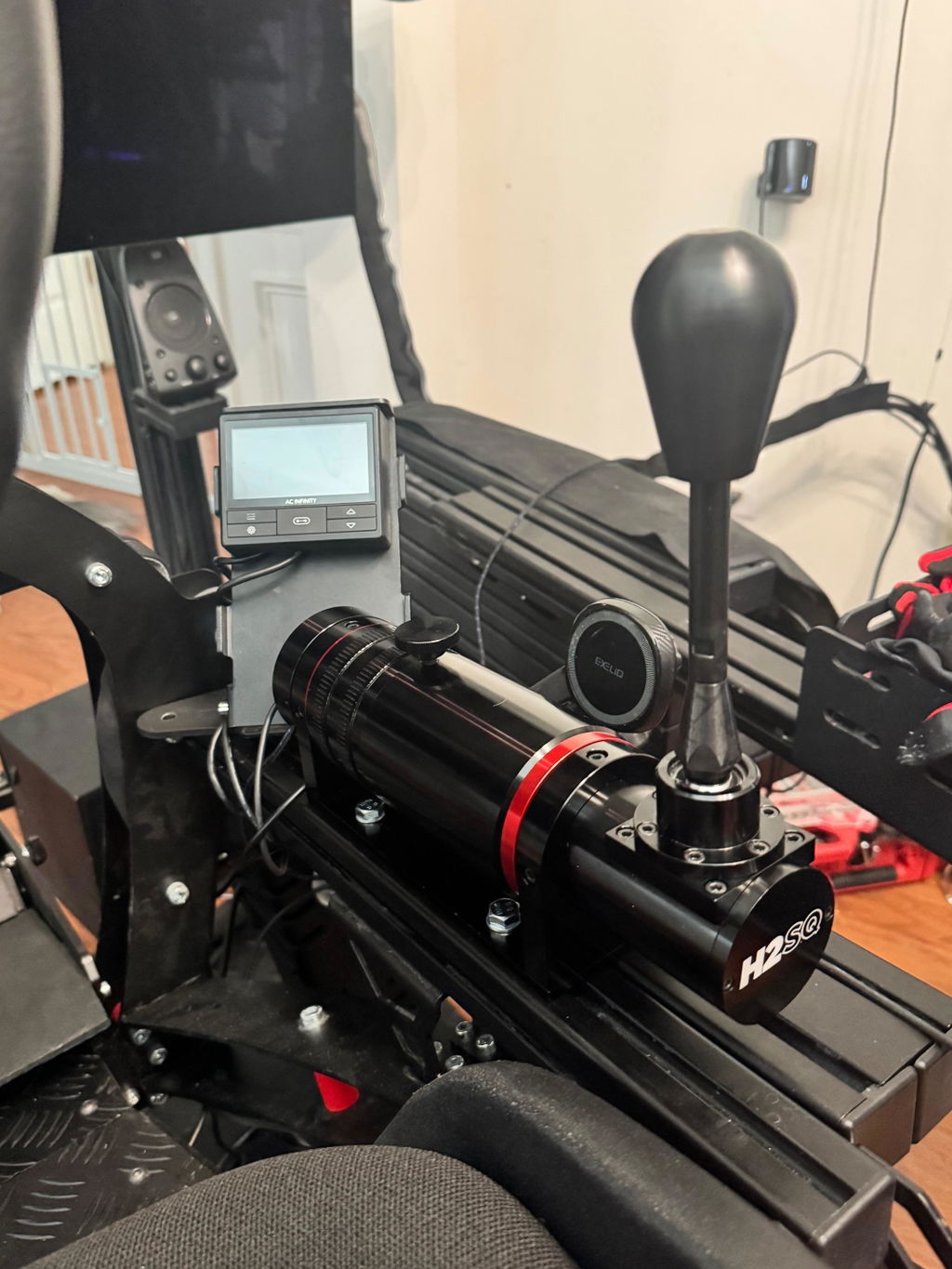
- Magnetic Shifters: These provide tactile, crisp gear changes that prevent accidental double-shifts during intense wheel-to-wheel battles.
- Dual-Clutch Paddles: These are essential for standing starts in Formula classes, allowing for precise bite-point control to get off the line faster.
- Connectivity: Professional builds prioritize USB-wired connections to eliminate the micro-latency sometimes found in high-bandwidth wireless systems.
Integrating a GSI wheel or a Cube Controls F-Core into your setup ensures that every input is registered instantly. This level of hardware integration is what separates a standard home setup from a professional-grade simulator that can truly dominate the iRacing service.

Haptic Immersion: Why Sigma Integrale Motion Changes the iRacing Game
Motion is often misunderstood as a purely aesthetic addition for "immersion," but in a professional build, it serves as a critical telemetry tool. The best sim rig for iracing uses high-fidelity actuators to communicate what your eyes cannot see: the subtle transition of weight and the exact moment of rear-end slip. While your vision processes the track ahead, your vestibular system can detect a slide milliseconds before the visual cue appears on your monitors. This allows for instinctive corrections that keep the car on the limit without overstepping it. By integrating these physical cues, you stop reacting to what happened and start anticipating what is about to happen.
The Sigma Integrale DK2+ motion system represents a significant departure from entry-level seat movers. Instead of just tilting your chair, the DK2+ moves the entire 160mm aluminum chassis, providing authentic heave, pitch, and roll. It uses four high-speed actuators that translate iRacing’s Low Frequency Effects (LFE) directly into the frame. This isn't just about feeling bumps. It's about sensing ABS vibration through your feet and traction control intervention through your seat. For a deeper dive into these technologies, you can explore the professional guide to haptic systems in high-performance simulation.
Sigma Integrale DK2+ vs. Traditional Motion Systems
Traditional motion platforms often suffer from latency, where the physical movement lags behind the on-screen action. The DK2+ system eliminates this delay with industrial-grade response times. Its "heave" capability is particularly vital for iRacing’s high-downforce cars, like the Dallara P217, as it simulates the car being sucked down to the track at high speeds. A 4-post system is superior because it manages pitch and roll independently. This helps you train muscle memory for ABS and TC intervention by providing a tactile "signature" for every electronic aid. If you want to experience this level of precision, you can consult with us about a custom high-performance racing simulator build.
Simucube 3 Active Feedback Tuning
Your Simucube 3 wheel base shouldn't work in isolation. In the best sim rig for iracing, the wheelbase and motion system function as a unified haptic environment. Using Simucube’s True Drive software, you can tune the feedback to prioritize road feel over generic vibration. This involves reducing "noise" from the engine while maintaining the "signal" of the track surface and tire scrub. When your motion system and direct drive wheel are perfectly synchronized, you gain a 360-degree understanding of the car's state. This synergy is what allows professional sim racers to maintain consistent pace over a full fuel stint without melting their tires.
- Signal Clarity: High-bandwidth actuators ensure that small details, like track seams, aren't lost in the larger movements.
- Payload Capacity: The DK2+ handles up to 800 lbs, easily supporting heavy aluminum rigs and triple monitor setups.
- Unified Software: Integration through Simucube and Sigma software suites ensures zero-latency communication between components.
The Turnkey Advantage: Professional Custom Builds for Serious Racers
The allure of building your own simulator often fades when faced with the reality of "rig-tinkering." For those seeking the best sim rig for iracing, the challenge isn't just bolting parts together, but ensuring every component speaks the same language. Apevie Simulators provides the expertise to move past the assembly phase and directly into competition. Professional integration eliminates the common pitfalls of DIY builds, such as software conflicts between motion drivers and steering interfaces that can lead to frustrating downtime during race weeks.
Apevie Simulators ensures that the transition from a collection of high-end parts to a precision instrument is seamless. While individual components like a Simucube 3 or Heusinkveld pedals are exceptional on their own, their true potential is only realized through expert calibration. We focus on the microscopic details, from the rigidity of the mounting brackets to the software-side filtering that removes unwanted vibration without masking the track signal. This holistic approach turns a gaming setup into a professional training tool, and for those who need to manage their racing profiles with enhanced privacy, you can check out Anosim for specialized SMS activation services.
The White-Glove Installation Process
High-performance systems like the Simucube 3 and Sigma Integrale DK2+ generate significant electromagnetic interference (EMI). Without professional routing and specialized shielding, this can lead to ghost inputs or lost telemetry data. Apevie Simulators handles these complexities through a meticulous white-glove installation process. This includes building custom PCs optimized for iRacing's specific CPU demands and calibrating triple-monitor arrays for a mathematically perfect field of view. By utilizing a turnkey racing simulator package, you ensure that every driver is optimized and every bolt is torqued for endurance reliability.
Why a Custom Built Rig is an Investment
A simulator built with elite components from manufacturers like GSI and Heusinkveld isn't just a purchase; it's a long-term asset. These professional-grade tools retain their value far better than consumer gaming gear and offer a lifespan measured in years rather than months. There is also a significant psychological benefit to a "ready-to-race" environment. Knowing your equipment is perfectly calibrated allows you to focus entirely on your driving technique. As you look toward 2027, the modular nature of a heavy-duty chassis ensures you can adapt to future hardware releases without a full rebuild. If you're ready to secure a professional-grade setup, you can contact Apevie Simulators for a custom turnkey iRacing build consultation.
Elevating Your Competitive Edge in iRacing
Achieving a professional-grade setup requires moving beyond individual components to view your simulator as a unified ecosystem. We've explored how a 160mm aluminum foundation eliminates the mechanical damping that ruins consistency, while high-fidelity inputs from Heusinkveld and GSI translate your intentions into precise on-track performance. Integrating a Sigma Integrale DK2+ motion system adds the final layer of tactile data, allowing you to sense the limit of traction before it's exceeded. The best sim rig for iracing in 2026 isn't just about raw power; it's about the clarity of the signal reaching the driver.
Apevie Simulators specializes in bridging the gap between high-end hardware and peak performance. As an authorized Simucube dealer, we provide custom high-performance turnkey systems that include expert white-glove installation and meticulous calibration. We handle the complexities of EMI shielding and software synchronization so you can focus entirely on your race craft. Whether you're a professional driver or a dedicated enthusiast, your journey toward a zero-flex, high-fidelity environment starts with a commitment to quality. Build Your Dream iRacing Rig with Apevie Simulators and experience the difference that expert integration makes on every lap.
Frequently Asked Questions
What is the best sim racing chassis for iRacing in 2026?
The best sim racing chassis in 2026 is a 160mm x 40mm aluminum extrusion frame. This heavy-duty profile provides the torsional rigidity needed to handle 25Nm plus direct drive wheelbases and 140kg load-cell pedals without any measurable flex. While tubular frames are available, they lack the modularity and long-term stability required for a professional-grade sim rig.
Do I need a motion system to be fast in iRacing?
You don't strictly need a motion system to be fast, but it is an essential tool for consistency and tire management. High-speed actuators like the Sigma Integrale DK2+ translate iRacing's telemetry into tactile cues, allowing you to feel the rear tires losing grip milliseconds before you see it on screen. This physical feedback helps you catch slides earlier and reduces the mental load during long endurance stints.
Is Simucube 3 better than Fanatec for iRacing?
Simucube 3 is widely regarded as the professional gold standard for iRacing due to its superior signal clarity and the depth of its True Drive software. While Fanatec offers a more consumer-friendly ecosystem, Simucube focuses on delivering an unfiltered force feedback signal with near-zero latency. For those seeking the best sim rig for iracing, Simucube's ability to process high-frequency telemetry data provides a more detailed connection to the track surface.
How much space do I need for a full professional sim rig?
A professional setup typically requires a dedicated footprint of approximately 1.8 meters in length and 1.2 meters in width. This space accounts for the chassis and a triple monitor setup or an ultrawide display. If you're integrating a motion system or triple 32-inch monitors, you should allow for additional clearance to ensure the rig can move freely through its full range of pitch and roll without hitting walls or furniture.
Can I use a professional sim rig with a console like PS5?
Most professional-grade components like Simucube wheelbases, Heusinkveld pedals, and Sigma Integrale motion systems are strictly PC-only. Consoles don't support the specialized drivers or the high-bandwidth telemetry data required for these high-fidelity systems to function. To build the best sim rig for iracing, a high-performance PC is a mandatory requirement to unlock the full potential of the software's physics engine.
Why are aluminum profile rigs preferred over steel tube rigs?
Aluminum profile rigs are preferred because they offer infinite adjustability and superior structural rigidity. Steel tube rigs are often welded into a fixed position, which limits your ability to fine-tune your ergonomics, and they can develop creaks or play in the joints over time. Profile rigs use T-slot channels that allow you to bolt on any accessory without drilling, ensuring the frame remains rock-solid even after years of heavy use.
What are the best pedals for iRacing's GT3 cars?
The Heusinkveld Sim Pedals Ultimate+ are the benchmark for GT3 racing because they utilize a 140kg load cell that measures pressure rather than distance. This replicates the stiff, short-travel feel of a real GT3 master cylinder, allowing your brain to rely on muscle memory for threshold braking. Cheaper pedals often use potentiometers that measure travel, which is far less consistent during high-pressure braking zones.
Is it better to build my own rig or buy a turnkey solution?
Buying a turnkey solution from experts like Apevie Simulators is the better choice for racers who value their time and want a perfectly calibrated system. Professional assembly ensures that complex issues like EMI shielding, cable management, and software synchronization are handled by specialists. While DIY is possible, it often involves hundreds of hours of troubleshooting that can be avoided with a white-glove installation service.