Beyond the Box: Why a Full Assembly Racing Simulator is the Elite Choice in 2026
What if the most sophisticated racing hardware in the world actually hinders your performance because of a single misaligned calibration setting? Choosing a full assembly racing simulator is often the difference between a high-end hobby and a professional-grade training tool. You've likely felt the frustration of spending more time managing cable clutter or wrestling with software like True Drive and Lunos than actually hitting the apex. It's an exhausting hurdle for those who simply want the ultimate level of immersion without the technical headache.
We believe that a simulator should be a seamless extension of your intent, not a source of mechanical stress. You'll learn exactly why a professionally assembled system outperforms DIY kits and how to spec a turnkey solution for maximum realism. We will examine how professional integration of high-torque direct drive bases and Sigma Integrale motion systems creates a unified ecosystem. This approach ensures the purity of the racing experience, allowing you to focus entirely on your lap times and the refined physics of the track.
Key Takeaways
- Learn why a professional full assembly racing simulator provides a unified ecosystem that consumer-grade kits cannot replicate, ensuring every component works in perfect harmony.
- Discover how industry-standard components like the Simucube 3 wheel base and Heusinkveld Ultimate+ pedals are expertly calibrated to deliver elite-level precision and feedback.
- Understand the engineering complexities of high-torque systems, such as managing electromagnetic interference (EMI) and ensuring chassis rigidity to prevent performance loss.
- Identify the specific ergonomic and mechanical requirements for Formula and GT builds to ensure your simulator setup matches the physical demands of your chosen discipline.
- Explore the benefits of white-glove installation and bespoke CAD design to eliminate the technical hurdles of software calibration and hardware compatibility.
Defining the Full Assembly Racing Simulator Experience
A full assembly racing simulator represents the pinnacle of virtual motorsport, where the focus shifts from the mechanics of building to the art of driving. While entry-level kits offer a glimpse into the hobby, a professional turnkey solution is an integrated masterpiece engineered by specialists. These systems are designed to handle the immense forces of modern direct-drive motors without the subtle flex that compromises feedback. When every micron of movement is calibrated by an expert, the result is a level of fidelity that standard consumer hardware simply cannot reach. Precision is not accidental. It's the result of meticulous engineering where every bolt is torqued to specific tolerances and every cable is shielded against interference.
The distinction between a DIY rig and a bespoke assembly lies in the synergy of the components. A Full motion racing simulator requires precise synchronization between the physics engine and the mechanical actuators. In a professional build, this harmony is pre-configured. You aren't just buying a seat and a wheel; you're investing in a refined training tool where electromagnetic interference is mitigated and structural rigidity is guaranteed. This stability is essential when using high-torque bases that can deliver over 25Nm of force. Any instability in the frame acts as a filter, dulling the very details you need to find the limit of grip. True luxury for the modern sim racer is the ability to step into the cockpit and focus entirely on the apex, knowing the technical foundation is flawless.
The Components of a Turnkey System
A turnkey system integrates the chassis, electronics, and peripherals into a single, cohesive unit. This includes custom-designed wiring looms that eliminate the clutter common in home builds, alongside professional cable management that protects sensitive data lines from power interference. The software ecosystem is equally vital. Specialists pre-install the operating system, necessary drivers, and simulation titles like iRacing or Assetto Corsa Competizione. Everything is optimized for the specific hardware, ensuring that the first time you power on the system, it's ready for a qualifying lap.
Who is a Fully Assembled Rig For?
These rigs serve those who demand reliability and performance without the steep learning curve of hardware calibration. Professional drivers use them for track acclimatization, relying on the consistent physics to build muscle memory. High-end enthusiasts often choose a full assembly racing simulator because they prioritize the quality of the experience over the hours required for troubleshooting firmware. Additionally, corporate environments and event activations require high-uptime tools that can run for hours without software conflicts or mechanical failure. For these users, a professionally integrated system is the only logical choice.
The Anatomy of a High-Performance Turnkey System
The heart of a full assembly racing simulator lies in the seamless communication between its mechanical and digital components. It isn't enough to simply bolt together the most expensive parts available. You must ensure they function as a singular, responsive organism. The current industry benchmark for this foundation is the Simucube 3 wheel base. Delivering up to 32Nm of torque, this direct-drive motor provides the raw data necessary for professional-grade fidelity. However, that power is wasted if the pedals don't offer equal precision. Heusinkveld Sim Pedals Ultimate+ use sophisticated load-cell technology to translate hydraulic-like pressure into digital braking force. This allows for the muscle memory required for consistent trail braking, which is a fundamental skill for any competitive driver.
Immersion is further deepened through tactile feedback. The Sigma Integrale DK2+ motion system doesn't just tilt the seat; it works in concert with the wheel base to simulate the subtle weight transfer of a vehicle. While some enthusiasts enjoy the process of building a pro sim racing rig manually, the turnkey approach ensures that the interplay between these complex systems is flawless from day one. You can choose between the rugged, professional feel of Gomez Sim Industries (GSI) steering wheels or the refined ergonomics of Cube Controls, depending on your tactile preference. Each interface offers a distinct biological response, connecting the driver to the virtual asphalt with unprecedented clarity.
The Chassis: Beyond Simple Aluminum Extrusion
A standard frame is insufficient for the forces generated by a 25Nm+ wheelbase. Professional builds utilize heavy-duty aluminum profiles to eliminate the micro-vibrations that can distort force feedback. It's vital to have "zero-flex" pedal plates, as even a millimeter of movement under heavy braking can ruin your consistency. For a deeper look at structural requirements, our Ultimate Sim Rig Guide explores how to build a professional foundation in 2026.
Visual Immersion and Haptics
Visual fidelity is achieved through either triple monitor arrays for maximum peripheral vision or ultra-wide curved displays for a focused, distortion-free field of view. Beyond visuals, haptic systems translate curb strikes and engine vibrations directly to the driver. These sensations are essential for "feeling" the car's limits. You can explore our Haptic Systems guide to understand how motion enhances professional-grade training. If you're ready to experience this synergy firsthand, exploring a custom high-performance racing simulator is the next logical step toward total immersion.
DIY vs. Professional Assembly: The Engineering Gap
The transition from a collection of premium parts to a functional full assembly racing simulator is where many enthusiasts encounter the "engineering gap." While the do-it-yourself approach is often viewed as a rite of passage, it carries a significant hidden time cost. Current industry data suggests that research, ordering, and physical assembly of a high-end rig can consume between 20 and 40 hours. This estimate doesn't account for the subsequent weeks spent troubleshooting firmware conflicts or calibrating software. A professionally integrated system eliminates this technical debt. It allows you to bypass the frustration of non-responsive hardware and move directly to the driver's seat. Experts handle the intricate task of ensuring that high-torque direct drive bases and motion actuators operate in a unified ecosystem.
Technical mastery also extends to managing electromagnetic interference (EMI). High-power motors, such as those found in Simucube bases, generate substantial electrical noise. In a DIY environment, this often leads to "ghost inputs" or disconnected peripherals at critical moments. Professional builders utilize specific grounding protocols and custom-shielded wiring looms to maintain signal integrity. Beyond electrical stability, ergonomic optimization is essential for performance. This involves more than just adjusting a seat slider. It requires a precise geometric alignment of the steering axis, pedal face, and eye level to ensure the driver remains comfortable and focused during long endurance sessions. When these elements are tuned correctly, the hardware disappears, leaving only the pure sensation of the track.
Calibration: The Secret to Consistency
Calibration is the bridge between mechanical force and human intuition. Professional builds often feature custom force feedback curves within software like True Drive or Lunos. These are tuned to specific car classes, such as GT3 or Formula 1, to provide a linear and predictable response. Brake pressure mapping is equally vital. By adjusting the load-cell sensitivity to match a driver's specific physical profile, professional calibration builds the muscle memory required for elite performance. This level of precision significantly reduces the learning curve for new drivers, as the car's behavior feels natural rather than digital.
Reliability and Support
Choosing a turnkey solution provides a single point of contact for technical support. If a component requires attention, you aren't forced to juggle five different hardware warranties or wait weeks for forum responses. Many providers offer remote assistance and diagnostic capabilities, allowing them to fine-tune your system from afar. The value of "White-Glove" installation cannot be overstated. Having an expert perform the final on-site setup and training ensures that your full assembly racing simulator is operating at its maximum potential from the very first lap. This commitment to reliability ensures that your training tool is always ready when you are.
Specifying Your Simulator for Discipline-Specific Realism
A true full assembly racing simulator isn't a generic tool; it's a precision instrument tailored to a specific automotive philosophy. The physical demands of an open-wheel formula car differ fundamentally from those of a GT3 endurance racer. When you spec a turnkey system, you're choosing more than just hardware. You're defining the biological relationship between the driver and the machine. This specialization is what separates a professional training tool from a standard gaming rig. It ensures that every input, from the angle of your ankles to the diameter of the steering rim, mirrors the reality of your chosen discipline.
For those seeking the ultimate in versatility, hybrid solutions exist. However, a dedicated assembly is always the elite choice for maximum realism. A hybrid rig often requires compromises in seating geometry or pedal placement that can subtly degrade muscle memory over time. By committing to a discipline-specific build, you ensure that the structural rigidity and ergonomic alignment are optimized for a singular purpose. This focus allows for a deeper level of immersion, as the physical sensations perfectly align with the visual data provided by your display array.
The Formula 1 Setup
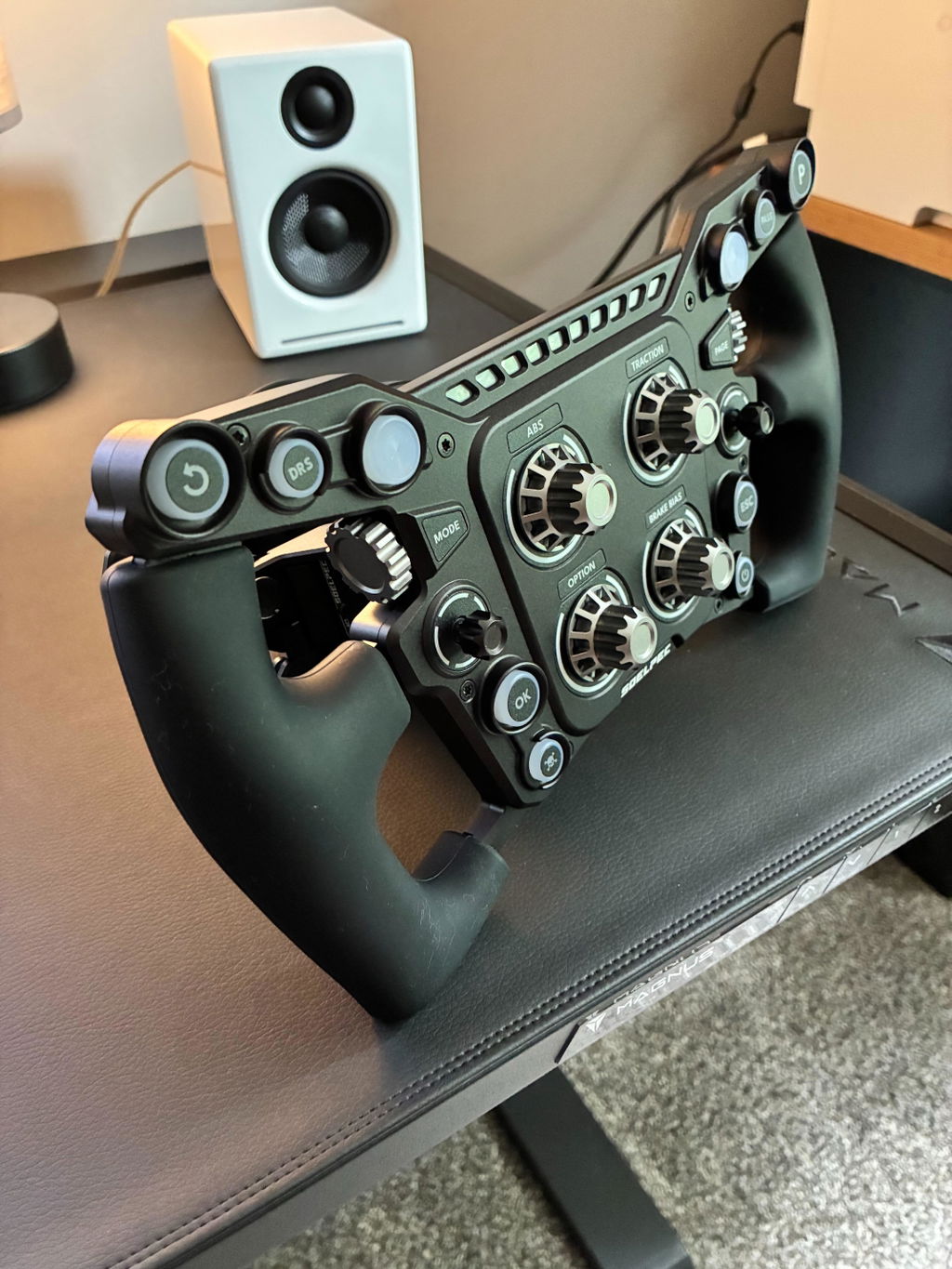
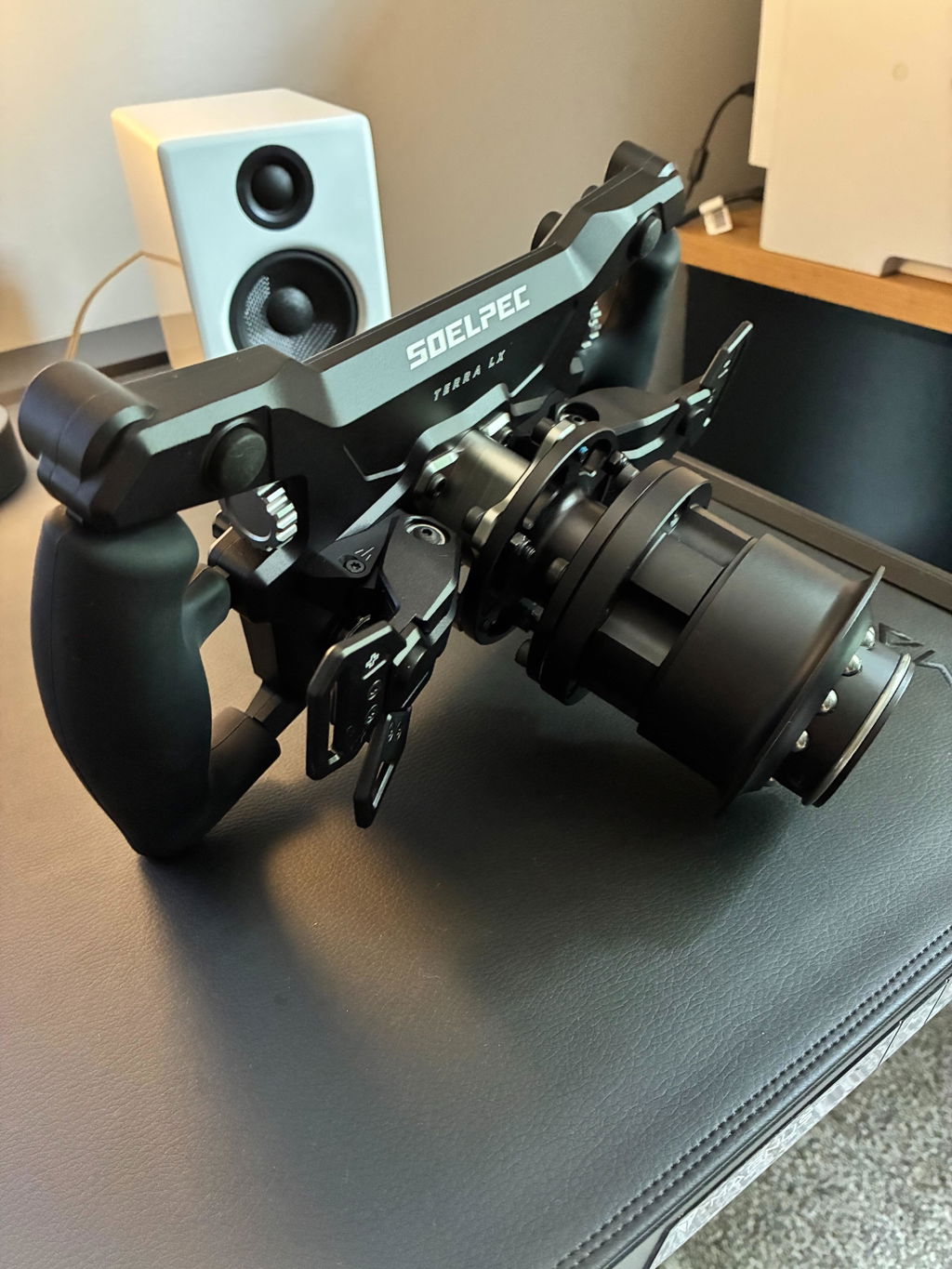
Formula builds prioritize a highly reclined seating position where the driver's feet are elevated relative to the hips. This geometry is essential for accurately simulating high-downforce environments. We utilize the Gomez Sim Industries (GSI) Formula Pro Elite wheel, which features a compact diameter for rapid directional changes. You can explore our curated list of the best F1 steering wheels to understand how rim weight and button ergonomics impact performance. High-torque Simucube settings are then calibrated to provide the heavy, communicative steering feel characteristic of modern open-wheel racing. Additionally, motion travel is often shortened and stiffened to replicate the lack of suspension compliance found in formula cars.
The GT and Touring Car Setup
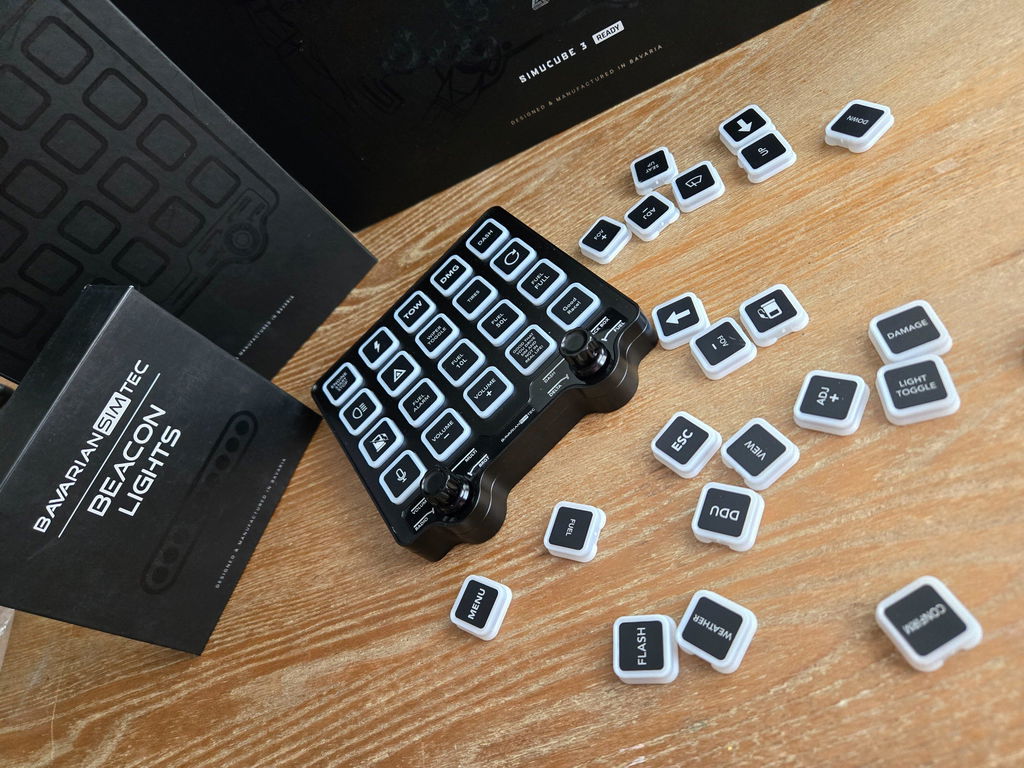
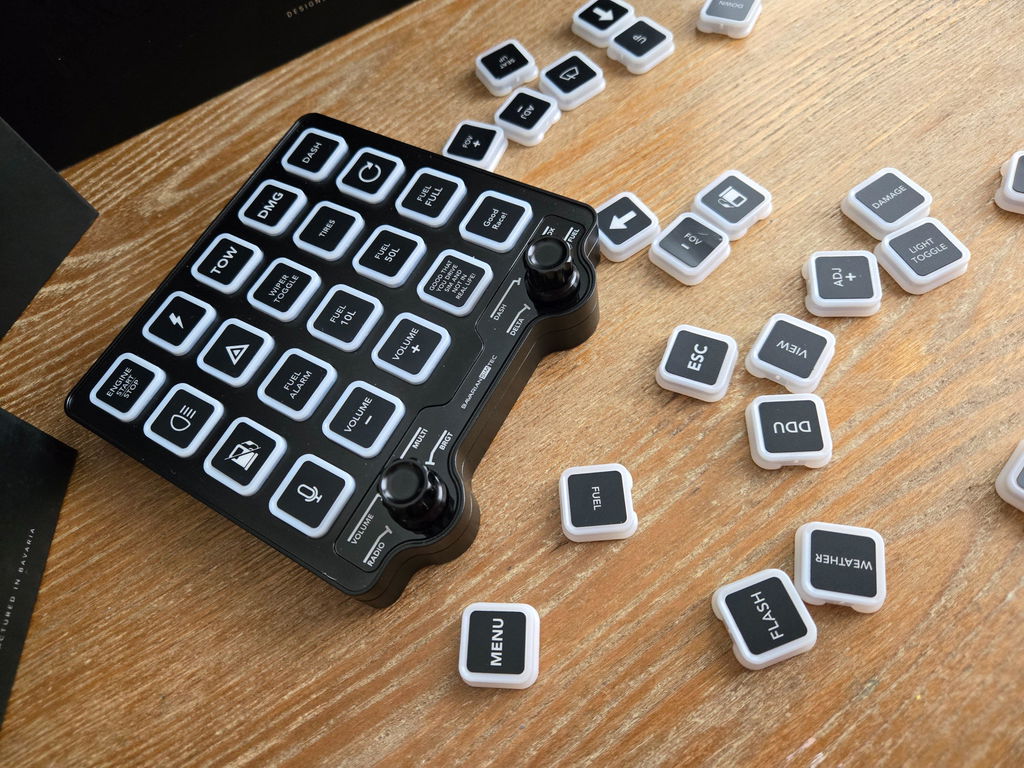
GT and endurance builds focus on a more upright ergonomic profile, allowing for greater comfort during multi-hour stints. These systems often integrate Cube Controls GT wheels, which offer a larger diameter for smoother steering inputs. Precision braking is achieved through Heusinkveld Sim Pedals Sprint, which allow for the varied pedal travel and modulation required in cars with ABS. Our guide to sim racing pedals details how to engineer consistency through pedal angle and resistance. To complete the immersion, we add sequential shifters and multi-functional button boxes, providing tactile control over brake bias and traction control settings. If you're ready to define your racing discipline, you can spec your turnkey racing simulator package today to ensure your training is as realistic as possible.
Apevie Simulators: Bespoke Turnkey Solutions and White-Glove Integration
Apevie Simulators approaches the creation of a full assembly racing simulator as a holistic engineering project rather than a simple retail transaction. Our methodology begins with a detailed consultation to understand your performance goals and the physical constraints of your environment. This leads to a custom CAD design phase where we visualize the integration of every component, from the chassis to the triple monitor array. By planning the build with mathematical precision, we ensure that the final result is a stable, high-fidelity environment that meets the rigorous standards of professional motorsport. We believe that a training tool should be as reliable as the car it simulates.
Component curation is at the core of our philosophy. We select only the most reliable and communicative hardware, including Simucube wheel bases, Heusinkveld pedals, and Sigma Integrale motion systems. It's not merely about choosing expensive parts. It's about identifying the biological synergy between them. Our National White-Glove service ensures that this sophisticated hardware is assembled professionally and calibrated on-site. This includes fine-tuning the motion profiles and force feedback curves to your specific preferences. We handle the technical complexities so you can focus on the purity of the driving experience.
The Apevie Difference
We focus exclusively on PC-based professional hardware because it offers the raw processing power and modularity required for true simulation. Unlike arcade consoles, our systems provide the depth of data necessary for meaningful real-world race preparation. Our commitment to "Zero-Flex" engineering means that every joint and mounting point is reinforced to handle the extreme forces of high-torque motors. Many of our clients use these simulators as primary tools for acclimatizing to new tracks or testing car setups before a race weekend. We also provide clear hardware upgrade paths, ensuring your investment remains at the cutting edge of technology as new innovations emerge.
Start Your Professional Build
Embarking on the journey toward an elite simulation environment is a structured and transparent process. During the design and assembly phase, you'll receive updates as your rig moves from a digital blueprint to a physical reality. We manage all the intricacies of firmware synchronization and cable shielding, protecting your system from the interference issues that often plague DIY builds. If you're ready to elevate your performance with a full assembly racing simulator, you can Contact Apevie Simulators for a Bespoke Turnkey Consultation to begin designing your custom system.
Mastering the Virtual Apex with Professional Precision
Investing in a full assembly racing simulator is a commitment to your own performance and technical peace of mind. You've seen how the synergy between high-torque Simucube bases and Heusinkveld pedals requires more than basic assembly; it demands a deep understanding of structural physics and digital calibration. By choosing a turnkey solution, you bypass the technical hurdles of electromagnetic interference and software conflicts that often plague home builds. Instead, you step into a world where your hardware is a transparent conduit for your skill on the track.
Apevie Simulators provides the specialized expertise needed to transform elite components into a unified training tool. As an authorized Simucube and Heusinkveld dealer, we offer expert calibration specifically tuned for iRacing and ACC. Our national white-glove installation ensures your rig is ready for a qualifying lap the moment it arrives in your space. It's time to stop troubleshooting and start driving. Explore Bespoke Turnkey Racing Simulator Packages at Apevie Simulators and take the first step toward a flawless racing experience. Your journey toward total immersion begins with a foundation built by experts.
Frequently Asked Questions
What is included in a full assembly racing simulator?
A full assembly racing simulator is a comprehensive ecosystem that includes every component necessary for professional simulation. This encompasses a rigid aluminum extrusion chassis, a high-torque direct drive wheel base, and precision load-cell or hydraulic pedals. We also integrate a high-performance PC, your choice of visual displays, and a professional steering wheel from GSI or Cube Controls. Every system is delivered with all necessary wiring, custom cable management, and pre-configured software ecosystems.
How much space do I need for a professional turnkey sim rig?
The required footprint depends largely on your chosen monitor configuration. A standard rig utilizing a single ultrawide curved monitor typically requires a space of approximately 5 feet by 3 feet. If you opt for a triple monitor setup for maximum peripheral vision, the width requirement increases to roughly 8 feet. It's advisable to leave a small buffer around the rig for ventilation and to allow for the movement of motion actuators if your system includes them.
Can I upgrade individual parts in a fully assembled simulator later?
Yes, one of the primary benefits of using an aluminum extrusion sim rig is its inherent modularity. You can easily swap steering wheels, upgrade to different pedal sets, or add new peripherals like shifters and handbrakes as your needs evolve. Our professional assemblies are designed to be future-proof, ensuring that the structural foundation can support more powerful hardware or advanced haptic systems without requiring a complete rebuild of the chassis.
Is a motion system necessary for a professional-grade assembly?
A motion system isn't strictly mandatory for driver training, but it significantly enhances the biological feedback you receive from the virtual car. Systems like the Sigma Integrale DK2+ provide essential cues regarding weight transfer, braking dive, and tire slip. These physical sensations allow you to react more intuitively to the car's behavior, making the simulation much more effective for building real-world muscle memory. For the most immersive experience, motion is a vital component.
How long does it take to build and deliver a custom racing simulator?
The timeline for a bespoke build generally spans several weeks from the initial consultation to final delivery. This duration allows our experts to complete the custom CAD design phase, source premium components, and perform meticulous physical assembly. We also dedicate significant time to software calibration and stress-testing the electronics. This ensures that when your full assembly racing simulator arrives, it's a refined and reliable tool ready for immediate use.
Do turnkey simulators work with both PC and consoles like PS5?
Professional turnkey simulators are almost exclusively built on the PC platform. This is because high-end peripherals from Simucube and Heusinkveld require specific drivers and software environments that aren't supported by consoles. PC-based simulation also offers superior physics engines and the ability to run sophisticated telemetry software. For those seeking an elite training tool, the PC ecosystem is the only platform that provides the necessary fidelity and hardware compatibility.
What kind of maintenance does a high-end racing simulator require?
High-end simulators are remarkably low-maintenance, typically requiring only periodic firmware updates and occasional dusting of the electronics. However, if you are also a driver of the real-world European performance cars these systems simulate, professional mechanical maintenance is vital; for expert service in the Belgrade area, click here.
Why should I choose a turnkey build over a DIY aluminum profile kit?
A turnkey build saves you the 20 to 40 hours of research, ordering, and assembly that a DIY project typically demands. You gain access to expert calibration that ensures your force feedback and brake mapping are optimized for realism from the first lap. Professional assembly also includes critical engineering details like EMI management and custom-shielded wiring. Instead of managing multiple hardware warranties and troubleshooting software conflicts, you receive a unified, supported system that lets you focus entirely on driving.