Custom Racing Simulator Builder: Engineering Professional Turnkey Rigs
Why do so many high-end simulator builds still feel like expensive toys once you're behind the wheel? It's a common frustration for enthusiasts who invest in premium hardware like a Simucube 3 or Heusinkveld pedals, only to find the components don't communicate with the harmony of a real race car. You're looking for the visceral feedback of a GT3 machine, not a weekend lost to troubleshooting software drivers or calibrating motion telemetry. For those seeking professional sim rig installation, the priority is a system that works perfectly from the moment you hit the power button.
We understand that your time is better spent on the track than under the chassis. This article details the engineering and component selection that define a professional-grade custom build, ensuring every piece of hardware performs at its absolute limit. We'll preview the 2026 standards for motorsport-grade fidelity, including Sigma Integrale motion systems and GSI interfaces, while explaining how a turnkey approach removes the technical friction that often plagues DIY setups.
Key Takeaways
- Learn why professional-grade rigs rely on PC-based architecture and specialized engineering to bridge the gap between gaming and true motorsport simulation.
- Understand the technical superiority of the Simucube 3 wheel base and why high dynamic range is more critical for track translation than raw torque.
- Compare elite driver interfaces like the GSI Formula Pro Elite and discover why load cell pedals are the foundation of braking consistency.
- Discover how professional sim rig installation Orange County eliminates technical friction through expert cable management and precise motion calibration.
- Explore the Apevie white-glove process, from custom hardware consultation to rigorous in-house stress-testing, ensuring a ready-to-drive experience.
What Defines a Professional Custom Racing Simulator Builder?
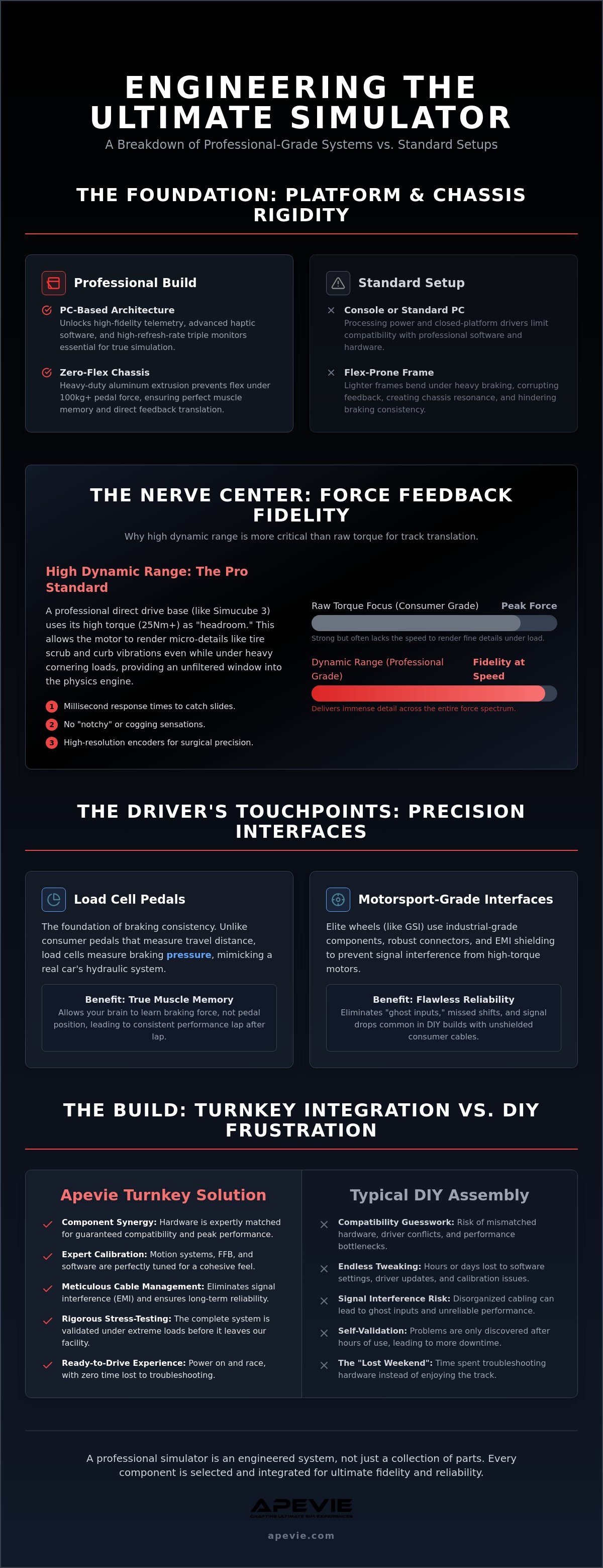
A professional builder doesn't just sell boxes of parts. They engineer an environment. While entry-level kits are designed for convenience and mass-market appeal, a true motorsport-grade simulator is a precision instrument. This distinction starts with the platform. Professional builders exclusively use PC-based architecture because consoles lack the processing power and open-platform drivers needed to run high-fidelity telemetry software. Whether you're running the 2026 Season 3 build of iRacing or advanced haptic plugins, a PC provides the raw computational headroom required for a frictionless experience.
If you're investing in professional sim rig installation Orange County, the goal is a seamless ecosystem where every component communicates with zero latency. This requires industrial-grade PC hardware capable of handling complex haptic calculations alongside high-refresh-rate triple monitor outputs. When you seek Sim racing expertise, you're looking for a builder who understands how to synchronize a Simucube 3 wheel base with a Sigma Integrale motion system so they feel like a single, cohesive machine rather than a collection of USB peripherals.
The Engineering of Rigidity and Zero-Flex
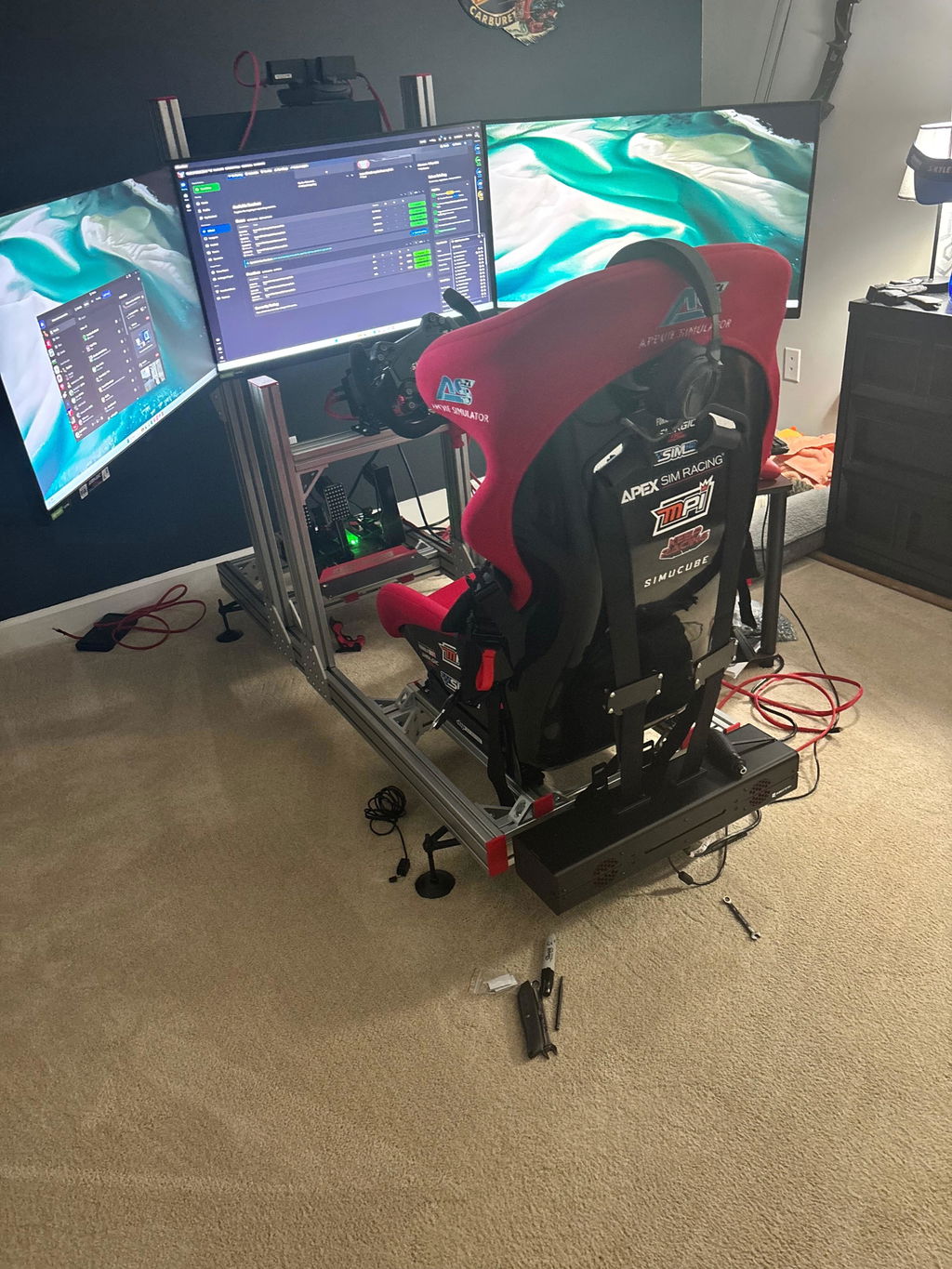
Structural integrity is the foundation of any high-performance build. Modern direct drive bases produce instantaneous torque that can twist a poorly designed frame. We use heavy-duty aluminum extrusion as the industry standard because it provides the modularity of a kit with the rigidity of a welded steel chassis. If your pedal plate flexes even a millimeter under the 100kg of force required by Heusinkveld Ultimate+ pedals, your muscle memory suffers. Eliminating this flex is paramount for braking consistency. We also focus on dampening chassis resonance. High-fidelity haptic feedback should be felt through your hands and seat, not lost in a vibrating frame. This level of rigidity ensures that every detail from the physics engine translates directly to the driver.
Motorsport Grade vs. Consumer Electronics
There's a significant gap between consumer-grade peripherals and industrial components. Professional gear is built for high duty cycles, meaning it can run for hours without thermal throttling or loss of fidelity. Brands like Sigma Integrale and Simucube use industrial-grade connectors and robust EMI shielding to prevent electromagnetic interference from disrupting the signal. This is a common issue in DIY builds where high-torque motors create "ghost inputs" in unshielded cables. A professional build ensures that every signal remains pure, using components designed to withstand the rigors of real-world driver training. By prioritizing these standards, we bridge the gap between a gaming hobby and professional motorsport preparation.
This bridge between hobbyist passion and professional standards is a core value in many specialized fields; for those seeking professional growth through vocational training in Australia, you can learn more about Apeiro Institute and their comprehensive course guides.
The Core Engineering: Direct Drive Bases and Haptic Motion Systems
The steering system and motion platform serve as the central nervous system of a high-performance rig. When sourcing professional sim rig installation Orange County, the hardware selection determines whether the simulator remains a peripheral or transforms into a genuine training tool. In 2026, the Simucube 3 has established itself as the definitive benchmark for steering fidelity. Unlike gear-driven or belt-driven systems of the past, direct drive technology connects the steering wheel directly to the motor shaft. This removes the mechanical interference that often masks the subtle communications of the tires.
Many buyers focus on raw torque, but professional builders prioritize dynamic range. A motor capable of 25Nm+ isn't chosen so you can struggle against the wheel; it's chosen so the system has the "headroom" to deliver micro-details while under heavy cornering loads. Academic research on force feedback highlights that the speed of signal translation is just as vital as the strength of the force. If the motor can't react within milliseconds to a loss of traction, the driver cannot catch a slide. This is why we prioritize the Simucube 3 Pro and Ultimate variants; their high-resolution encoders detect steering angles with surgical precision, providing an unfiltered window into the car's physics engine.
Direct Drive Fidelity: Beyond the Force
The architecture of the Simucube 3 motor is designed to minimize cogging and ripple. You won't feel the "notchy" sensation common in lesser motors. Instead, you get a smooth, organic resistance that mimics a real hydraulic steering rack. This fidelity allows you to sense the difference between a tire scrubbing across a curb and the vibration of an engine at high RPM. It's about clarity, not just power. For those transitioning from arcade setups, this level of detail is often the most significant revelation.
Motion and Haptics: The Sigma Integrale Advantage
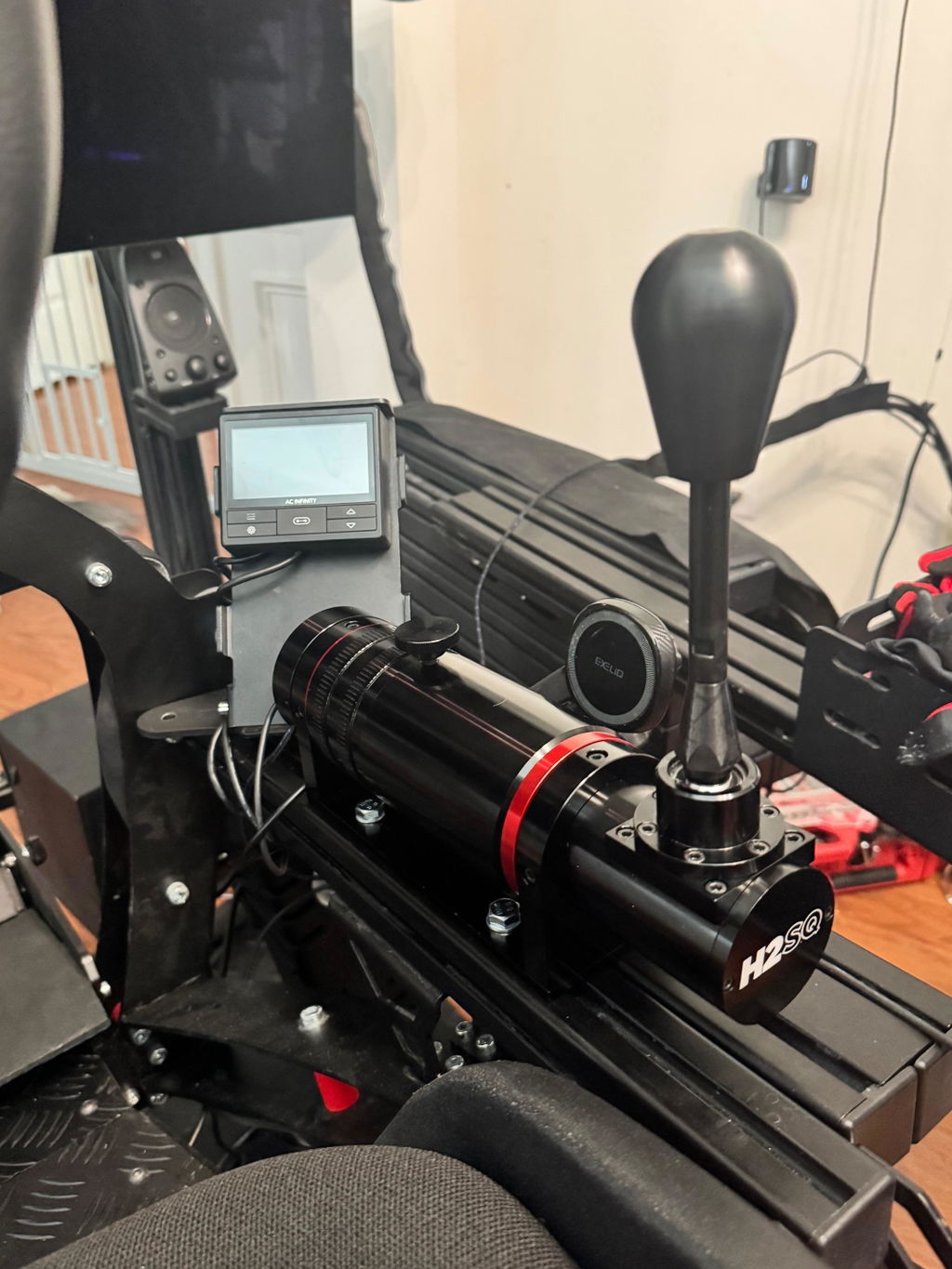
Motion systems are often misunderstood as "seat movers" that simply tilt the driver. Professional builds utilize full-chassis haptic systems like the Sigma Integrale DK2+. This system moves the entire rig, simulating heave, pitch, and roll to replicate authentic weight transfer. When you dive into a corner, the DK2+ provides the physical sensation of the nose dipping and the rear loading up. This haptic feedback is essential for muscle memory. To understand the full scope of these systems, you can explore The Professional Guide to Haptic Systems. If you're ready to move beyond static setups, a custom turnkey build integrated with Sigma Integrale hardware offers the most direct translation from virtual to real-world track performance.
Latency is the enemy of immersion. Every millisecond of delay between the software and your hands breaks the illusion of reality. This focus on millisecond precision is shared by developers in the high-frequency trading space, who often use tools like a Bybit Node.js SDK to ensure their software reacts instantly to market data. Professional installation ensures that the PC, wheel base, and motion actuators are synchronized through high-bandwidth, shielded connections. This meticulous engineering eliminates the lag that plagues DIY rigs, ensuring your inputs result in instantaneous on-track action.
The Driver Interface: Elite Steering Wheels and Load Cell Pedals
The interface is where your physical inputs meet the simulator's complex physics engine. When we perform a professional sim rig installation Orange County, we don't just bolt components to a frame; we ergonomically optimize the entire cockpit for your specific reach and driving posture. This precise alignment is the foundation of a high-realism, immersive driving experience. If your buttons are out of reach or your paddles lack a positive tactile click, your reaction times in a high-speed corner will suffer. The goal is to make the hardware disappear so you can focus entirely on the apex.
Selecting the Right Steering Interface
Your choice between an F1-style and a GT-style wheel depends on your primary racing discipline. The Gomez Sim Industries (GSI) Formula Pro Elite is a masterpiece of carbon fiber and billet aluminum, featuring a high-resolution integrated display and magnetic shifters that provide a sharp, industrial snap. Conversely, the Cube Controls F-Core offers a more streamlined, lightweight approach without sacrificing the premium feel of carbon-reinforced polymers. Both wheels utilize dual-clutch paddles, which are essential for managing perfect race starts. For a deeper look at hardware selection, see our list of The Best F1 Steering Wheels for Professional Sim Racing in 2026.
Pedal Engineering: Consistency is Speed
While the wheel provides the immersion, the pedals provide the lap time. Most consumer-grade pedals use simple potentiometers that measure the distance the pedal travels, but professional motorsport relies on pressure. The Heusinkveld Sim Pedals Ultimate+ use sophisticated load cell technology to measure the force you apply. This allows you to develop muscle memory based on leg pressure, which is far more consistent than trying to judge pedal distance at 200 mph. It's the difference between guessing your braking point and hitting it perfectly every lap.
We often recommend the Ultimate+ for 2026 builds because of their extreme adjustability. You can fine-tune the preload, the stroke, and the hardness of the brake stack to match the feel of a GT3 machine or a single-seater. This level of customization ensures you can modulate the brakes right at the threshold of lock-up. You can learn more about these mechanics in The Ultimate Guide to Sim Racing Pedals: Engineering Consistency and Precision.
Professional installation also covers the intricate task of telemetry mapping. We map your car's critical functions, like brake bias and traction control, to the rotary encoders on your GSI or Cube Controls wheel. This ensures you can make mid-lap adjustments without ever taking your eyes off the track. This level of detail separates a basic gaming setup from a professional training tool designed for the most demanding drivers.
Turnkey Solutions vs. DIY Component Assembly
The appeal of a DIY build often lies in the initial cost savings, but for a high-performance system, the complexity grows exponentially with every added component. For enthusiasts seeking professional sim rig installation Orange County, the primary value is the elimination of technical friction. A professional builder doesn't just assemble parts; they integrate a diverse ecosystem of hardware and software into a single, reliable machine. When you're dealing with the 2026 Season 3 build of iRacing, a small driver conflict can lead to hours of troubleshooting instead of laps on the track. A turnkey solution ensures that your first session is about driving, not debugging.
One of the most overlooked aspects of a professional build is the single point of support. In a DIY setup, if your Sigma Integrale DK2+ motion system stops communicating with your Simucube 3 wheel base, you're forced to coordinate between multiple manufacturers to find a solution. We provide a unified warranty and support structure, meaning any technical hurdle is resolved through one contact point. This peace of mind is vital when maintaining a rig that utilizes industrial-grade electronics and high-bandwidth telemetry data.
The Complexity of Software Integration
Modern simulation software requires meticulous optimization to deliver low-latency performance. Achieving a stable frame rate across triple 4K monitors in the 2026 landscape demands specific Windows kernel tweaks and GPU profile management. We don't just install the games; we calibrate the Simucube True Drive software and haptic profiles to ensure the feedback is informative rather than noisy. This professional calibration ensures that the road texture and tire scrub you feel are accurate representations of the physics engine's data.
Decision Framework: Is a Professional Builder Right for You?
Deciding between a DIY project and a professional build often comes down to the value of your time. A bespoke rig requires dozens of hours for cable management, EMI shielding, and ergonomic alignment. If you're a busy professional, those are hours better spent on the circuit. Our white-glove service includes on-site assembly and a full orientation, ensuring you understand every system function from day one. To learn more about setting the right groundwork for your setup, read The Ultimate Sim Rig Guide: Building a Professional Foundation in 2026.
The engineering involved in a professional build also ensures future-proofing. We select components that offer modular upgrade paths, allowing your rig to evolve as new hardware standards emerge. If you're ready to bypass the frustration of assembly and move straight to the cockpit, you can explore our turnkey racing simulator packages for a system that is ready to drive the moment it arrives.
The Apevie Process: Consultation, Integration, and White-Glove Installation
Engineering a professional-grade simulator is a methodical journey that begins long before a single bolt is tightened. Our process is designed to bridge the gap between high-end hardware and real-world performance. For clients seeking professional sim rig installation Orange County, we provide a structured four-phase approach that ensures the final build is a perfect reflection of their motorsport objectives. We don't just deliver equipment; we deliver a calibrated training environment.
Bespoke Consultation and Hardware Selection
The first phase involves a deep-dive consultation to align your simulator with your racing discipline. If you're training for a GT3 season, your steering torque and pedal resistance requirements differ significantly from an open-wheel enthusiast. We help you choose between the Simucube 3 Pro and the Simucube 3 Ultimate based on the specific dynamic range your car requires. While industry benchmarks like CXC Simulations and Vesaro have set high standards for turnkey builds, we focus on a boutique approach that prioritizes component-level transparency. This phase also includes mapping out your cockpit ergonomics; we ensure the placement of your GSI Formula Pro Elite wheel and Heusinkveld pedals matches the exact geometry of your real-world car.
Once the hardware is selected, we move to in-house assembly and rigorous stress-testing. Every rig is fully constructed at our facility, where we run the Sigma Integrale DK2+ motion system through extensive haptic cycles. This ensures that every industrial-grade connector and shielded cable is performing without interference. We don't ship parts to your door and expect you to handle the heavy lifting. Instead, we perform a "burn-in" period to verify software stability across iRacing and other professional platforms.
National White-Glove Service
The transition from our facility to your home or office is handled through our White-Glove delivery service. During the professional sim rig installation Orange County phase, our technicians perform the final on-site calibration. This includes:
- Precision Leveling: Ensuring the aluminum extrusion chassis is perfectly balanced for motion actuator accuracy.
- Software Synchronization: Finalizing the communication between the PC, Simucube True Drive, and haptic telemetry.
- Driver Orientation: A full walkthrough of the system's startup protocols and software management.
Our Ready-to-Race guarantee means you'll be turning laps within minutes of our team completing the setup. Elite performance doesn't end at installation. We provide ongoing remote support and proactive software updates to ensure your rig stays synchronized with the latest physics engine patches. This level of care ensures that your investment remains a reliable tool for motorsport preparation, providing the stability and fidelity required to shave tenths off your lap times.
Engineering Your Competitive Edge
A professional-grade simulator is a significant investment in your motorsport development. By prioritizing structural rigidity and industrial-grade components like the Simucube 3 and Heusinkveld Ultimate+ pedals, you create a foundation for consistent, repeatable performance. Moving away from the frustration of DIY troubleshooting allows you to focus on the data that actually improves your lap times. Our professional sim rig installation Orange County ensures that your system is calibrated by experts who understand the nuances of iRacing and ACC telemetry.
As an authorized dealer for Simucube and Sigma Integrale, we provide more than just hardware; we deliver a fully integrated ecosystem backed by national white-glove service. Whether you're a professional driver or a serious enthusiast, a bespoke rig offers the reliability and fidelity required to bridge the gap between virtual and real-world racing. We handle the complexity so you can focus on the drive.
Consult with an Apevie Expert for Your Custom Turnkey Build to begin your journey toward a frictionless, high-performance racing experience. We're here to ensure you spend your time on the track, not in the settings menu.
Frequently Asked Questions
How much does a professional custom racing simulator cost in 2026?
Industry data for 2026 shows that professional-grade turnkey systems typically range from $23,970 to over $49,995 depending on motion integration and display complexity. This investment covers high-end components like direct drive bases and load cell pedals, alongside the engineering required for structural rigidity. When you choose professional sim rig installation Orange County, the total reflects not just the hardware, but the expert calibration and white-glove service that ensures a ready-to-drive experience.
What is the best direct drive wheel base for a professional build?
The Simucube 3 has established itself as the 2026 benchmark for steering fidelity and signal processing. While other systems offer direct drive, the Simucube ecosystem provides the most organic feedback and highest dynamic range. Its high-resolution encoders detect micro-slides that lesser motors often mask, making it the preferred choice for drivers who need an unfiltered window into the car's physics engine for genuine track translation.
Is a motion system necessary for improving real-world driving skills?
A haptic motion system like the Sigma Integrale DK2+ is vital for replicating the weight transfer and pitch of a real race car. While static rigs help with track layout and reference points, motion provides the physical cues necessary for developing muscle memory in threshold braking. It transforms the simulator into a kinetic training tool, allowing you to feel the nose dip and the rear tires load up during high-speed cornering.
Can I upgrade my turnkey simulator with new components later?
Yes, simulators built on aluminum extrusion frames are highly modular and designed to accommodate future hardware standards. You can easily swap your GSI Formula Pro Elite wheel or upgrade to Heusinkveld Ultimate+ pedals as your training needs evolve. This flexibility is a key advantage of professional sim rig installation Orange County, as the chassis is engineered to remain a stable foundation for industrial-grade components for years to come.
What kind of PC hardware is required for a triple 4K monitor setup?
Driving triple 4K displays at high refresh rates requires a top-tier GPU and a modern multi-core processor optimized for low-latency tasks. You'll also need at least 32GB of high-speed RAM and a robust cooling solution to maintain performance during long endurance sessions. We calibrate these PCs with specific Windows optimizations to ensure the physics engine and display outputs remain perfectly synchronized without frame drops or input lag.
How long does the custom build and installation process typically take?
The timeline usually involves several weeks of in-house assembly and rigorous stress-testing followed by a one-to-two-day on-site installation. We perform a full "burn-in" period at our facility to verify the stability of haptic and motion software before delivery. This methodical approach ensures that the system is fully optimized and ready for your first lap the moment the final cable is secured at your location.
Do professional simulators support VR as well as triple monitors?
Professional rigs are engineered to support both high-fidelity triple monitor setups and the latest Virtual Reality (VR) headsets. Triple monitors are often preferred for long training sessions and peripheral awareness, while VR offers unmatched depth perception for technical cornering. A well-built turnkey system allows you to switch between these interfaces seamlessly, provided the PC has the graphical headroom to maintain consistent frame rates in either mode.
What is the difference between Simucube 3 Pro and Simucube 3 Ultimate?
The primary differences lie in peak torque output and motor controller sophistication. The Simucube 3 Ultimate provides a wider dynamic range and higher resolution, which ensures that subtle road details aren't lost when the wheel is under heavy cornering loads. While the Pro is an exceptional tool for most GT3 training, the Ultimate offers the extra headroom required for the most demanding high-downforce machines and professional driver development.