Load Cell Pedal Sets for Sim Racing: Prices and Availability
The obvious choice isn’t always the better brake: a load cell pedal set responds to pressure, while a Hall sensor system tracks pedal position. That difference shapes how braking feels and how consistently you can repeat it, but neither technology is right for every driver.
If you’re weighing an upgrade, focus on how you want to control braking, not simply which sensor sounds more advanced. Load cell pedals can help you build muscle memory around brake force, while Hall sensor pedals offer a different way to register pedal input.
This guide explains how the two systems compare, what to consider when choosing between them, and how pedal count and use case affect the decision. It also covers current Heusinkveld product listings, their prices and availability, so you can assess the options with a clearer sense of what fits your rig and driving style.
Key Takeaways
- Learn how pressure-based braking differs from pedal-position sensing, and decide which response better fits your driving style.
- Compare Heusinkveld Sprint and Ultimate+ configurations to understand how pedal count and product tier shape your options.
- Follow a clear connection and calibration process to prepare your pedals for consistent input in your simulator.
- See how Apevie Simulators’ Heusinkveld pedals and custom racing simulator solutions can support a more complete setup.
Why Choose Load Cell Pedals?
Brake consistency depends on controlling pressure, not simply matching pedal travel. A load-cell pedal set measures force, giving the simulator a signal tied to how firmly you brake.
Brake Force Measurement
A load cell converts pressure on the brake pedal into an electrical signal that sim racing software interprets. Strain gauges inside the sensor detect deformation as force is applied. The signal changes with that deformation, allowing the software to map braking input to pedal pressure rather than distance alone. When comparing pedals, check how the sensor measures force and whether its output can be calibrated to your braking style. In a load cell brake system, pressure is the input the sensor reads.
Pedal Operation and Sensor Capacity
As you press the brake, the sensor registers the load and the software translates its signal into braking. Sensor capacity describes the load the sensor is designed to measure. The usable range should suit the force you apply, not just the pedal’s travel. Check stated capacity alongside adjustment options: a higher figure alone doesn’t tell you how the brake will feel.
Do load-cell pedal sets require a separate pedal plate or mounting hardware? It depends on the pedal design and your rig. You need a compatible, rigid mounting surface and the correct fasteners, but a separate plate isn’t always necessary if your rig already has suitable mounting points.
What are common load cell pedal problems, and how can you address them? Inconsistent readings may result from calibration settings, a loose connection, or movement at the mount. Recheck the connection, secure the pedals, then recalibrate the brake input in the simulator software. If readings remain erratic, inspect the sensor and cable for visible damage before continuing to use the pedals.
Product prices and availability
Pedal pricing depends on the model and what the package includes. Fanatec Podium Pedals Sport offers a specific comparison point for a brake-and-throttle setup.
Product Availability
The Fanatec Podium Pedals Sport is listed with two pedal modules, a connection box, and USB and RJ12 cables. Its package includes brake elastomers and springs, but no clutch pedal. Stock quantities can be limited and may change, so availability is not fixed. Orders placed before 11:00 AM PST ship the same day; orders placed later ship the next business day. Standard shipping within the United States is free.
For a broader view, compare sim racing pedal options by configuration and included hardware. This helps distinguish a pedal set from a bundle requiring additional components.
Sim Racing Pedal Prices
The brake uses a custom load-cell sensor rated 200 kg+, and the package contains throttle and brake pedals. The price may change, so treat the current listing as the relevant reference rather than a permanent figure.
Check compatibility alongside price: this model supports PC through USB or a supported Fanatec base. Check console compatibility before buying, as requirements can vary by setup. Factor in that requirement if you’re budgeting beyond the pedals themselves.
Pedal Set Prices
The Fanatec Podium Pedals Sport does not include a clutch module, which is sold separately. The package includes a connection box and mounting hardware, so review the listed contents before comparing configurations. A price comparison is useful only when you account for the same pedal count and required components.
Load-cell and Hall sensor systems
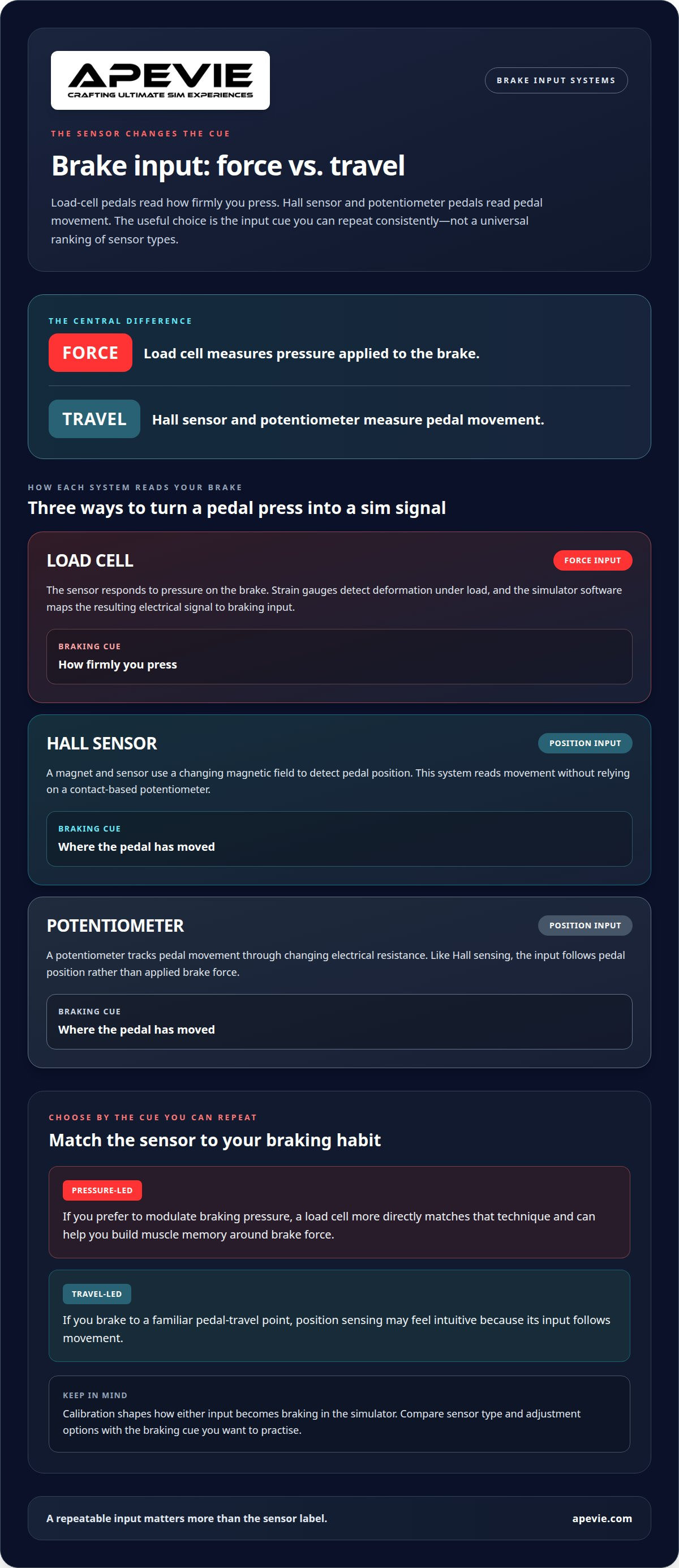
Two brake pedals can look similar yet report different inputs to a simulator. A load-cell design reads force; a Hall sensor reads movement using a magnet and sensor. That distinction shapes how you practise repeatable braking.
A load-cell pedal set converts pressure into an electrical signal for the sim. Its brake input follows how firmly you press, rather than how far the pedal travels. This may suit drivers who want to build braking cues around leg pressure. Strain gauges in the sensor detect deformation under load, and the software maps the resulting signal to brake application.
Hall sensor pedals use a magnetic field to detect pedal position without relying on a contact-based potentiometer. As the pedal moves, the sensor reads the magnet’s changing position and reports travel to the simulator. Potentiometer pedals also track pedal movement, but use variable electrical resistance. The practical comparison is force input versus position input, not a universal ranking.
- Load cell: Brake response follows applied pressure, useful when you practise pressure-based braking.
- Hall sensor: Brake response follows pedal movement, useful when travel is your familiar control cue.
- Potentiometer: Position tracking uses changing resistance, unlike magnetic Hall sensing.
Choose the input you can repeat consistently. If you tend to brake by pressing to a familiar travel point, position sensing may feel intuitive. If you prefer to modulate pressure, a load cell more directly matches that technique. Calibration shapes how either input becomes braking in the sim. Compare sensor type and adjustment options with your preferred braking cue before choosing.
Load-cell brake pedals use one or more strain gauges to sense deformation in the load cell. This connects the pedal’s response to the force applied at the brake, while the simulator receives an electrical signal to interpret. The key question is whether that relationship supports a braking cue you can reproduce, not whether one sensor is inherently better.
When comparing pedals, consider how their input translates into braking and whether calibration can make the response comfortable to use. Force-based input may suit pressure-led practice, while movement-based sensing may suit a familiar travel cue. Aim for a response you can apply consistently, so your braking practice reflects the way you naturally use the pedal.
How do you connect and calibrate a load cell pedal set?
Connection and calibration turn brake pressure into a usable signal in your simulator. Follow the pedal manufacturer’s instructions, since connection methods and software vary by model.
- Secure the pedals. Mount the pedal base firmly to a compatible rig or pedal plate. Movement under braking can make your input feel inconsistent, even when the sensor works correctly.
- Connect the hardware. Use the cable and connection method specified for your pedals. Connect directly to the computer or through a compatible wheelbase only when the manufacturer supports that configuration.
- Open the configuration software. Select the pedals in their software or the simulator’s input settings. Confirm that the brake control responds before changing its range.
- Set the input range. Release the brake when prompted to establish its resting point. Then press the pedal firmly to set the upper point, without forcing it beyond your comfortable braking pressure.
- Test the response. Apply light, medium, and firm pressure while watching the displayed input. Check that the signal rises smoothly and returns to rest when released.
If the brake registers at rest, repeat the resting-point calibration with your foot off the pedal. If the input reaches its limit too soon, adjust the software range rather than changing several settings at once. Recheck the cable and pedal mounting if readings fluctuate between presses. Save the profile, then test it in a familiar simulator car before a race.
For help choosing hardware that suits your rig, explore load-cell pedal options.
Apevie Simulators: Load Cell Pedal Set
Apevie Simulators offers load-cell pedals for drivers who want pressure-based braking in a dedicated sim racing setup. When choosing between a pedal upgrade and a complete rig, consider how the pedals will fit your cockpit, wheelbase, and driving goals. Heusinkveld Sim Pedals Sprint are one load-cell option to consider.
The Sprint pedals may suit a driver upgrading an existing setup, while a Custom High-Performance racing simulator brings major components together in a considered build. A custom build may be useful when your current rig needs more than a brake pedal change, or when you’re planning your first premium simulator. Pedal position, mounting, and the surrounding setup all affect how naturally you can use the brake.
For drivers building a broader motion experience, the Sigma Integrale DK2 Motion System is another component to consider alongside the pedals. Motion is a separate part of the simulator, not a substitute for choosing suitable brake controls. Think about your priorities: improving pressure-based braking, assembling a complete simulator, or adding motion to a considered build. Apevie’s White Glove Simulator Installation Service can support installation as part of the project.
A focused pedal upgrade makes sense when the rest of your rig already meets your needs. Consider a custom simulator when you want the cockpit and components planned together. Contact Apevie Simulators to discuss your sim racing requirements and choose a direction for your setup.
Build Your Next Step Around the Driving You Want
Use your next upgrade to solve a specific limitation in your current rig. If braking consistency is the priority, plan around the pedal feel and mounting position you want to practise with. If you’re reworking the whole setup, consider how each component will fit together before choosing what to change first.
A deliberate upgrade path helps you make each decision in context, rather than treating pedals, cockpit, and supporting hardware as separate purchases. Compare the options against your driving goals, then browse pedal options for your setup as you decide what belongs in your next build.
Whether you’re refining an established rig or planning a new one, let the way you drive guide the configuration. Choose upgrades that address your biggest limitation first, and check that your pedals, cockpit, and supporting hardware will work together before placing your next order.
Frequently Asked Questions
How do load cell pedals compare with potentiometer and Hall effect pedals?
For choosing between them, focus on the braking cue you can reproduce reliably. Potentiometer and Hall effect systems register pedal position, while a load-cell design responds to pressure. Potentiometer pedals have more moving parts than load-cell pedals, which may affect long-term durability. Hall effect sensing offers a position-based alternative. Your preferred control feel and maintenance priorities can help decide which approach suits your rig.
What load cell brake force and pedal travel should I choose?
Choose a brake setup by its usable resistance and adjustment range, not the maximum capacity alone. The Fanatec Podium Pedals Sport, for example, has a 200kg+ custom load-cell sensor and adjustable travel and resistance. That rating describes sensor capacity, not the force every driver must apply. Set the brake so your normal pressure and pedal movement remain comfortable and repeatable during your sim sessions.