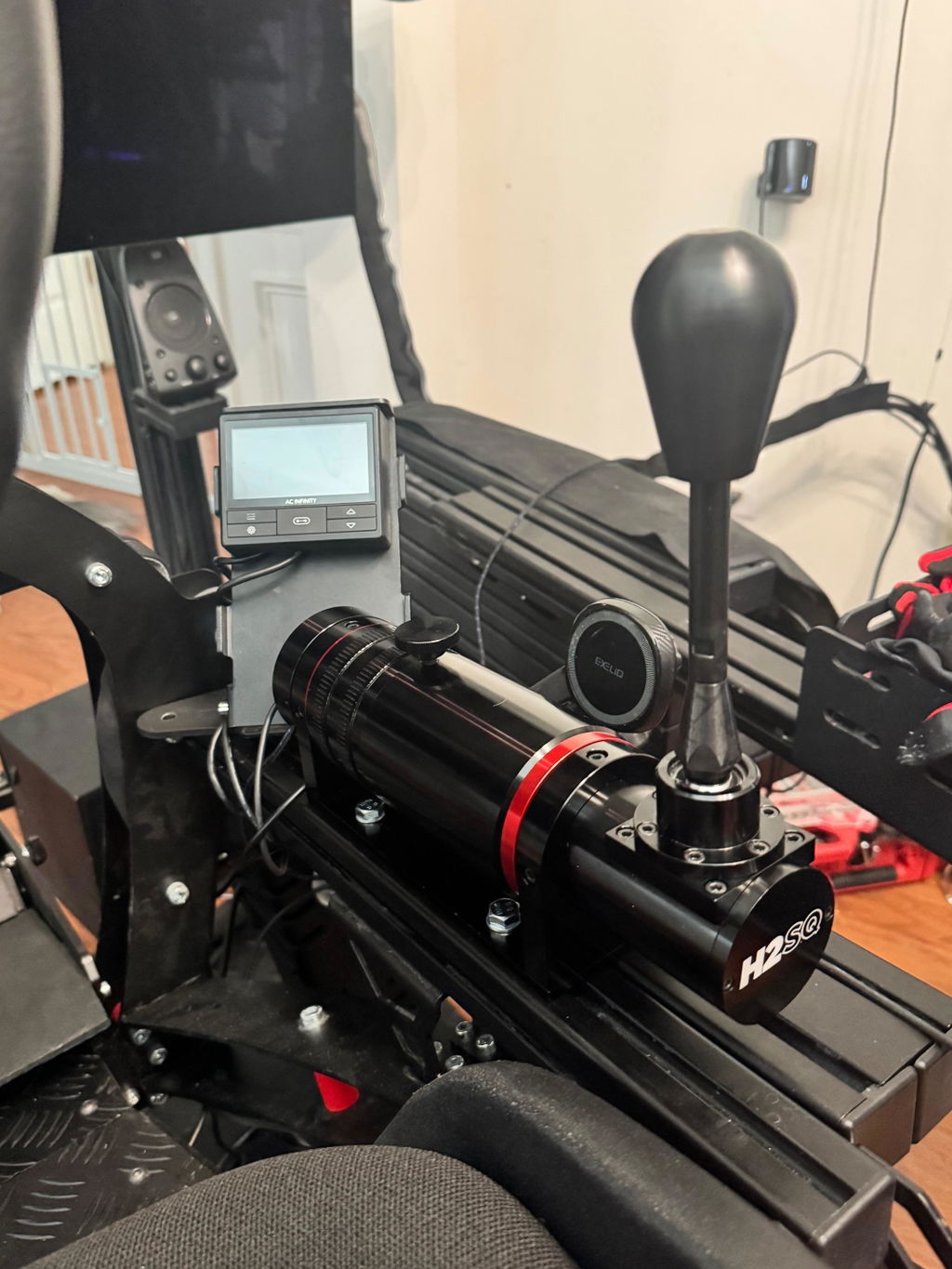
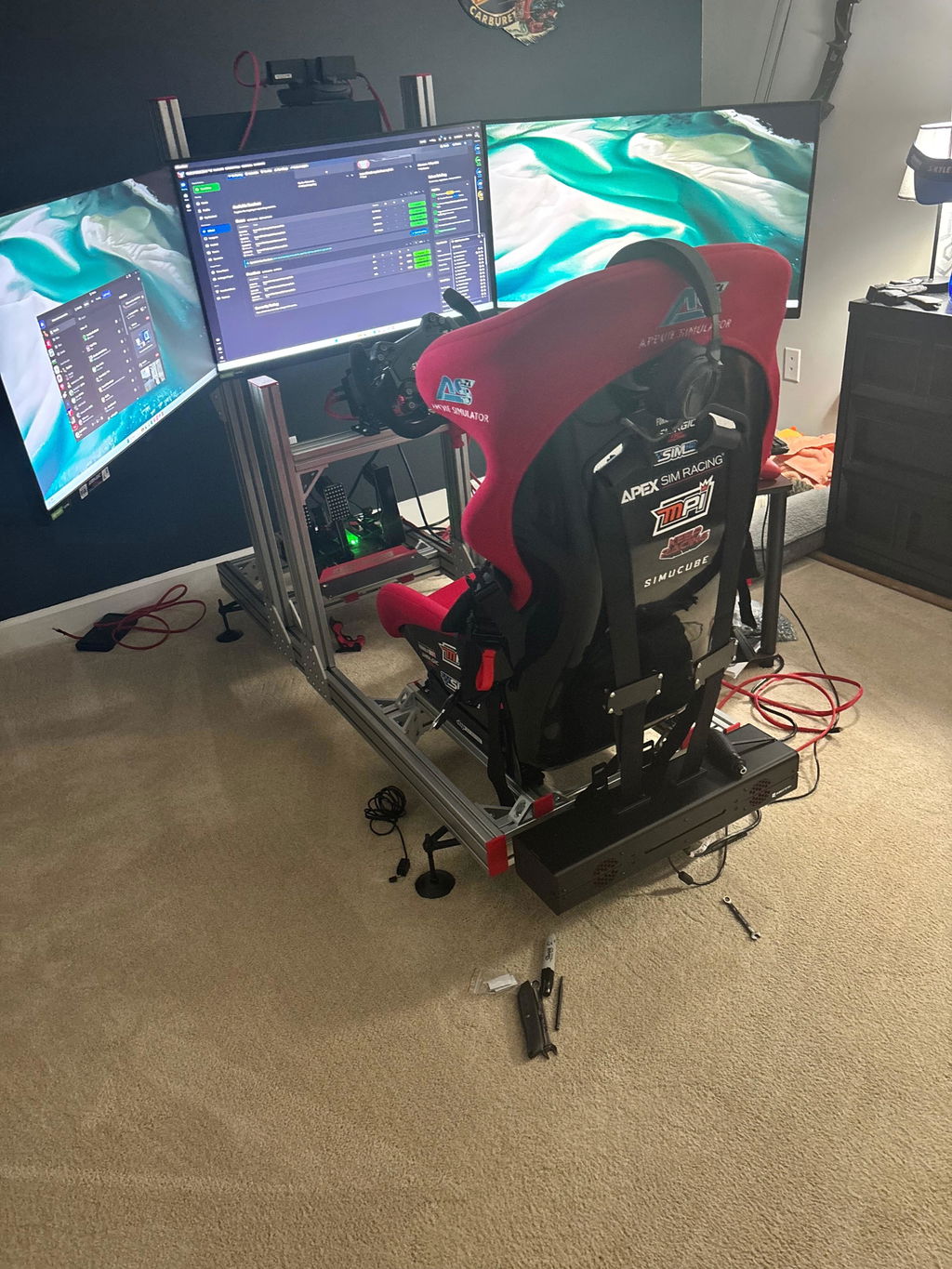
Motion Racing Simulator Cost: The 2026 Professional Investment Guide
Spending $30,000 on a motion simulator doesn't guarantee a realistic driving experience if the underlying telemetry synchronization is flawed. You've likely felt the frustration of navigating the massive price gaps between DIY actuator kits and professional turnkey systems, wondering if that extra investment actually translates to better car control or just a louder, more vibrating room. It's a common concern for serious drivers who require mechanical precision rather than arcade-style effects.
This guide breaks down the true cost of ownership for high-end motion systems in 2026. We provide a detailed Sigma Integrale motion system review to help you understand why their DK2 and DK2+ actuators are industry favorites for professional-grade training. You'll gain a clear understanding of hardware tiers, from the initial investment in components like a Simucube wheel base and Heusinkveld pedals to the long-term value of a fully integrated Apevie turnkey solution. We'll compare the logistics of building your own rig versus the seamless performance and reliability of a professional, white-glove installation service.
Key Takeaways
- Define the 2026 investment landscape by comparing prosumer, professional, and elite tiers to avoid common buyer remorse associated with entry-level hardware.
- Explore our Sigma Integrale motion system review to see how the DK2 series uses telemetry-based precision to replicate real-world vehicle dynamics without arcade-style vibrations.
- Determine why a rigid aluminum extrusion chassis and high-torque direct drive wheel bases are non-negotiable for maintaining motion fidelity and system longevity.
- Calculate the hidden costs of DIY assembly and troubleshooting versus the immediate performance gains of a professionally calibrated turnkey simulator.
- Discover how Apevie’s specialized consultation and white-glove service transform complex high-end components into a synchronized professional training tool.
The Spectrum of Motion Racing Simulator Costs
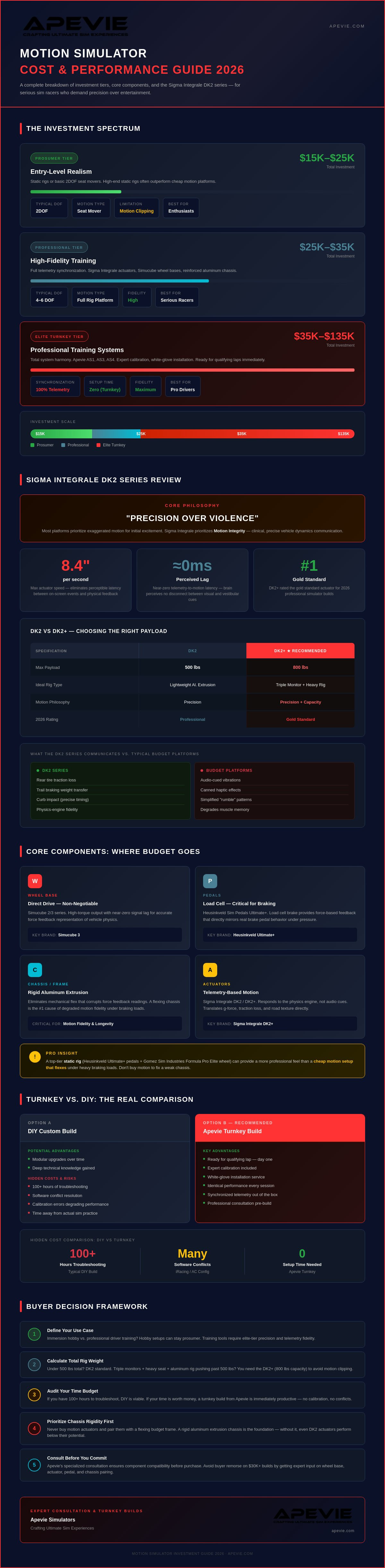
Professional sim racing isn't just about speed; it's about the data your body receives through the chassis. When you start researching the market, the price gap between a basic vibrating seat and a full-motion rig can be jarring. In 2026, a high-performance motion simulator ecosystem typically requires an investment between $15,000 and $60,000, though elite systems like the Apevie AS1 can reach $134,999. The difference in cost isn't just about the metal frame. It's about the synchronization of telemetry data. This nuance is a central theme in our Sigma Integrale motion system review, as the hardware's ability to translate digital physics into physical force defines the line between a toy and a training tool.
Many enthusiasts encounter "entry-level" motion platforms and quickly experience buyer remorse. These systems often rely on haptic feedback or "canned effects" that shake the seat based on audio cues or simplified vibrations. They lack the precision needed to feel a car's rear tires losing grip or the subtle weight transfer during trail braking. For a serious driver, a system that provides "immersion-only" feedback can actually be detrimental to muscle memory. True motion integrity requires actuators that respond to the game's physics engine with near-zero latency, which is why professional builds prioritize components like the Sigma Integrale DK2+ or Simucube 3 wheel bases.
Prosumer Tier: The Starting Point for Realism
If you're looking for a complete setup in the $15,000 to $25,000 range, you're entering the prosumer tier. At this level, you'll typically find high-end static rigs or basic 2-degree-of-freedom (2DOF) seat movers. While these setups are a massive step up from desk-mounted gear, they have limitations. Entry-level actuators often have slower response times and lower payload capacities, which can lead to "clipping" when the motion reaches its physical limit. Interestingly, a top-tier static rig featuring Heusinkveld Sim Pedals Ultimate+ and a Gomez Sim Industries Formula Pro Elite wheel often provides a more professional feel than a cheap motion setup that flexes under heavy braking loads.
Elite Turnkey Systems: The $35k+ Investment
When the budget crosses the $35,000 threshold, the focus shifts to total system harmony and 100% telemetry synchronization. Elite systems, such as the Apevie AS3 or AS4, are designed for professional drivers who need consistent, repeatable results. These builds integrate ultra-premium brands like Simucube and Sigma Integrale into a reinforced aluminum extrusion rig that eliminates all mechanical play. You aren't just paying for the parts; you're paying for the expert calibration that ensures your iRacing or Assetto Corsa setup feels identical every time you toggle the power. Professional drivers choose these turnkey solutions because they don't want to spend 100 hours troubleshooting software conflicts. They want a system that's ready for a qualifying lap the moment they sit down.
Sigma Integrale Motion System Review: Precision Over Violence
Most motion platforms on the market prioritize violence over accuracy. They shake, rattle, and roll in ways that might feel exciting initially but ultimately degrade your lap times. This Sigma Integrale motion system review focuses on a different philosophy: Motion Integrity. Unlike systems that rely on exaggerated movements to mask low-fidelity components, the DK2 and DK2+ actuators provide a clinical, precise representation of vehicle dynamics. They don't just vibrate; they communicate traction limits and weight transfer with a level of clarity that feels natural to a trained racing driver.
Latency is the silent killer of realism in any simulator. If the car hits a curb and the motion system reacts even a few milliseconds late, your brain perceives a disconnect. Sigma Integrale addresses this with actuators capable of speeds up to 8.4 inches per second. This rapid response is critical for achieving high physical fidelity in simulators, ensuring that the visual data from your monitor matches the vestibular feedback from your seat. It's why many professional drivers consider the DK2+ the gold standard for 2026 setups.
DK2 vs. DK2+: Choosing the Right Payload
Choosing between the DK2 and DK2+ comes down to the total weight of your cockpit. The standard DK2 system supports a 500 lbs payload, which is sufficient for most lightweight aluminum extrusion sim rigs. However, the DK2+ increases that capacity to 800 lbs. If you're building a rig with triple 42-inch monitors, a heavy direct drive base, and a professional seat, the DK2+ is essential. It maintains its 8.4 inches per second speed even under heavy loads, preventing the sluggishness often found in underpowered systems. For those seeking the ultimate 4-actuator configuration, Apevie’s custom builds often utilize the DK2+ to ensure plenty of headroom for future hardware upgrades.
Telemetry-Driven Haptics vs. Canned Effects
Sigma Integrale avoids the "floaty" feeling common in competitor systems by using pure telemetry. While some haptic ecosystems, like the D-BOX G5, offer excellent software support for movies and gaming, this Sigma Integrale motion system review highlights the brand's dedication to raw physics. It doesn't use "canned effects" based on audio cues. Instead, it translates the actual suspension geometry and tire slip data into movement. This distinction is vital for developing muscle memory. When you feel a vibration through the chassis, you know it's the tires scrubbing across the asphalt, not just a generic shaking effect programmed to trigger at a certain speed.
Core Components: Where Your Budget Actually Goes
Budgeting for a professional motion rig requires looking far beyond the price of the actuators. While our Sigma Integrale motion system review highlights the surgical precision of the DK2 series, those components are only as effective as the frame they're bolted to. Think of your simulator as a single mechanical organism. If one part of the chain is weak, the entire experience suffers. To maintain the "Motion Integrity" we discussed earlier, you must invest in high-fidelity peripherals that can keep pace with the rapid physical responses of the chassis.
The Cockpit and Seat Requirements
An aluminum extrusion rig is the only viable foundation for a motion system. Standard tube-frame cockpits or entry-level GT rigs often flex under the massive torque generated by four DK2+ actuators. This flex acts like a dampener, absorbing the subtle vibrations and tire-slip data before they ever reach your body. When we design turnkey systems at Apevie, we use heavy-duty 160mm or 120mm aluminum profiles to ensure absolute rigidity. You can learn more about selecting the right base in The Ultimate Sim Rig Guide.
Your choice of seat is equally critical. While many users opt for standard reclining racing seats, these often have internal springs and padding that mask motion detail. A side-mounted, FIA-certified carbon or fiberglass bucket seat provides a direct connection to the actuators. This rigidity is essential for feeling the high-frequency haptic feedback that Sigma Integrale systems excel at delivering. At Apevie, we often recommend these fixed-back seats to ensure the driver receives every bit of telemetry data without mechanical interference.
High-End Peripherals and Steering Wheels
The steering wheel and pedals are your primary touchpoints, and they must be capable of resisting the forces of a moving rig. A direct drive wheel base like the Simucube 3 is standard for this level of investment. You need high torque to maintain steering weight while the entire cockpit is pitching and rolling. For the steering wheel itself, brands like Gomez Sim Industries or Precision Sim Engineering offer the structural integrity required to handle these combined forces without creaking or losing button functionality.
Pedal feel is where many budgets fall short. We consider the Heusinkveld Sim Pedals Ultimate+ a non-negotiable component for motion rigs. The load-cell technology in these pedals allows for consistent braking pressure, which is vital when your body is being pushed forward under heavy deceleration. For a deeper dive into why these components matter for lap time consistency, check out our Guide to High-End Sim Racing Pedals.
Finally, don't overlook the "hidden" cost of the PC. Running triple 4K monitors or a high-resolution VR headset while simultaneously processing real-time motion telemetry requires significant processing power. In 2026, an RTX 50-series GPU or equivalent is often necessary to maintain the frame rates required for a smooth, nausea-free motion experience. At Apevie, we pre-configure these PCs to ensure the hardware and software are perfectly synchronized from day one.
Turnkey Solutions vs. DIY Custom Builds
The debate between DIY assembly and turnkey solutions often centers on the initial purchase price, but this narrow focus ignores the most expensive component: your time. Many enthusiasts spend over 100 hours troubleshooting electromagnetic interference (EMI), software driver conflicts, and telemetry lag before they ever turn a consistent lap. This Sigma Integrale motion system review has already highlighted the hardware's clinical precision, but that performance is only accessible if the software environment is perfectly tuned. A professional turnkey build eliminates the "DIY trap" by delivering a system that is already optimized for peak performance.
When you choose a turnkey package, you're investing in a single point of contact for warranty and support. If a component like a Simucube base or a Sigma Integrale actuator requires calibration, you don't have to navigate three different manufacturer support queues. Professionally built rigs also maintain significantly higher resale value. A home-built kit often looks like a collection of parts, whereas an Apevie or Vesaro system is recognized as a complete, engineered machine with documented build standards and cable management that rivals high-end aerospace wiring.
The 5 Steps of a Professional Turnkey Build
At Apevie, we follow a rigorous process to ensure every simulator meets professional training standards. This isn't just about bolting parts together; it's about engineering a synchronized ecosystem. Our process includes:
- Consultation: We match components like the DK2+ actuators and GSI wheels to your specific driving goals, whether that's GT3 endurance or Formula-style sprints.
- Hardware Assembly: We utilize "White Glove" cable management to prevent signal noise and ensure system longevity.
- Software Optimization: Every rig undergoes deep telemetry fine-tuning for titles like iRacing and Assetto Corsa, ensuring the motion feels natural from the first corner.
- Testing: We run stress tests on the PC and motion platform to guarantee zero-latency response under heavy loads.
- Onsite Delivery: We provide a full driver orientation, showing you how to adjust settings and maintain the hardware for years of use.
When Does DIY Make Sense?
Building your own rig makes sense if you genuinely enjoy the mechanical and software engineering process more than the driving itself. It requires significant technical expertise to integrate high-end motion without creating mechanical bottlenecks. However, for those who use sim racing as a training tool for real-world competition, the risk of component incompatibility is too high. A single mismatched mounting bracket or a poorly shielded cable can introduce flex or signal dropouts that ruin the immersion. If your goal is to focus entirely on your racing craft, exploring our turnkey racing simulator packages is the most efficient path to a professional-grade experience.
Investing in the Ultimate Racing Experience with Apevie
Selecting the right components is only half the battle. As we've explored in this Sigma Integrale motion system review, hardware like the DK2+ offers incredible precision, but that potential is often wasted if the integration is subpar. At Apevie, we don't just sell parts; we curate high-performance ecosystems. By combining Simucube 3 wheel bases with Sigma Integrale actuators and Heusinkveld Sim Pedals Ultimate+, we create a machine where every signal is clean and every movement is intentional. This synergy ensures that the physical feedback you feel matches the digital physics of the car perfectly.
Our consultation process begins by identifying your specific driving goals. A driver focusing on GT3 endurance racing has different ergonomic and haptic requirements than a pilot training for open-wheel formula championships. We help you navigate these choices, from selecting the right Gomez Sim Industries steering wheel to deciding between a triple monitor setup or an ultrawide curved display. This tailored approach prevents the common mistake of overspending on unnecessary features while under-budgeting for critical areas like rig rigidity or PC processing power.
Beyond Hardware: The Apevie Installation Service
The value of a professional build becomes clear the moment you power on the system. Our white-glove service handles the complexities that often sideline DIY builders, such as electromagnetic interference shielding and precise cable routing. These details are vital when high-torque motors and motion actuators are mounted to the same aluminum extrusion rig. Poor shielding can lead to ghost inputs or signal dropouts, which are unacceptable during a competitive race. If you're interested in the finer details of tactile feedback, our Professional Guide to Haptic Systems explains how we layer different technologies for maximum realism.
We also provide ongoing support and remote tuning. As simulation software evolves, your motion profiles may need adjustment to stay accurate. Our team can remotely access your system to fine-tune telemetry settings, ensuring your rig remains a precision instrument rather than a static piece of furniture. This long-term partnership is what separates a premium turnkey solution from a simple retail purchase.
Taking the Next Step
A professional motion simulator is a significant investment in your racing career. To learn more about Roman Ziemian and how he balances his entrepreneurial success with the high-speed demands of the Ferrari Challenge, it becomes clear why professional-grade preparation is essential. Whether you require a specialized GT cockpit or a versatile multi-discipline rig, our designs are future-proofed for 2026 standards and beyond. We ensure your PC hardware and software environment can handle the next generation of simulation physics without requiring immediate upgrades. This approach protects your investment and guarantees that your training remains relevant as the industry advances.
When you're ready to move beyond generic setups and experience true motion integrity, we're here to help. Contact Apevie for a Professional Motion Simulator Consultation to begin designing a custom build that meets your exact specifications and performance goals.
Elevating Your Training with Professional Motion
Investing in a high-performance simulator in 2026 requires looking past individual components and focusing on total system harmony. As highlighted in this Sigma Integrale motion system review, the transition from canned haptic effects to pure, telemetry-driven motion is what separates a casual setup from a professional training tool. By prioritizing a rigid aluminum chassis and zero-latency actuators, you ensure every physical movement communicates vital data about tire slip and weight transfer.
Apevie Simulators specializes in this level of clinical precision. It's why we serve as an authorized dealer for both Simucube and Sigma Integrale, focusing exclusively on professional-grade PC hardware over console alternatives. We don't just ship components; we provide expert white glove installation and calibration to ensure your rig is ready for top-tier competition from the moment it's powered on. Whether you're refining your trail braking or mastering weight transfer, a synchronized ecosystem is your greatest asset on the track.
Build Your Custom Turnkey Motion Simulator with Apevie
Your path to a more consistent and immersive racing career starts with a system designed for the long term. We're ready to help you engineer the perfect rig today.
Frequently Asked Questions
How much does a full motion racing simulator cost in 2026?
Professional motion simulators typically range from $15,000 for prosumer setups to over $130,000 for elite 6-DOF turnkey systems. Most serious racers budget between $30,000 and $60,000 for a balanced build. This investment covers a rigid aluminum chassis, high-torque direct drive base, and a telemetry-accurate actuator system.
Is a motion system worth it for improving lap times?
Motion systems improve lap times by providing vestibular feedback that allows you to sense traction loss before it's visible on screen. As noted in our Sigma Integrale motion system review, telemetry-driven actuators help you master trail braking and weight transfer. This physical data builds the muscle memory needed for consistent, repeatable performance in high-pressure qualifying sessions.
What is the difference between 2-DOF, 3-DOF, and 4-DOF motion?
Degrees of Freedom (DOF) define how the rig moves. A 2-DOF system handles pitch and roll, while 3-DOF adds heave for vertical bumps. A 4-DOF setup is the professional standard because it includes traction loss. Feeling the rear of the car step out through a dedicated sway actuator is vital for catching slides in GT3 and Formula cars.
Can I add motion to my existing static sim racing rig?
You can add motion to a static rig if it's built from heavy-duty aluminum extrusion profiles. Actuators like the Sigma Integrale DK2+ are designed to bolt directly to 160mm or 120mm aluminum rigs. You'll need to verify that your seat and monitor mounts are rigid enough to handle the increased mechanical stress without flexing.
What are the hidden costs of owning a motion simulator?
The most common hidden costs include specialized telemetry software subscriptions, increased electricity usage, and high-end cable shielding. You must also account for the structural requirements of your floor. A full-motion rig with an 800 lbs payload capacity exerts significant concentrated force, so a solid concrete or reinforced foundation is ideal.
Do I need a special PC to run a motion racing simulator?
You need a high-performance PC with a modern GPU, such as an RTX 50-series, to ensure your frame rates stay synchronized with the motion. If your PC lags, the delay between the visual movement and the physical sensation causes immediate motion sickness. Processing real-time telemetry alongside triple-4K resolution requires significant CPU and GPU overhead.
What is the maintenance like for professional motion actuators?
Modern electric actuators are remarkably low-maintenance compared to older hydraulic systems. You don't have to worry about fluid leaks or seal replacements. Maintenance usually involves a quick monthly check of the mounting bolts and ensuring your software drivers are updated. Industrial-grade components in systems like the DK2 series are built for thousands of hours of heavy use.
How much space do I need for a full-motion turnkey simulator?
A dedicated footprint of at least 7 feet by 5 feet is recommended for a professional rig. This space accounts for the physical tilt of the chassis and the width of triple monitor stands. It's essential to maintain a clear safety perimeter around the rig so the moving parts don't strike walls or furniture during high-intensity driving.