Adjustable Sim Racing Rig: Your Ultimate Buying Guide for 2026
What if the perfect adjustable sim racing rig doesn't exist in your current setup?
Key Takeaways
- Discover how proper adjustability in wheel position, pedal angles, and seat placement directly impacts your lap times and comfort during extended racing sessions.
- Learn why an adjustable sim racing rig with aluminum profile construction offers infinite customization options and future upgrade compatibility without needing to replace your entire setup.
- Understand the critical ergonomic principles that transform your racing performance, including optimal seating angles and mounting positions for different body types.
- Master the essential setup process from unboxing to calibration, ensuring your rig delivers maximum stability and precision for competitive racing.
- Compare top-rated models based on rigidity, adjustment range, and value to make an informed investment that grows with your sim racing journey.
Why an Adjustable Sim Racing Rig is Essential for Performance
An adjustable sim racing rig is more than just a luxury; it's a pivotal component in achieving optimal performance and an immersive racing experience. These rigs allow users to customize their setup according to personal preferences and physical dimensions, significantly enhancing the overall user experience. Whether you're a casual gamer or a competitive racer, the right adjustable rig can make a profound difference in how you perform and enjoy your time on the track.
Adjustability is crucial for accommodating various user sizes and preferences. A well-designed adjustable sim racing rig can cater to different heights and body types, ensuring that every racer finds their ideal position. This level of customization allows users to optimize their reach and comfort, which is vital for maintaining control during intense races.
Proper posture is another critical aspect that adjustable rigs address. A well-adjusted rig helps maintain spinal alignment, reducing the risk of fatigue and discomfort during prolonged gaming sessions. This ergonomic advantage means that users can focus on racing without being distracted by physical strain, enhancing both performance and enjoyment.
Comfort plays a significant role in race performance. Studies indicate that discomfort can lead to decreased concentration and slower reaction times. An adjustable sim racing rig provides the necessary support and positioning to keep racers engaged and alert, ultimately translating to better lap times and a more enjoyable racing experience.
Understanding the Components of an Adjustable Rig
Key features of an adjustable sim racing rig include seat adjustability, wheel height, and tilt adjustments. These components work in tandem to create a personalized racing environment. High-quality materials and build quality are equally important; they ensure durability and stability, which are essential for effective force feedback and control. For instance, a solid frame reduces vibrations, allowing for a more accurate response to steering inputs.
Comparing Adjustable vs. Fixed Rigs
When weighing adjustable rigs against fixed setups, it's essential to consider the pros and cons. Adjustable rigs offer versatility and comfort, making them ideal for users who share their setup with others or have changing preferences. However, fixed rigs may be suitable for users with specific needs or those with limited space. Understanding individual preferences and scenarios is crucial for choosing the right design.
In summary, investing in an adjustable sim racing rig is not merely about aesthetics; it is about enhancing performance, comfort, and enjoyment on the virtual racetrack. With the right adjustments, every user can experience the thrill of racing at its best.
Top Adjustable Sim Racing Rigs for 2026: A Comparison
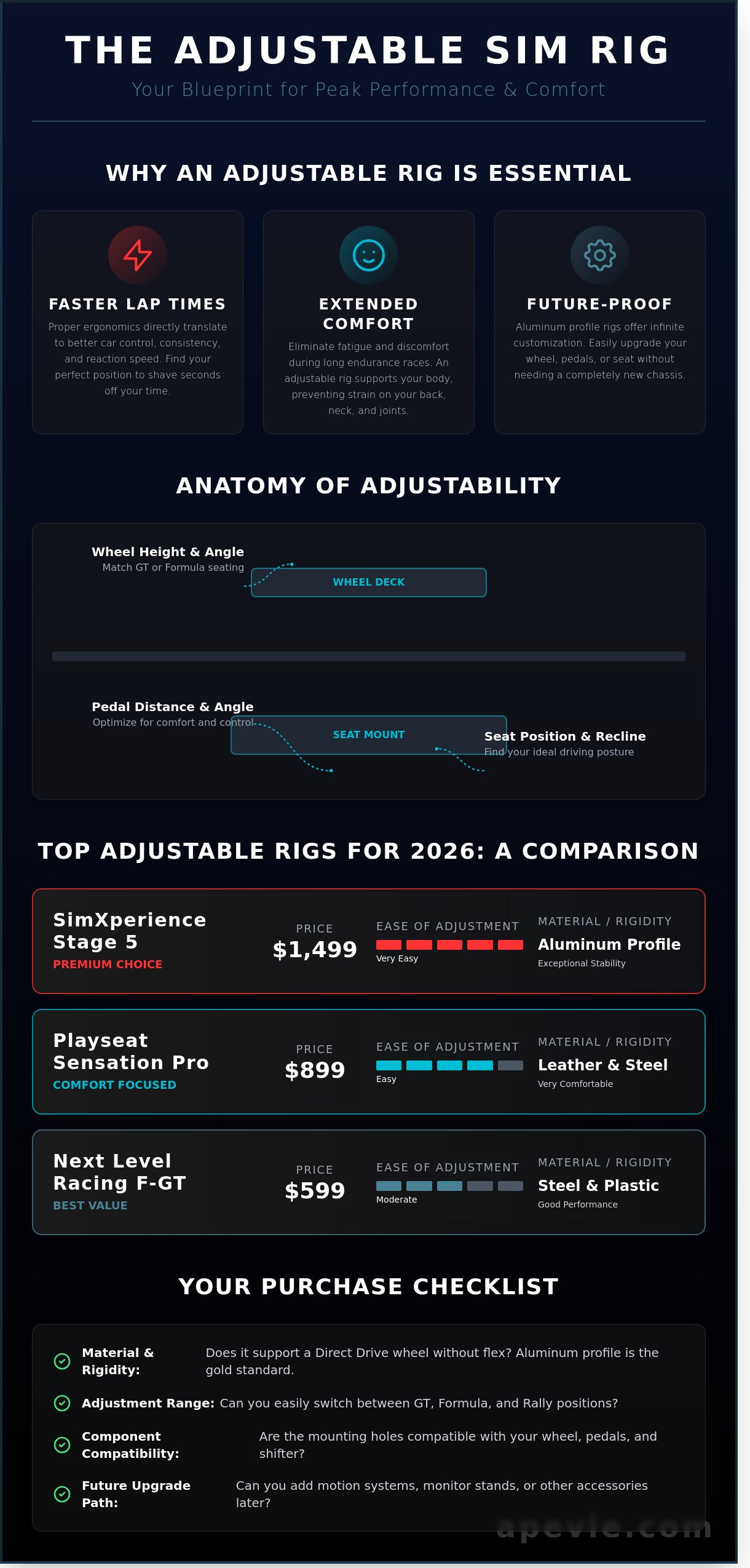
As the sim racing community grows, so does the variety of adjustable sim racing rigs available on the market. Each rig offers unique features, price points, and user experiences. Below is a comparison table of leading adjustable sim racing rigs for 2026, showcasing their most noteworthy attributes:
| Model | Price | Ease of Adjustment | Material Quality | User Feedback |
|---|---|---|---|---|
| SimXperience Stage 5 | $1,499 | Very Easy | Aluminum Frame | Highly Praised |
| Next Level Racing F-GT | $599 | Moderate | Steel and Plastic | Good Performance |
| Playseat Sensation Pro | $899 | Easy | Leather and Steel | Comfortable |
Each adjustable sim racing rig offers distinct advantages:
- SimXperience Stage 5: Known for its exceptional adjustability and robust aluminum frame, this rig provides a high-end racing experience. Users frequently commend its stability, which enhances immersion during races.
- Next Level Racing F-GT: This model strikes a balance between affordability and functionality. Its moderate adjustment capabilities cater well to both casual and serious racers, making it a versatile choice.
- Playseat Sensation Pro: Praised for its comfort, this rig features premium materials, ensuring an enjoyable racing experience. Users often highlight its ergonomic design, which supports long gaming sessions.
Key Features to Consider
When selecting an adjustable sim racing rig, consider the following:
- Seat Comfort and Adjustability: Look for rigs with customizable seating options that accommodate different body types and preferences.
- Wheel and Pedal Mount Adjustments: Ensure the rig allows for modifications based on your racing style, whether you prefer a laid-back position or a more aggressive stance.
- Stability and Durability: Assess build quality by checking user reviews and expert evaluations; a stable rig enhances your overall performance.
User Experiences and Reviews
User feedback is invaluable when considering an adjustable sim racing rig. Across various models, comfort and performance consistently emerge as key themes. Many users rave about the immersive experience provided by the SimXperience Stage 5, while others appreciate the affordability and functionality of the Next Level Racing F-GT. However, some complaints center around the assembly process for certain models, pointing to a need for clearer instructions.
For insights on pedal compatibility and performance, check out the Ultimate Guide to Sim Racing Pedals.
In conclusion, selecting the right adjustable sim racing rig depends on your individual needs and preferences. Whether you prioritize comfort, stability, or budget, there's a rig available to enhance your racing experience. To explore more options, feel free to visit Apevie.
Ergonomic Considerations for Adjustable Sim Racing Rigs
In the world of sim racing, an adjustable sim racing rig is more than just a luxury; it’s a necessity for optimal performance and long-term comfort. Ergonomic design plays a pivotal role in ensuring that racers can maintain their focus and agility without the hindrances of discomfort or strain. Proper posture not only enhances performance but also reduces fatigue, allowing for longer and more enjoyable racing sessions.
When you invest in an adjustable sim racing rig, you gain the ability to customize your setup, which can lead to significant health benefits. This adaptability helps mitigate strain on your back, neck, and wrists, which are common problem areas for racers. A well-designed rig can encourage proper alignment of your body, ensuring that you remain comfortable and effective as you race.
Adjusting for Optimal Comfort
Finding the best seating position is crucial for both comfort and control. Follow these steps to achieve an optimal setup:
- Start with the seat: Adjust the seat height so that your knees are slightly bent when your feet are on the pedals. Your thighs should be parallel to the ground.
- Set the wheel height: The steering wheel should be positioned at chest level, allowing for a natural grip without raising your shoulders.
- Pedal positioning: Ensure the pedals are at a comfortable distance, allowing full range of motion without overextending your legs.
Common mistakes include placing the wheel too high or low, which can cause shoulder strain, or positioning the pedals too far away, leading to cramped legs. Regular adjustments based on your racing style and personal preferences will help maintain comfort.
Long-Term Health Benefits of Proper Positioning
Extended periods spent in a poor posture can lead to serious health issues, including chronic back pain and repetitive strain injuries. Research from the American Chiropractic Association indicates that over 80% of adults will experience back pain at some point in their lives, often exacerbated by poor ergonomics. An adjustable sim racing rig can significantly reduce this risk by allowing users to tailor their setup to their own height and body mechanics.
Experts recommend taking breaks every 30 to 60 minutes to stretch and reset your posture. Additionally, regularly evaluating your seating position can help prevent discomfort. By prioritizing an ergonomic design, you not only improve your racing performance but also invest in your long-term health and well-being.
Setting Up Your Adjustable Sim Rig: Practical Tips
Setting up your adjustable sim racing rig is an exciting yet intricate process. With the right approach, you can ensure optimal performance and longevity of your equipment. Below, we provide a detailed guide on unboxing, initial setup, calibration, and maintenance to help you get the most out of your rig.
Step-by-Step Setup Process
Unboxing your adjustable sim racing rig should be done carefully. First, gather the necessary tools, which typically include a screwdriver, Allen wrenches, and perhaps a level. Upon opening the box, inspect each component, ensuring everything is accounted for according to the manual. Start with the initial assembly by following the step-by-step instructions provided by the manufacturer.
Once assembled, positioning your rig correctly is crucial. Ensure it’s placed on a stable surface, ideally in a location that allows for comfortable seating and access to your gaming setup. The seat should be at the right height, allowing for a natural grip on the wheel while maintaining a straight posture.
Calibrating your wheel and pedals is the next vital step. Many sim racing rigs have specific calibration processes that can vary by model. For instance, follow the on-screen prompts in your simulation software to adjust the steering sensitivity and pedal response for accurate feedback. This calibration is essential for a responsive and immersive racing experience.
Ongoing Maintenance and Adjustments
Regular maintenance is key to prolonging the life of your rig. Check for wear and tear on moving parts, particularly the wheel and pedal systems, every few months. Lubricate components as necessary to maintain smooth operation. Keeping your rig clean will also help; dust and debris can affect performance and longevity. A simple microfiber cloth can do wonders to keep surfaces dust-free.
Be mindful of common pitfalls during setup. Many users overlook the importance of adjusting the seat position or fail to calibrate their equipment correctly. These mistakes can lead to discomfort during extended use and hinder performance. Always refer back to the manual for specifications and troubleshooting tips.
In conclusion, setting up your adjustable sim racing rig requires careful attention to detail, from the initial assembly to ongoing maintenance. Following the steps outlined above will ensure you get the most from your investment, leading to countless hours of enjoyable racing. To enhance your experience even further, explore our range of custom high-performance racing simulator hardware.
Conclusion: Choosing the Right Adjustable Sim Racing Rig
Selecting the perfect adjustable sim racing rig represents far more than simply purchasing gaming equipment. It's an investment in your long-term performance, comfort, and racing enjoyment. Throughout this guide, we've explored how adjustability transforms your sim racing experience from a casual hobby into a precision-driven pursuit that mirrors real motorsport.
The importance of adjustability cannot be overstated, as it directly impacts your ability to achieve the best possible driving position and overall experience. Selecting the right adjustable sim racing rig isn't just about comfort; it's about unlocking your full potential on the virtual track, leading to improved performance and greater satisfaction in your racing endeavors.
Transform Your Racing Performance Today
Selecting the right adjustable sim racing rig isn't just about comfort-it's about unlocking your full potential on the virtual track.
Frequently Asked Questions
What is an adjustable sim racing rig?
An adjustable sim racing rig is a customizable setup designed to enhance the virtual racing experience. It allows users to modify the position of crucial components like the seat, steering wheel, and pedals, catering to individual preferences and body types. This adaptability ensures optimal comfort and control during long racing sessions, making it easier for drivers to maintain focus and improve performance.
How do I know which adjustable rig is best for me?
To determine the best adjustable sim racing rig for your needs, consider factors like your budget, available space, and compatibility with existing gear. Assess your racing style and how much adjustability you require. Reading customer reviews and comparing features of different models can help you make an informed decision, ensuring you select a rig that enhances your driving experience.
What are the benefits of an ergonomic sim racing cockpit?
An ergonomic sim racing cockpit offers numerous benefits, including improved comfort and reduced fatigue during extended gaming sessions. A well-designed cockpit promotes proper posture, minimizing strain on the back and neck. Additionally, it enhances your overall racing performance by allowing better control and responsiveness while driving, making it a valuable investment for serious sim racers.
Can I use my existing gear with an adjustable rig?
Yes, most adjustable sim racing rigs are designed to be compatible with a wide range of existing equipment, such as steering wheels, pedals, and shifters. Before purchasing, verify that the rig supports your specific gear brands and models. Many rigs come with universal mounting options, making it easy to integrate your current setup without needing additional modifications.
How much should I expect to spend on a high-quality adjustable sim rig?
High-quality adjustable sim racing rigs typically range from $300 to over $1,500, depending on features and materials. Entry-level rigs may offer basic adjustability, while premium options provide extensive customization and robust construction. Researching various brands and models can help you find a rig that meets your needs without compromising on quality.
Are adjustable sim racing rigs difficult to set up?
Setting up an adjustable sim racing rig can vary in complexity based on the model. However, most rigs come with detailed instructions and are designed for relatively straightforward assembly. Many users report completing the setup in under two hours, depending on their experience level and the number of components involved. Following the manufacturer's guidelines will ensure a smoother installation process.
What maintenance does an adjustable sim rig require?
Maintaining an adjustable sim racing rig is generally simple and involves regular cleaning and periodic checks for loose screws or wear on components. Wiping down surfaces with a soft cloth can keep the rig looking new. Additionally, ensuring that pedals and steering wheels are functioning correctly will enhance your racing performance and extend the lifespan of the rig.