Load Cell Sim Racing Pedals: How They Measure Braking Force
A brake pedal doesn’t need a long sweep to give you useful control. Load cell sim racing pedals measure how hard you press, rather than relying mainly on pedal travel, linking braking input more closely to pressure and muscle memory. That can matter when you’re easing off smoothly into a corner, not just applying maximum braking.
If you’re considering an upgrade, the appeal is straightforward: a more consistent feel can help you repeat braking inputs, but a load cell is not automatically the right fit for every rig or budget. This guide explains how a load cell turns pedal pressure into a signal the simulator can read, and how that differs from potentiometer pedals, which track movement. It also covers what to compare, including pedal feel, adjustability, mounting, and driving style. Use these points to decide whether a load cell brake suits your setup now or your current pedals still meet your needs.
Key Takeaways
- Choose pedals based on how they read braking input: force-based systems and travel-based systems build different habits.
- Account for the maintenance needs of hydraulic pedals when weighing their feel against a load cell design.
- Look beyond maximum load figures and consider how the brake responds to the pressure you apply.
- Compare budget options by pedal feel, adjustability, and mounting needs to find a setup that suits your driving and rig.
What are load cell pedals?
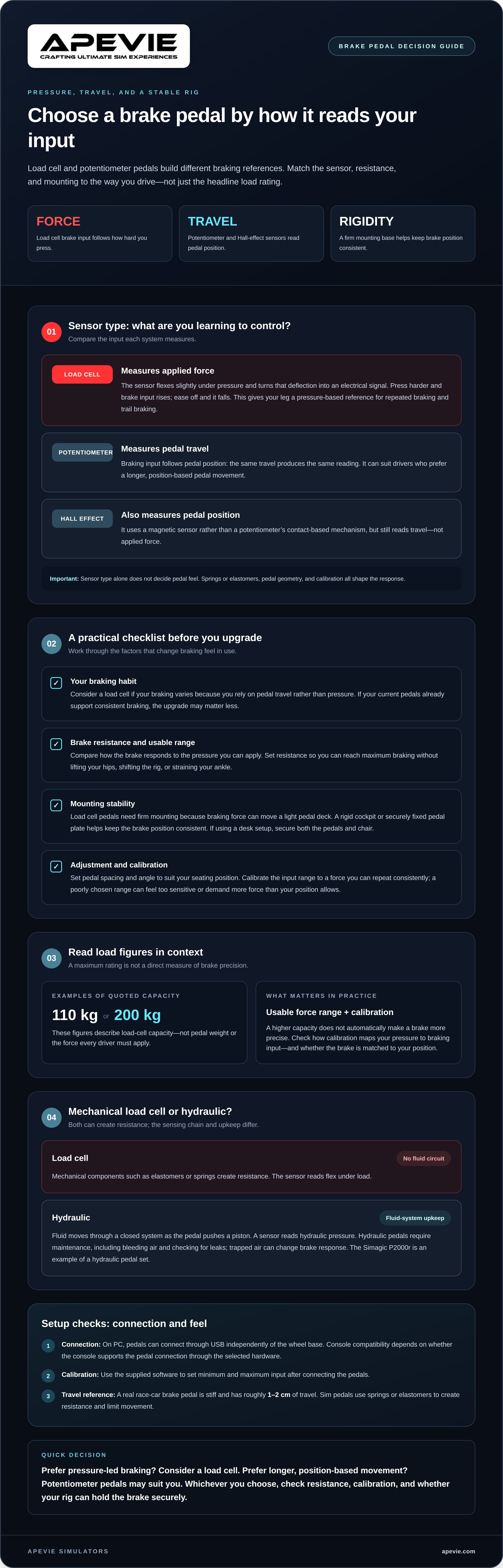
Load cell sim racing pedals measure braking input by force rather than pedal travel. Under pressure, the sensor flexes slightly and converts that deflection into an electrical signal that the simulator reads as brake input. Press harder and the reading rises; ease off and it falls. This pressure-based response gives drivers a consistent reference for trail braking and repeated corner entries.
Hydraulic pedals use a different sensing chain. Brake fluid or oil moves through a closed system as the pedal pushes a piston in a master cylinder. A sensor reads the resulting hydraulic pressure and sends a signal to the simulator. The Simagic P2000r is an example of a hydraulic pedal set. Unlike a conventional load cell mounted beneath the pedal, hydraulic sensing measures pressure within the fluid circuit.
The sensing method also affects pedal feel and maintenance. Load cell pedals get their resistance from mechanical components such as elastomers or springs. Hydraulic systems use fluid, pistons, and cylinders to create resistance that can feel progressive as pressure builds. They also require maintenance, including bleeding to remove air and checking for leaks. Trapped air, for example, can change the brake response, while a load cell system has no fluid circuit.
On PC, pedal sets can connect through USB independently of the wheel base, so different pedal and wheel-base brands can work together. PlayStation and Xbox compatibility depends on whether the console supports the pedal connection through the selected hardware. For installation, secure the pedals to a stable base, connect them through USB or the supported wheel-base route, then use the supplied software to calibrate the minimum and maximum input.
Load cell pedals need firm mounting because braking force can move a light pedal deck. A rigid cockpit or securely fixed pedal plate helps keep the brake position consistent. A desk setup can work if both the pedals and chair are secured; loose furniture makes hard braking less controlled. Set pedal spacing and angle to suit your seating position before calibrating.
Load cell versus potentiometer pedals
Potentiometer pedals measure pedal travel, while load cell brakes respond to applied force. That distinction changes how you develop a repeatable braking reference in a simulator.
Load Cell and Potentiometer Sensors
A potentiometer tracks how far the brake pedal moves; a load cell measures how hard you press. With a potentiometer, braking input follows pedal position, so the same travel produces the same reading. A load cell lets you learn pressure through your leg, which can make repeated braking points feel more consistent. Hall-effect sensors also measure pedal position, using a magnetic sensor instead of a potentiometer’s contact-based mechanism. The sensor type alone doesn’t determine pedal feel: springs or elastomers, pedal geometry, and calibration all shape the response.
The Case for Upgrading
Consider load cell pedals if your braking varies because you rely on pedal travel rather than pressure. They can provide a more direct reference for braking force, especially when easing off at corner entry. The upgrade may matter less if your current potentiometer pedals already support consistent braking, or your rig cannot hold a firm brake pedal securely. Your braking habits and mounting stability matter as much as the sensor type.
Capacity figures need context. Sim racing pedals may quote 110 kilograms or 200 kilograms, but those figures describe load-cell capacity, not pedal weight or the force every driver must apply. A higher capacity doesn’t automatically make a brake more precise. Look at the usable force range and how its calibration maps pressure to the simulator’s braking input. A cell rated for a high maximum can still feel poorly matched if the brake is too stiff for your driving position.
For a practical decision, compare sensor type, brake resistance, and available adjustment together. Potentiometer pedals can suit drivers who prefer a longer, position-based pedal movement; a load cell suits pressure-led braking. Hall-effect position sensing avoids a potentiometer’s contact mechanism, but it still reads travel rather than applied force. If you’re considering a pedal change, compare the Conspit pedal options with the sensing approach you want.
How load cell brake pedals measure force
A load cell brake converts foot pressure into a signal the simulator can interpret. In a typical design, the brake assembly flexes slightly under load, and the sensor converts that deflection into an electrical output. The game maps the changing signal to braking input, so pressing harder increases the brake command. That small amount of physical movement is part of the measurement, but it is not the main input you learn to control.
Calibration connects the sensor reading to usable brake output. According to the National Institute of Standards and Technology, load-cell calibration can relate a known applied load to cell deflection using a linear regression model. In sim racing software, the resulting input range can be adjusted so a controlled press reaches the desired braking response. A poorly chosen range can make the brake feel too sensitive or require more force than your position allows.
Pedal stiffness and travel shape the feedback your leg receives. A real race-car brake pedal is stiff and has roughly 1 to 2 cm of travel. Sim pedals use mechanical components, such as springs or elastomers, to create resistance and limit movement. A firmer stack can give your foot a clearer pressure reference; a softer setup allows more movement before strong braking. The right feel depends on your driving position and the rigidity of your sim racing setup.
Beginners and experienced drivers don’t need one universal brake-force target. Set resistance so you can reach maximum braking without lifting your hips, shifting the rig, or straining your ankle. Then calibrate the input range to the force you can repeat consistently. A beginner may prefer a lighter brake for controlled practice, while an experienced driver may choose firmer resistance for a familiar pressure reference.
Adjusting brake resistance changes the effort required, not the sensor’s basic function. Change the spring or elastomer arrangement, then recalibrate the brake input so the simulator reads the range you intend to use. This separates pedal feel from software response: the components shape what your foot feels, while calibration determines how that pressure becomes braking input.
Budget load cell pedal options
A lower-cost approach can start with the brake rather than a complete three-pedal set. Throttle and brake are enough to get started in sim racing, so a two-pedal load cell set can cover the core need without an unused clutch. If you already own compatible pedals, compare the practical fit of replacing them with the cost of building a new set around your existing rig.
When setting a budget, consider the sensor alongside the rest of the setup. A load cell reads brake pressure, but consistent input also depends on mounting, pedal resistance, and calibration. A stiff brake on a flexible deck may move the rig instead of providing a stable position. Before choosing, consider these three points:
- Pedal count: choose two pedals for throttle and braking, or add a clutch if your driving requires it.
- Mounting: account for the pedal plate and cockpit, since the brake needs a stable base under pressure.
- Adjustment: look for a way to set resistance and input range around the force you can repeat.
Capacity figures alone don’t show which pedals offer the best value for you. A higher maximum load doesn’t tell you whether the brake resistance suits your seating position or the pedals fit your rig. Compare usable feel and adjustment options first. For example, if you mainly race cars without using a manual clutch, a well-mounted two-pedal set may be more practical than adding a third pedal.
Budget also means avoiding upgrades that don’t solve your current limitation. If your existing potentiometer brake already supports repeatable braking, prioritize a rigid mount or better calibration before replacing the whole set. If inconsistent pressure is the problem, focus your upgrade on the brake’s load cell and resistance adjustment. Compare Conspit pedal options as part of that decision, with pedal count and mounting compatibility in mind.
Apevie Simulators: Load Cell Pedal Set
Apevie Simulators’ Load Cell Pedal Set is a practical next step if you’ve decided force-based braking fits your driving style. It gives you a pedal option to consider when replacing travel-based brake input or planning a custom simulator build. For a specific pedal example, Apevie Simulators also offers Heusinkveld Sim Pedals Sprint, which can be considered as part of a wider setup.
The right choice depends on how the pedals fit your rig, the brake resistance you prefer, and whether you’re upgrading pedals alone or building a complete system. Contact Apevie Simulators to discuss your setup and goals alongside the simulator components you’re considering.
Build your braking around the rest of your setup
Choose a pedal feel you can use consistently, then match it to a stable simulator. Load cell sim racing pedals are only one part of the decision; cockpit rigidity, seating position, and the rest of the system also shape your setup. A pedal upgrade can stand alone or form part of a wider build.
Apevie Simulators offers Heusinkveld Sim Pedals Sprint and custom high-performance racing simulators, with the Sigma Integrale DK2 Motion System as another component option. Its turnkey solutions bring components together, while white-glove installation and expert consultation support buyers planning a complete rig or refining an existing one.
If you’re ready to compare pedal options for your setup, explore Conspit pedal options with Apevie Simulators. Start with the braking feel you want, then build the rest of your rig around it.
Frequently Asked Questions
What is a load cell in sim racing pedals, and how does it work?
A load cell converts force on the brake into an electrical reading. The simulator uses that input to apply braking, so calibration determines how pedal pressure maps to the in-game brake. If strong braking begins too early in the pedal press, for example, adjusting the input range can better match the response to your foot pressure.
How do load cell pedals improve braking consistency compared with potentiometer pedals?
Load cell pedals let you use applied force as a repeatable cue instead of relying on the same pedal position each time. That can help if your braking varies because pedal travel feels different across corners. A load cell won’t choose your braking points, but a stable mount and well-calibrated brake can make pressure easier to reproduce.
How much do load cell sim racing pedals cost in the United States?
Cost depends on the set and its configuration, so compare the included pedals and adjustment features rather than assuming one price covers every option. As a specific current example, Fanatec PODIUM PEDALS SPORT are listed at $599.99. Fanatec prices may change without notice. A two-pedal set may suit drivers who don’t need a clutch pedal.
What are common load cell pedal problems, and how can you troubleshoot them?
Inconsistent readings can point to calibration issues, a loose connection, or pedal movement under braking. Check that the pedals are firmly mounted, reconnect the USB cable, and recalibrate the brake input in the relevant software. If the signal remains erratic, inspect the cable and sensor area for visible damage, then consult the pedal maker’s support guidance before taking components apart.
What are the best load cell sim racing pedals in 2026, and how do they compare?
Heusinkveld Ultimate+ and Sprint sets are listed options, but no single best choice is established. The Ultimate+ brake uses a 200 kg load cell; choose a two-pedal set for throttle and braking or add a clutch if you need one, and compare pedal feel, adjustability, and mounting.