Pro-Level Cockpit Optimization: The Ultimate Aluminum Extrusion Sim Rig Accessories Buying Guide (2026)
Why do so many drivers invest thousands in a direct drive system and precision pedals only to let cable clutter and ergonomic flex ruin their immersion? It's a common frustration to have a world-class Simucube base mounted to a frame that lacks the necessary refinement for a truly professional setup. Choosing the right aluminum extrusion sim rig accessories is the critical step that turns a collection of metal profiles into a high-performance cockpit. You've likely experienced the annoyance of reaching for a keyboard that's out of position or watching a premium button box vibrate because of a cheap mount.
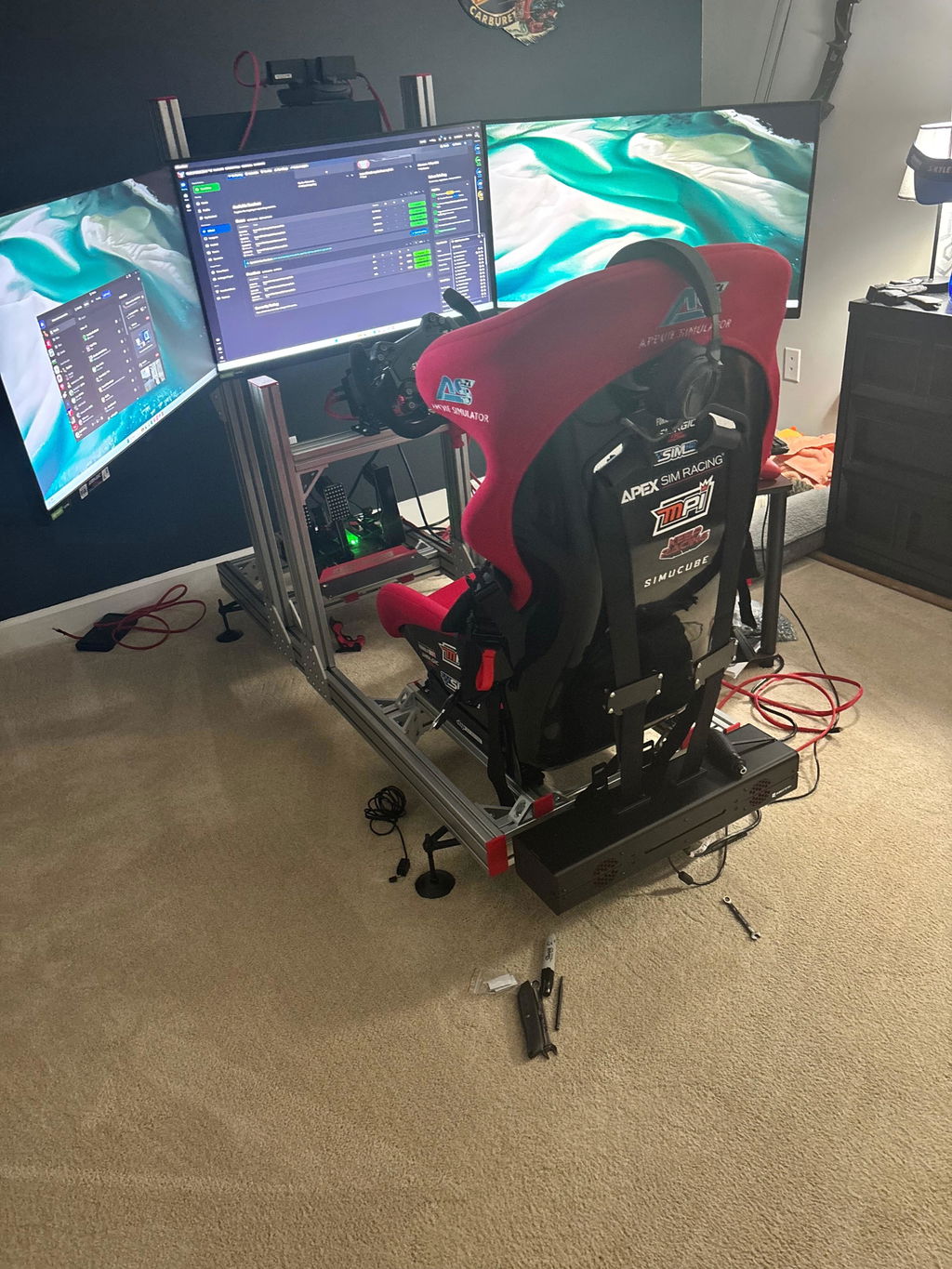
We agree that your focus should be on the apex, not on gear that shifts under pressure. This guide provides a clear roadmap to transform your raw frame into a clean, organized, and rigid racing environment. We'll explore the essential components from the ResTech collection by Apevie Simulators, including secure mounting solutions for GSI wheels and cable management systems designed to handle the intense forces of a Sigma Integrale motion system. By the end, you'll know exactly how to build a workspace that supports your performance rather than hindering it.
Key Takeaways
- Understand why heavy-duty mounting is essential for high-torque wheel bases like the Simucube 2 Pro to eliminate sympathetic vibration and maintain haptic clarity.
- Learn to differentiate between simple environmental tools and the performance-driven aluminum extrusion sim rig accessories that optimize your ergonomic interface.
- Implement professional cable and power management strategies to protect your Sigma Integrale motion systems and ensure a clean, focused racing environment.
- Discover how the 22 curated items in the ResTech collection provide the necessary rigidity for mounting premium peripherals like GSI wheels and Cube Controls.
- Identify the key ergonomic upgrades that eliminate physical distractions and help improve your lap time consistency through better control accessibility.
The Role of Accessories in Professional Aluminum Profile Rigs
Rig accessories aren't just aesthetic upgrades; they're specialized mounting hardware and ergonomic tools designed to integrate with a sturdy frame made from aluminum profiles. While the frame provides the structural skeleton, the right aluminum extrusion sim rig accessories create the functional nervous system of your cockpit. This transition from a basic gaming setup to a professional motorsport simulator relies on the total elimination of flex. If your shifter plate or button box mount moves even a millimeter during a high-G turn or a rapid gear change, you lose the tactile precision required for high-level competition. Professional drivers prioritize rigidity because inconsistent hardware feedback inevitably leads to inconsistent lap times. By securing your peripherals with heavy-duty mounts, you ensure that every input is translated directly into the simulation without the dampening effect of structural movement.
T-Slot Compatibility: 40-Series vs. 15-Series
Building a rig requires understanding the specific standards of T-slot profiles. Most global rigs use metric 40-series profiles, such as the 4080 or 40160, while some North American builds utilize the imperial 15-series. The ResTech collection, which includes 22 curated items, is engineered for universal compatibility. This ensures that these accessories secure firmly to either standard without requiring custom modifications. Using high-quality M6 or M8 hardware combined with steel spring-loaded T-nuts is essential for long-term stability. These components prevent the "creep" that often occurs when using inferior 3D-printed mounts that simply can't handle the sustained vibrations from a Sigma Integrale DK2 motion system. High-tensile fasteners ensure that once a component is locked into place, it stays there regardless of the torque levels your Simucube base produces.
Ergonomics and Muscle Memory
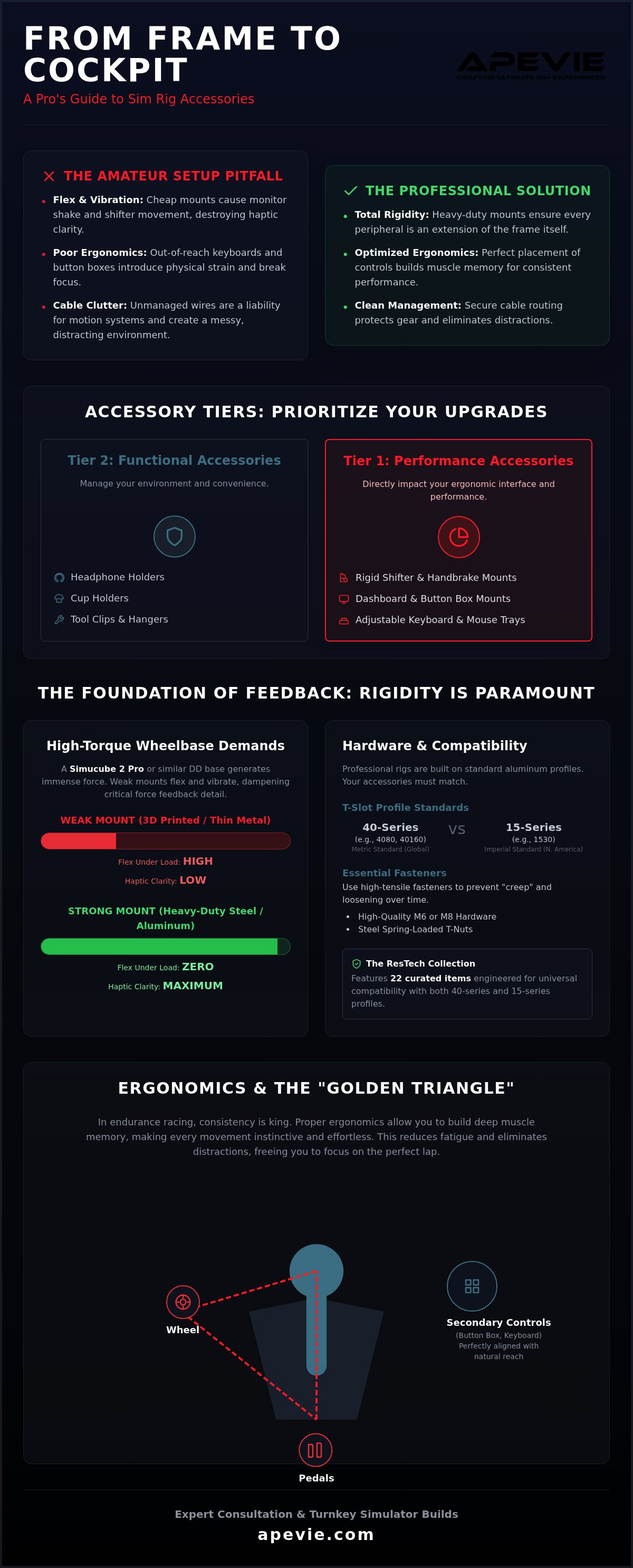
In the heat of a three-hour endurance stint, every movement must be instinctive and effortless. Professional-grade mounts allow you to position peripherals like a Cube Controls F-Core or a GSI Formula Pro Elite within the "Golden Triangle." This is the zone where your wheel, pedals, and secondary interface points are perfectly aligned with your natural reach and line of sight. If you're forced to lean forward or strain your shoulder to reach a keyboard or button box, you're breaking your posture and introducing physical fatigue. Adjustable mounts ensure that your interface points remain static, allowing you to build the deep muscle memory needed for critical mid-race adjustments. Ergonomic consistency is the direct foundation of improved lap time consistency. When your body doesn't have to compensate for poor gear placement, your mind is free to focus entirely on the racing line.
Functional vs. Performance Accessories: Categorizing Your Rig Upgrades
Not every addition to your frame carries the same weight. While the term aluminum extrusion sim rig accessories covers a broad range of hardware, professional builders categorize these by their direct impact on the driving experience. Functional accessories manage your environment. These include items like headphone holders, cup holders, or simple tool clips. Performance accessories, however, are ergonomic interface points such as shifter plates, dashboard mounts, and keyboard trays. When you prioritize your budget, these interface points should always come first. A study on force feedback performance suggests that the clarity of tactile information is vital for driver response times. If your dashboard mount or shifter plate flexes, it acts as a mechanical filter that muddies the data your body receives from the car.
Cable management is often dismissed as a functional convenience, but it becomes a performance factor when you install Sigma Integrale motion systems. In a dynamic environment where the rig is pitching and rolling, loose cables are a liability. Secure routing ensures that your high-voltage lines don't interfere with your telemetry or snag on moving parts. Using profile-channel clips to lock down your loom prevents "sympathetic vibration," where loose cables rattle against the frame and mask the subtle haptic cues provided by your motion actuators. Rigidity is paramount. Every component must be an extension of the frame itself.
Interface Points: Keyboard Trays and Mouse Pads
A swinging keyboard arm is usually the superior choice for serious racers, especially those using VR or large triple-screen arrays. Fixed trays often block entry or force an awkward seating position. A high-quality arm allows you to swing the interface into your "Golden Triangle" for navigation and then move it completely out of the way for the race. You shouldn't settle for a tray that bounces while you type. Precision builds from brands like Vesaro prioritize this stability to ensure the cockpit feels like a unified piece of motorsport equipment. This level of integration is what separates a professional build from a basic gaming station.
Display and Dashboard Mounting
Deciding between an integrated wheel base mount and a profile-mounted dashboard depends on your visual setup. Integrated mounts for Simucube or Fanatec bases keep the display close to the steering axis, which is ideal for GT-style cockpits. However, profile-mounted dashboards offer more adjustability in height and depth. This is crucial when using high-end wheels from Gomez Sim Industries (GSI). The larger diameter of some formula wheels can easily obscure a poorly positioned DDU. Mounting your telemetry at eye level ensures you never take your eyes off the track to check your brake bias or tire temperatures. You can find these curated interface solutions in the Apevie ResTech collection to ensure your build meets professional standards.
Mount Rigidity and Integration: Choosing Hardware for High-Torque Peripherals
High-torque wheel bases like the Simucube 2 Pro generate up to 25Nm of peak force. This energy doesn't just stay in the steering shaft; it travels through the entire frame. If your aluminum extrusion sim rig accessories lack the structural integrity to handle these loads, you'll encounter a phenomenon known as sympathetic vibration. This occurs when loose or under-engineered mounts begin to resonate in response to the wheel's feedback. These micro-vibrations degrade the clarity of the haptic signals reaching your hands, making it harder to sense the edge of traction. Ensuring absolute rigidity is the only way to preserve the fidelity of high-end direct drive systems. For more on the core structure, see our Sim Rig Guide.
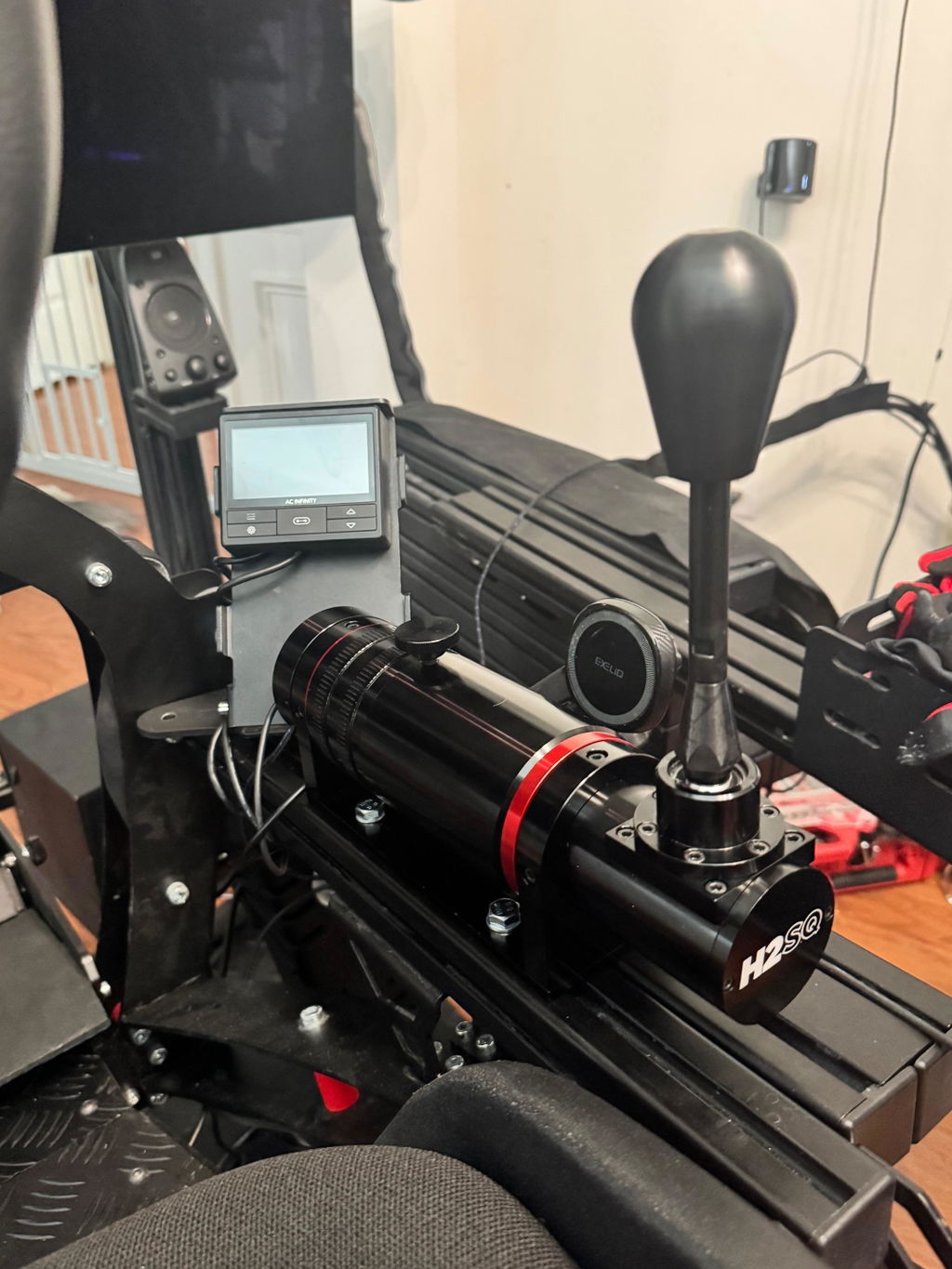
When choosing mounts for high-stress peripherals like shifters and handbrakes, material density is critical. While aluminum profiles are excellent for the main structure, high-gauge steel is often superior for the plates that hold your controls. Steel provides the density and tensile strength needed to resist the leverage applied during aggressive downshifts or heavy handbrake pulls. Using inferior mounts causes the gear to deflect, which ruins the tactile sensation of a mechanical shift. The ResTech collection, featuring 22 professional-grade items, focuses on these high-stress interface points to ensure your build remains as stable as a real race car cockpit.
Heavy-Duty Shifter and Handbrake Plates
Precision hardware like the Heusinkveld Sim Pedals Ultimate+ demands a mounting surface that doesn't deflect under pressure. The same logic applies to shifters. Side-mounting your profile arms generally provides better lateral stability than top-mounting. This configuration uses the natural depth of the profile to resist twisting forces. High-performance plates are designed to eliminate this flex entirely, providing a solid foundation that matches the build quality of professional motorsport equipment. You'll notice the difference immediately in your consistency when the controls don't move during emergency maneuvers.
Haptic and Transducer Mounting
Effective haptic integration is about targeted energy transfer. When using systems like the Sigma Integrale DK2, you want the vibration to reach your seat and pedals, not dissipate into the floor. Specialized profile clamps and rubber isolators play a vital role here. They allow the actuators to deliver crisp, localized feedback while preventing the rest of the rig from becoming a giant tuning fork. This isolation ensures that the subtle road textures and engine harmonics remain distinct rather than becoming a muddy, undifferentiated hum. It's this level of detail that elevates a simulator from a toy to a professional-grade training tool.
The Professional Cockpit Checklist: Essential Add-Ons for 2026
Building a world-class simulator requires more than just bolting a wheel to a frame. The final refinement stage involves selecting aluminum extrusion sim rig accessories that address the practical realities of high-end racing. A professional checklist for 2026 must prioritize safety, accessibility, and long-term maintenance. This means moving beyond basic functionality to integrated solutions that protect your investment. For example, high-torque direct drive systems require a dedicated Emergency Stop (E-Stop) mount within immediate reach. If a software glitch causes a runaway wheel, searching for a loose button on the floor is not an option. Securely mounting your power management tools, such as surge protectors and industrial-grade USB hubs, directly to the profile ensures that your data connections remain stable even under the intense vibrations of a professional build.
Maintenance is another overlooked aspect of cockpit optimization. Profile end-caps are essential, not just for a finished aesthetic, but to prevent dust buildup inside the T-slots and protect your racing boots from sharp, unfinished aluminum edges. For telemetry, articulating arms for tablets or secondary displays allow you to adjust your data readout mid-session without breaking your ergonomic "Golden Triangle." These components, like the 22 items found in the ResTech collection, are designed to endure the rigors of daily use in a high-performance environment.
Cable Management for Motion Rigs
When your cockpit is capable of the violent movements provided by a Sigma Integrale DK2 system, cable routing becomes a safety-critical task. You must plan for "service loops" at every pivot point and actuator mounting location. These loops provide enough slack for the rig to reach its full range of pitch and roll without tensioning the internal wiring. Using T-slot cable ties and split-sleeving allows you to create a professional loom that stays flush within the profile channels. In motion simulators, an unsecured cable is a mechanical failure waiting to happen. Proper routing prevents snagging, which can lead to catastrophic port damage or electrical shorts during a race.
Peripheral Integration
The modern sim racer often switches between various disciplines, from GT3 to Formula. This makes steering wheel storage and quick-access mounting vital. For those using the Cube Controls F-Core or Gomez Sim Industries wheels, dedicated profile-mounted hangers keep your expensive hardware safe and organized. Additionally, keeping your PC off the floor is essential for cooling and dust management. A profile-mounted PC shelf or cradle ensures that your computer moves with the rig or stays safely elevated, reducing the length of the display cables required. If you're ready to finalize your professional build, you can consult with Apevie Simulators for a custom accessory package tailored to your specific hardware.
Elevate Your Build with ResTech: Premium Accessories from Apevie Simulators
Apevie Simulators doesn't simply provide components; we offer a vetted ecosystem for the serious racer. The ResTech Accessories collection is the result of years of hands-on experience, featuring exactly 22 items curated to solve the unique ergonomic and structural challenges of elite cockpits. When you select aluminum extrusion sim rig accessories from our collection, you're benefiting from the same hardware we use in our high-end turnkey installations. We've eliminated the frustration of searching for parts that might not fit or fail under pressure. Every mount, clip, and tray in the ResTech line is chosen for its ability to maintain absolute rigidity when paired with high-torque systems like Simucube or precision peripherals from GSI. This white-glove product selection ensures that your build is optimized for performance from day one, without the need for aftermarket modifications or compromises.
Spotlight: Heavy-Duty Keyboard and Mouse Solutions
The ResTech articulating keyboard tray is engineered to exceed the stability of common 3D-printed alternatives. Standard mounts often flex or vibrate, especially when the rig is subjected to the intense haptic feedback of a motion system. Our tray features heavy-duty pivot points and high-tensile fasteners that lock the interface into your "Golden Triangle" with zero play. The collection offers various price points and value tiers, from essential mouse pads to fully adjustable arms. This variety allows you to customize your cockpit's accessibility without sacrificing the industrial-grade strength required for a professional-level racing environment. You'll find that these solutions provide a stable surface for typing and navigation that matches the build quality of your primary racing controls.
Spotlight: Advanced Cable and Power Integration
A clean cockpit is a fast cockpit. The ResTech collection includes specialized cable clips and power integration tools that simplify the complex wiring required for motion rigs. These accessories allow you to route your looms within the profile channels, protecting your data lines from the electromagnetic interference and physical snagging risks associated with moving simulators. The result is a professional aesthetic that matches the high-performance nature of your hardware. If you're ready to elevate your setup, you can browse the full ResTech Accessories collection here. For those building a new high-performance simulator, we recommend a professional consultation to ensure every component is perfectly integrated into your custom build. Proper integration ensures that your focus remains entirely on the track, where it belongs.
Refining Your Path to the Podium
A high-performance simulator is only as strong as its weakest interface point. We've explored how the right aluminum extrusion sim rig accessories preserve the haptic fidelity of your Simucube base and ensure that your ergonomic setup supports long-term consistency. By moving beyond basic mounts and embracing industrial-grade rigidity, you eliminate the mechanical noise that masks critical track data. Whether it's securing a GSI wheel or managing complex motion looms, every detail matters in a professional build. A stable cockpit isn't just about comfort; it's the foundation of your muscle memory and lap time consistency.
The ResTech collection provides a curated selection of 22 professional-grade components designed for zero-flex in high-performance racing environments. These parts are expertly tested for compatibility with high-torque systems, ensuring your cockpit remains stable under the most demanding conditions. If you're ready to transform your raw frame into a world-class training tool, Shop the ResTech Collection: Professional Sim Rig Accessories or visit Apevie Simulators for expert consultation on your next turnkey build. Precision is a choice; make sure your hardware reflects your commitment to the sport.
Frequently Asked Questions
Do aluminum extrusion accessories fit all brands of sim rigs?
Yes, most aluminum extrusion sim rig accessories are designed for universal compatibility with standard T-slot profiles. Metric 40-series rigs are the most common standard globally, but imperial 15-series builds are also prevalent in North America. The ResTech collection is engineered to bridge these standards, ensuring that components like shifter plates and keyboard trays mount securely without custom modifications. You should always verify whether your rig uses 8mm or 10mm slots to select the correct T-nuts.
What is the most important accessory for a direct drive sim rig?
A dedicated Emergency Stop (E-Stop) mount is arguably the most critical safety accessory for any high-torque direct drive setup. When you're using a Simucube base capable of 25Nm, you must have an immediate way to cut power during a software runaway. Beyond safety, high-rigidity pedal plates are essential. These ensure that the forces from high-end load-cell pedals are translated into the simulation rather than causing the frame to flex or lift during heavy braking.
How do I manage cables on a motion simulator rig?
Managing cables on a motion rig requires the use of service loops and profile-channel clips to accommodate actuator travel. You should avoid tight zip ties that can pinch wires during rapid pitches or rolls. Instead, use T-slot cable management clips to keep looms flush within the profile grooves. This prevents snagging on moving parts like Sigma Integrale DK2 actuators, which could lead to catastrophic port damage or electrical failure in the middle of a race.
Are 3D-printed sim rig accessories strong enough for high-end gear?
While 3D-printed parts work for low-stress items like headphone hooks, they often lack the structural integrity required for performance-critical components. High-torque wheel bases and motion systems create sustained vibrations that can cause plastic mounts to fatigue and crack over time. Professional builds rely on steel or aluminum extrusion sim rig accessories to ensure zero-flex. Metal hardware provides the density needed to resist sympathetic vibrations that otherwise muddy the haptic feedback from your steering system.
What hardware (bolts/nuts) do I need for aluminum profile accessories?
Most accessories require M6 or M8 socket head cap screws paired with compatible T-nuts. Spring-loaded "ball" T-nuts are the professional choice because they stay in place within the vertical channels during installation. This prevents the hardware from sliding down the profile before you can thread the bolt. Using high-tensile steel fasteners ensures that your peripherals remain locked to the frame, even when subjected to the violent forces of a Sigma Integrale DK2+ motion system.
Can I mount real-world car accessories to my aluminum sim rig?
You can certainly mount real-world motorsport equipment to your rig using the versatility of T-slot channels. Many professional racers use actual FIA-approved seats or sequential shifters originally designed for rally cars. The ResTech collection provides the necessary adapter plates and mounting hardware to bridge the gap between automotive standards and aluminum profiles. This allows you to integrate authentic hardware while maintaining the modular adjustability that makes aluminum extrusion rigs the industry standard for professional simulation. For those who take their passion for performance back to the street or track, EcuFilesMarket offers professional ECU file modifications to ensure your real-world engine is as optimized as your cockpit hardware.
Why should I use a keyboard tray instead of a side table?
A dedicated keyboard tray is superior to a side table because it maintains your ergonomic "Golden Triangle" during a race. Reaching for a side table often forces you to break your seating position, which is uncomfortable when strapped into a motion rig or using a VR headset. Articulating arms allow you to swing the interface directly in front of you for navigation and then move it out of the way for maximum visibility. This ensures your controls are always within reach.
How do I prevent my accessories from vibrating loose during races?
To prevent hardware from vibrating loose, you should use high-quality T-nuts and ensure every bolt is torqued correctly. For high-vibration environments, such as rigs equipped with haptic transducers or motion actuators, using lock washers or serrated flange bolts helps maintain tension. Regularly checking your primary interface points during routine maintenance will ensure that your cockpit remains rigid and silent. High-quality fasteners from the ResTech collection are specifically tested to stay secure under the intense forces of professional-grade racing.