Is a Motion System Worth It? A Professional Guide to High-Performance Racing Sim Kits
Can you truly master a car at its limit if your body only perceives a fraction of the physics involved? For many serious sim racers, the frustration of relying solely on visual cues to catch a sliding rear end leads to a critical question: is a motion system worth it when compared to a high-quality static setup? You've likely felt that disconnect where your eyes see the rotation, but your inner ear and seat don't register the shift until it's too late to save the lap.
We understand that choosing to invest in premium hardware like the Sigma Integrale DK2 or a D-BOX G5 system is a significant decision for any enthusiast. This guide will help you discover if a motion system provides the competitive edge and sensory realism required for your professional build. We'll examine the technical differences between pure physical displacement and high-fidelity haptic feedback. By the end, you'll know exactly how these systems integrate with high-end PC hardware from specialists like Grey PC and whether they're the missing piece in your quest for total immersion.
Key Takeaways
- Learn how motion systems engage your vestibular system to process vehicle telemetry faster than your eyes can track pixels on a screen.
- Evaluate the cost-to-performance ratio to determine if is a motion system worth it for your specific training goals compared to real-world track expenses.
- Compare the technical fidelity of industry leaders like Sigma Integrale and D-BOX to find the right haptic response for your professional rig.
- Understand why sensing rear-end traction loss through physical displacement is the key to consistent lap times and advanced car control.
- Identify the essential hardware foundation required to support a high-performance motion platform without compromising structural integrity.
Defining the Professional Racing Sim Kit: More Than Just a Seat
A high-performance racing sim kit isn't just a collection of gaming peripherals. It's an integrated ecosystem where every component works in harmony to replicate the physical forces of driving. For years, sim racing was defined by gear that prioritized visual flair over physical accuracy. Today, the industry has shifted toward professional simulation hardware designed for training and competitive performance. This transition replaces simple vibration with complex feedback loops that allow you to feel the car's limit before you see it on a screen.
When enthusiasts ask, "is a motion system worth it?" they're really asking about the quality of the feedback loop. The backbone of a worthy system is low-latency telemetry. Unlike standard setups, a pro rig processes data from the simulator's physics engine at incredibly high speeds. This data drives the direct drive wheel bases, load cell pedals, and haptic actuators that make up a modern motion simulator technology stack. By moving beyond visual-only immersion, you engage your body's natural balance sensors to process vehicle telemetry at the speed of instinct.
The Components of an Elite Setup
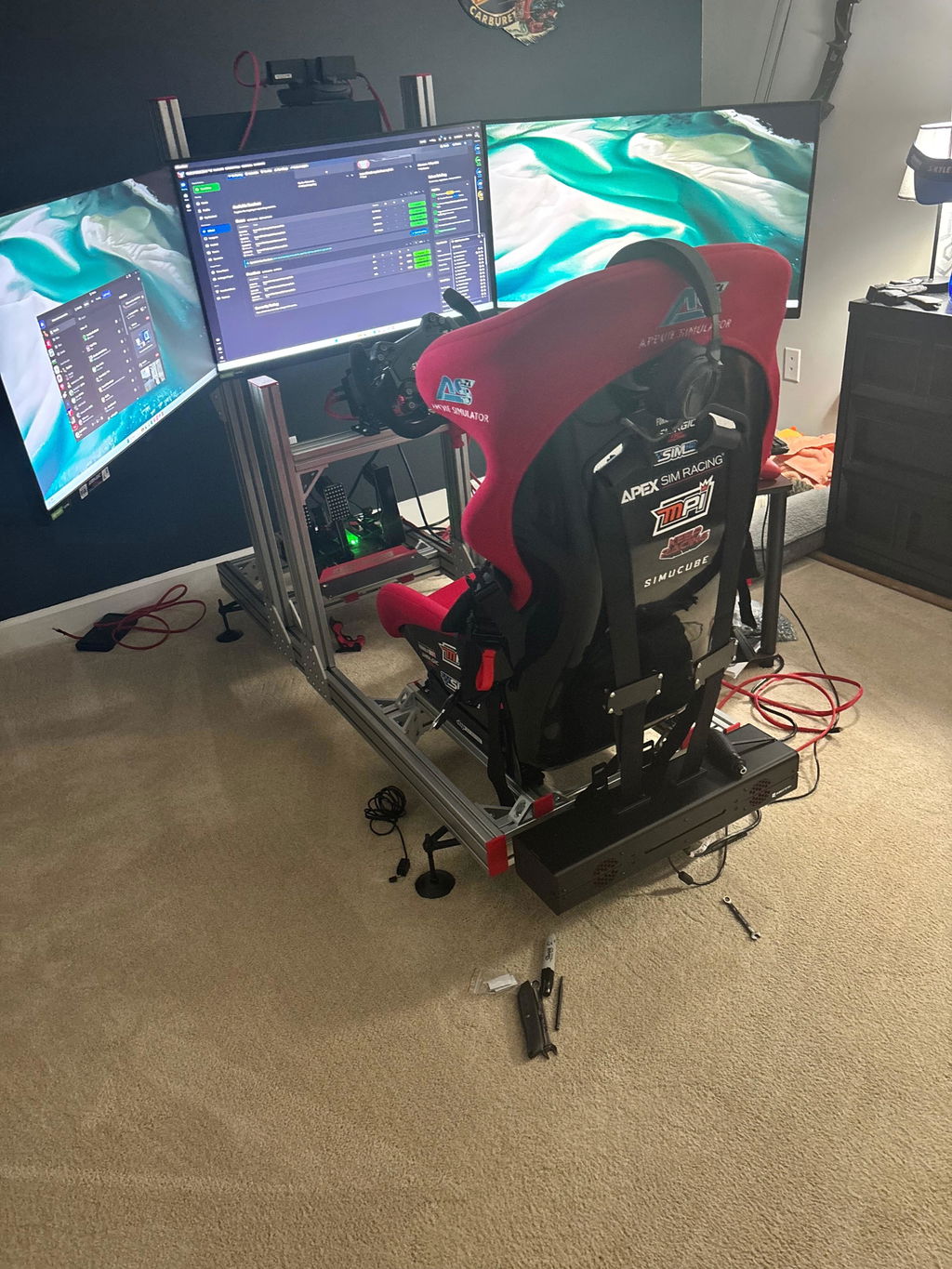
A rigid aluminum extrusion rig is the non-negotiable prerequisite for any motion upgrade. Without a stable foundation, the forces generated by high-performance actuators simply flex the frame rather than moving the driver. A pro-level build demands a synergy between several key elements:
- Chassis Rigidity: Aluminum extrusion prevents mechanical energy loss and ensures actuator precision.
- Direct Drive Bases: Units like the Simucube 3 Wheel Base or a Fanatec Podium Wheel Base provide complementary torque.
- Load Cell Pedals: Essential for maintaining consistent braking pressure while the cockpit is in motion.
Professional PC-based hardware is essential here because consoles often limit the telemetry bandwidth required to drive complex haptic arrays. This ensures that high-performance actuators, like those found in the Sigma Integrale DK2 system, receive the raw data they need to perform accurately. If your interest in high-end hardware extends to AI or high-performance computing, you can learn more about eCircles LLC for specialized GPU infrastructure. When these components are properly integrated, the simulator stops feeling like a game and starts functioning as a professional training tool.
Why 2026 is the Year of High-Fidelity Haptics
We've moved past the era of "canned" effects that just shake your seat when you hit a curb. Modern software, such as Sigma Integrale’s proprietary controllers and Simucube True Drive, has refined how we interpret in-game physics. The industry has transitioned from simple vibration to precise haptic displacement, where actuators move with micro-millimeter accuracy to simulate tire scrub and weight transfer. The question of whether is a motion system worth it often comes down to the fidelity of these modern actuators. A professional haptic system is a telemetry-driven actuator array that translates digital tire scrub and chassis flex into physical reality. With the arrival of systems like the Sigma Integrale DK2+ Motion System, the threshold for response time has reached a point where the delay between the sim and the driver is virtually non-existent.
The Science of Speed: How Motion Systems Build Muscle Memory
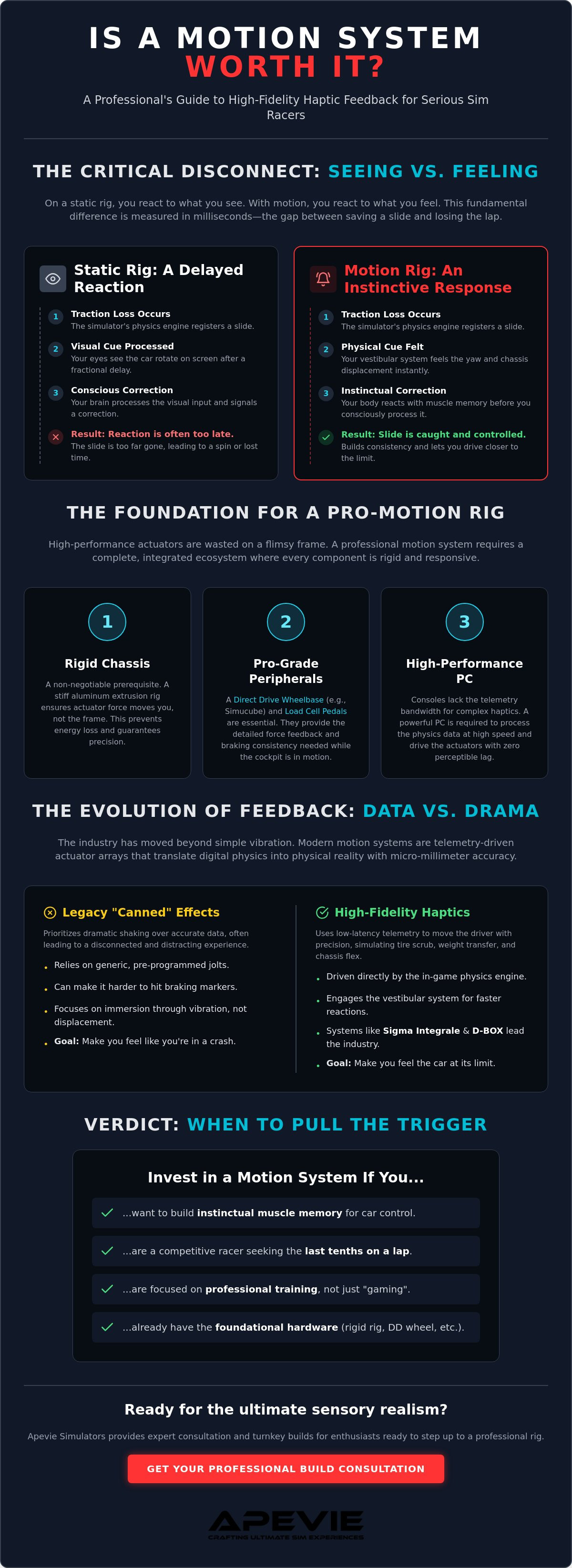
A common critique found in online forums is that motion is merely a distraction. Critics argue that the physical movement of the cockpit makes it harder to hit braking markers or maintain precision. However, this perspective often stems from experience with poorly calibrated, "canned" motion profiles that prioritize drama over data. In professional simulation, the goal isn't to shake the driver; it's to engage the vestibular system. This biological sensor in your inner ear processes pitch, roll, and heave significantly faster than your eyes can process pixels on a screen. When you're deciding if is a motion system worth it, you have to consider the speed of human reaction and biological feedback loops.
By the time your eyes see the car's rear end stepping out on a triple-monitor setup, the slide is already well underway. A high-fidelity system, such as the Sigma Integrale DK2+, communicates that yaw moment through your seat and chassis instantly. This allows you to catch the car using instinctual muscle memory rather than waiting for a visual confirmation. Academic research on force feedback suggests that providing these physical cues directly correlates to improved driver performance and consistency. For a deeper look at the physics behind these interactions, you can explore The Professional Guide to Haptic Systems.
Sensing Traction Loss Before the Visual Cue
The physics of yaw, which is the rotation of the car around its vertical axis, is the most difficult element to master in a static rig. Actuators communicate the limit of adhesion by providing a subtle "seat-of-the-pants" feel that tells you exactly how much grip the rear tires have left. Real-world drivers often use sim motion for track familiarization because it allows them to learn the bumps and camber changes of a circuit like Spa-Francorchamps or the Nürburgring. These micro-corrections prevent spins and turn a lucky save into a repeatable, consistent lap.
Reducing Mental Fatigue in Long Sessions
Sensory alignment is the key to endurance racing. When your eyes see a curb strike but your body feels nothing, your brain works overtime to reconcile the conflict. This cognitive load leads to sim-sickness and mental fatigue over long stints. A well-calibrated motion system provides road texture that keeps your brain locked into the simulation. While high-end static components like Heusinkveld Sim Pedals Ultimate+ provide incredible mechanical feedback, adding active haptic displacement to the chassis completes the loop. This level of detail is why many enthusiasts choose to invest in custom high-performance racing simulators that prioritize physiological accuracy over simple gaming aesthetics.
Is a Motion System Worth It? Cost vs. Performance Analysis
When you look at the total budget for an elite simulator, the motion platform represents a significant portion of the capital outlay. It's common to weigh this against other high-end upgrades, asking is a motion system worth it compared to investing in a premium hydraulic pedal set or high-resolution displays. The answer lies in viewing the rig as a professional development tool rather than a static piece of gaming hardware. For those aiming for the podium, the value is found in the quality and consistency of the training data you can generate at home.
The "Value per Lap" becomes apparent over the long-term life of the equipment. Industrial-grade actuators, such as those found in the Sigma Integrale DK2, are engineered for thousands of hours of peak performance without the mechanical degradation common in consumer electronics. When you compare the cost of this setup to a single season of real-world track expenses, including tires, fuel, brake pads, and entry fees, the hardware effectively pays for itself. Unlike a track car, a professional simulator doesn't require a costly engine rebuild or a fresh set of slicks after every weekend session.
Professional ROI: Training vs. Entertainment
Professional drivers utilize these systems to maintain their edge during the off-season, as a static rig can't replicate the weight transfer required for accurate car control. Relying on a static setup can lead to "wrong" muscle memory where you over-compensate visually for forces your body should feel through the chassis. Apevie Simulators provides the expertise to ensure your hardware is calibrated to prevent these habits. By choosing a custom high-performance racing simulator from Apevie Simulators, you're investing in a system where every component is synchronized to translate digital physics into real-world skill.
The "Hidden" Costs of DIY Motion
Attempting to build a motion rig from scratch often leads to unforeseen expenses in both time and hardware. You might find yourself spending weeks troubleshooting software handshakes or reinforcing a frame that wasn't built for high-torque actuators. These technical hurdles can lead to rig flex or signal latency that destroys the immersion you're trying to build. This is why the white-glove installation service from Apevie Simulators is the standard for serious buyers. It guarantees that your PC hardware and motion controllers work perfectly from the first turn, allowing you to focus on your lap times instead of your wiring.
Choosing the Right Tech: Sigma Integrale vs. D-BOX
When you evaluate whether is a motion system worth it, you must distinguish between entry-level seat movers and professional chassis-based platforms. A seat mover only pivots your chair, which can create a confusing sensory mismatch during high-speed cornering. At Apevie Simulators, we focus on 4-post actuator systems that move the entire rig, maintaining the correct relationship between your eyes, hands, and pedals. Currently, the industry is led by two distinct philosophies: the raw, telemetry-focused response of Sigma Integrale and the highly polished, licensed ecosystem of D-BOX.
The Sigma Integrale DK2+ Motion System has gained a reputation among hardcore sim racers for its exceptional fidelity and minimal signal processing delay. It's designed for those who want the most direct connection to the car's physics engine. Meanwhile, the D-BOX G5 system is often considered the benchmark for ease of use. D-BOX works closely with game developers to create specific motion codes, ensuring a "plug-and-play" experience that feels cohesive across hundreds of titles. Both represent a massive leap over entry-level gear, but the right choice depends on your specific training goals.
Actuator Fidelity: Why Travel Distance Isn’t Everything
Many first-time buyers mistakenly prioritize total stroke length, assuming that more travel creates a more realistic experience. However, a system with 6 inches of travel often moves too slowly to communicate high-frequency data like tire scrub or engine vibration. These large movements can actually mask the subtle cues you need for micro-corrections. Professional systems focus on acceleration and response time over total stroke length. A high-fidelity system with only 1.5 to 2 inches of travel can provide sharper, more accurate cues than a long-stroke actuator that "washes out" the detail. It's the difference between feeling a gentle wave and a sharp, informative jolt from a curb strike.
Software Integration: SimHub, SRS, and Proprietary Suites
The hardware's performance is limited by the software's ability to process telemetry without lag. Sigma Integrale uses a proprietary controller architecture that bypasses many of the bottlenecks found in generic haptic software. This ensures that the physical response happens the instant the data leaves the sim. This level of synchronization is critical when using other high-end components, such as those from Precision Sim Engineering, where visual and tactile inputs must align perfectly. If you want to avoid the complexities of software tuning, investing in a turnkey build from Apevie Simulators ensures your motion profiles are professionally optimized for your favorite racing disciplines.
Verdict: When to Pull the Trigger on a Motion Rig
Determining if is a motion system worth it for your specific build depends entirely on the foundation you've already laid. Motion is the ultimate sensory layer; it's the final piece of the puzzle that bridges the gap between a visual representation of speed and a physical one. However, it's not a shortcut to better lap times if your primary inputs are lacking. A professional-grade simulator should follow a methodical "foundation-first" approach. This means prioritizing a rigid chassis, high-fidelity pedals, and a direct drive wheel before adding the complexity of a motion platform. When these elements are in place, motion stops being a luxury and becomes a vital training tool for developing instinctual car control.
If you're already competing at a high level or using simulation for real-world track preparation, the investment is easily justified. The ability to feel weight transfer and rear-end slip allows you to push closer to the limit with a higher degree of safety and consistency. For the serious enthusiast, a motion system provides the longevity and immersion that a static rig simply cannot match. It transforms the experience from a high-end game into a professional-grade simulator that mirrors the physical demands of a real cockpit.
The Professional Checklist for Motion Readiness
Before you invest in a high-performance actuator system, run through this readiness checklist to ensure your setup can handle the forces involved. First, your chassis must be an aluminum profile (80/20) rig with heavy-duty mounting points. High-torque actuators like the Sigma Integrale DK2 will expose any weakness in a lightweight frame, leading to flex that dampens the haptic detail. Second, you should already be using load cell or hydraulic pedals, such as those from Heusinkveld, to ensure your braking remains consistent while the rig is pitching and rolling. Finally, verify that your PC has the overhead to run high-refresh telemetry. Motion systems require a stable data stream from the sim to the controller; any stutter in your PC's performance will translate into "notchy" or lagging physical feedback.
Why Turnkey is the Only Way for Professional Haptics
The complexity of mounting and grounding high-voltage actuators shouldn't be underestimated. Professional systems involve sophisticated electrical components that require proper shielding to prevent electromagnetic interference with your wheel and pedals. Beyond the hardware, the true value of a motion rig lies in the calibration. A GT3 car requires a different haptic frequency and roll-rate than a Formula car to feel authentic. At Apevie Simulator, we provide custom high-performance racing simulators that come pre-calibrated with specific profiles for various car classes. This eliminates the weeks of troubleshooting often associated with DIY motion projects. Our white-glove service ensures that your rig is balanced, grounded, and optimized for your specific driving style.
If you're ready to move beyond a static setup and experience the full spectrum of vehicle physics, contact Apevie Simulators for a professional consultation. We specialize in turnkey builds and professional haptic integration that ensure your investment delivers the performance and realism you demand.
Mastering the Limit with Physical Intelligence
Deciding if is a motion system worth it depends on your commitment to bridging the gap between simulation and reality. We've explored how high-fidelity haptics engage your vestibular system to catch slides before they become spins. You've seen that while the initial investment is significant, it often pays for itself by replacing the high costs of real-world track days with precise, repeatable training. By prioritizing a rigid foundation and professional actuators like the Sigma Integrale DK2+, you transform your rig into a true performance tool.
At Apevie Simulator, we specialize in custom high-performance racing simulators for pro drivers who demand the highest standards. As an authorized dealer for Simucube and Sigma Integrale, we provide expert white-glove installation nationwide to ensure your system is perfectly calibrated from day one. Don't let technical hurdles or poor calibration hold back your development on the track.
Build your professional turnkey motion rig with Apevie Simulators and start sensing the limit with total confidence. Your journey toward ultimate immersion and consistent lap times begins with the right expertise.
Frequently Asked Questions
Is sim racing motion actually realistic?
Professional motion systems are highly realistic because they translate raw telemetry data into physical forces that mirror a car's behavior. Instead of just tilting a chair, systems like the Sigma Integrale DK2+ use high-frequency haptics to simulate tire scrub, curb strikes, and weight transfer. This sensory alignment creates a convincing physical environment that allows pro drivers to train for real-world track conditions with remarkable accuracy.
Do motion systems work with iRacing and Assetto Corsa Competizione?
Yes, professional motion hardware is fully compatible with major titles like iRacing and Assetto Corsa Competizione. These simulators provide high-bandwidth telemetry output that controllers from Sigma Integrale and D-BOX use to drive their actuators. When you're deciding if is a motion system worth it, the seamless integration with these competitive platforms is a major factor, as it ensures your physical feedback remains perfectly synchronized with the virtual physics.
How much space do I need for a motion racing sim kit?
You don't need a massive room, but you should plan for a footprint slightly larger than a standard static rig. A typical setup requires roughly 6 feet by 4 feet of floor space. It's vital to maintain a safety zone of at least 12 inches around the perimeter of the rig to account for the physical travel of the chassis. Apevie's turnkey solutions are designed to optimize this space while ensuring structural stability during intense motion.
Can I add motion to my existing aluminum profile rig?
Adding motion to an existing aluminum extrusion rig is possible if the chassis is sufficiently rigid. Most 80/20 rigs provide the necessary mounting points for actuators like those in the Sigma Integrale DK2 system. However, you'll need to verify that your frame can handle the increased torque and vibration without flexing. Apevie offers professional consultation to help determine if your current rig is a suitable candidate for a motion upgrade.
Does a motion system require a special electrical circuit?
Most professional motion systems run on standard household circuits and don't require specialized industrial wiring. However, high-performance actuators can be sensitive to electromagnetic interference. It's essential to ensure your rig is properly grounded and that your PC hardware is on a clean power source. Apevie's white-glove installation includes managing these electrical requirements to prevent signal noise from affecting your direct drive wheel or pedals.
What is the difference between haptic feedback and a motion system?
Haptic feedback focuses on high-frequency vibrations like engine rpm and road texture, while a motion system provides physical displacement to simulate G-forces, pitch, and roll. Modern elite systems often combine both. For example, the Sigma Integrale DK2+ acts as both a motion platform and a haptic array. This combination allows you to feel the large-scale weight transfer of a heavy braking zone alongside the subtle micro-vibrations of tire scrub at the limit.
Is a motion system worth it for VR sim racing?
A motion system is particularly valuable for VR users because it helps eliminate the sensory conflict that causes sim-sickness. When your eyes see a car turn but your body feels no movement, your brain can become disoriented. By aligning the physical forces with the visual input, motion makes the VR experience significantly more comfortable and immersive. For many VR enthusiasts, this alignment is exactly what makes them feel that is a motion system worth it for long-term use.
How loud are professional motion actuators during a race?
Professional electric actuators are surprisingly quiet compared to older pneumatic or hydraulic systems. During a race, the sound of your cooling fans or the mechanical clack of your Heusinkveld Sim Pedals Ultimate+ will likely be louder than the motion system itself. While you'll hear a subtle mechanical hum during rapid movements, it won't disturb others in your home or interfere with your audio, especially if you're using a high-quality headset.